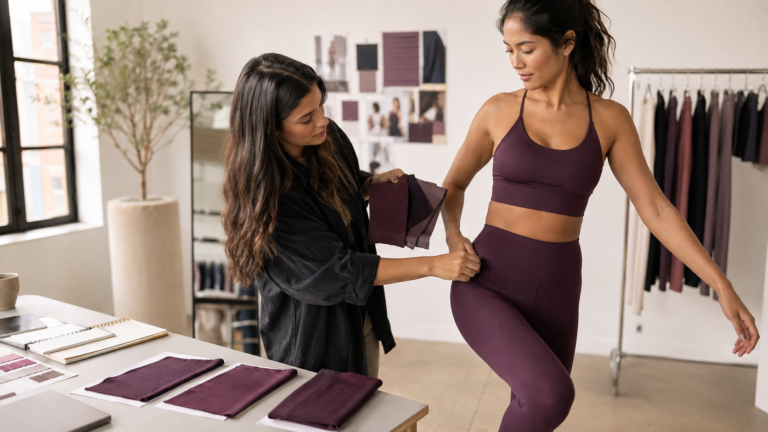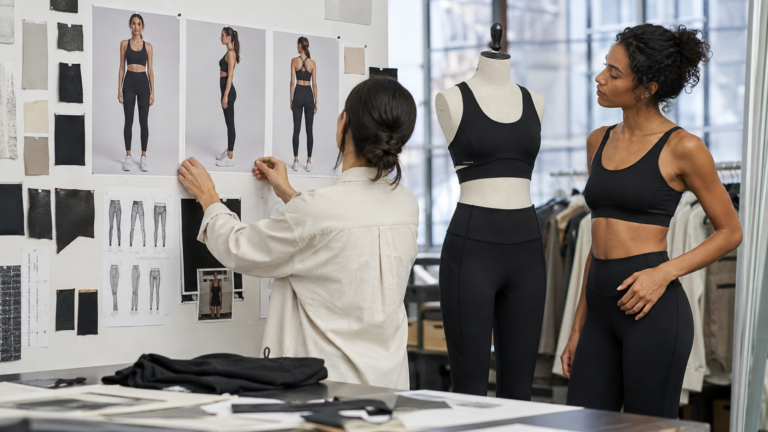


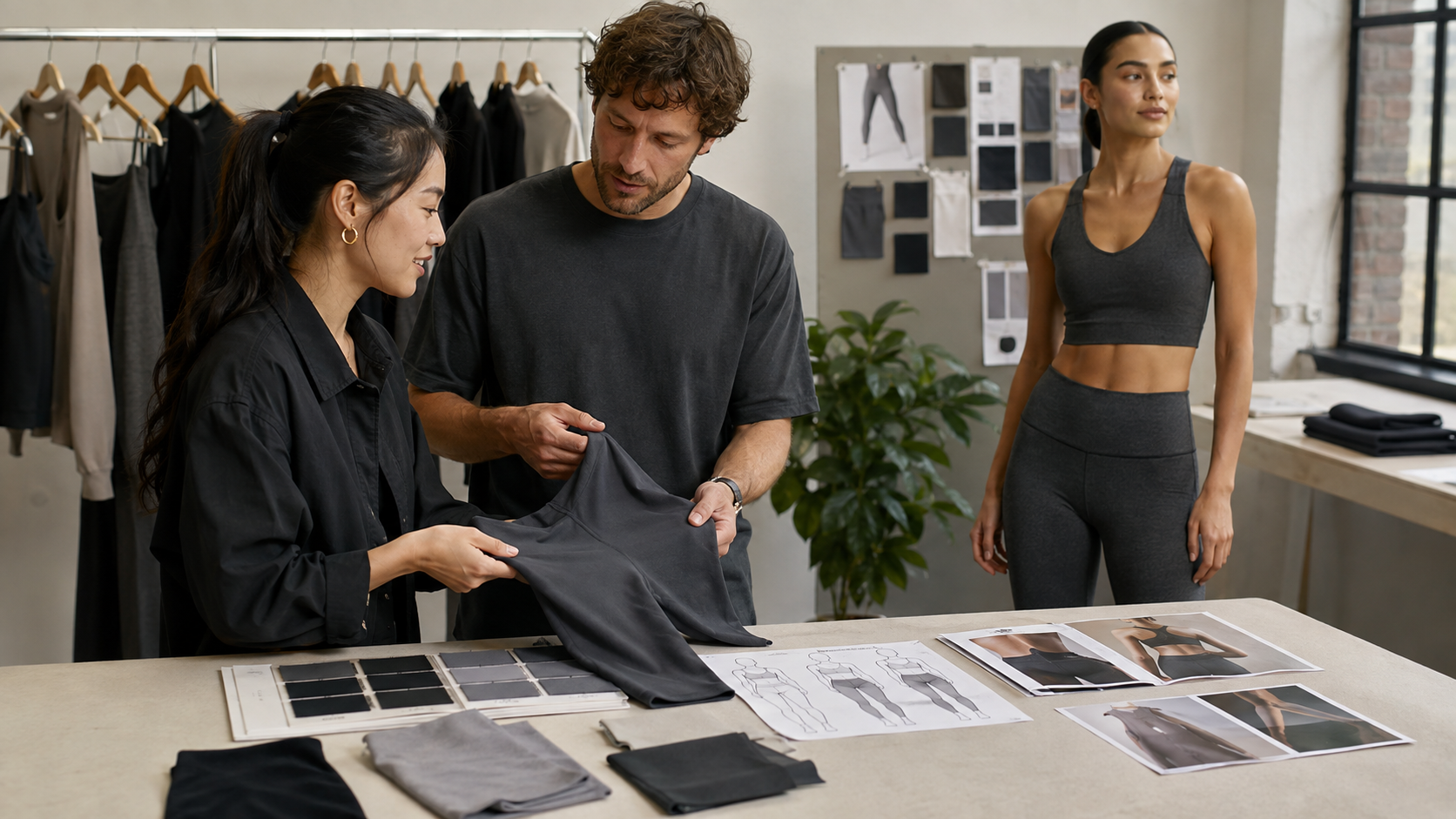
A sample can look good in a photo and still be unready for production.
An activewear sample should earn production approval through clear evidence, not relief that the revision process is over.
The waistband may still need a decision. The logo artwork may be an older version. The fit may work on one person but not match the intended size direction. Or the founder may be approving a sample simply because another revision feels exhausting.
Before asking whether your activewear sample is ready for production, ask a narrower question: have you approved the decisions that production will need to repeat?
When is an activewear sample ready for production?
A production-ready sample does not mean every future wearer will have the same body or every preference has disappeared. It means the brand has made a clear decision about the product’s shape, materials, construction, fit direction, branding, and acceptance points.
An activewear sample is ready for production when those decisions can be repeated and explained.
The sample is the physical reference. The written record explains what it is, which size was approved, which materials were used, what changed, and which details must remain consistent.
Fast rule: if you are still saying “make it feel more like the idea,” it is not ready. If you can identify what is approved, what is intentionally different, and what the next production check must catch, you are close.
Check the six decisions that production will repeat
1. Product shape and proportions
Look at the front, side, and back. Confirm the neckline, strap position, body length, rise, hem, leg opening, waistband height, and any pocket or opening. Compare the sample with the brief, not only with the last message.
If the overall proportion is still being debated, do not hide the uncertainty behind a small hem adjustment. Decide whether the silhouette is approved or whether the product needs another development sample.
2. Material direction
Record the fabric or material option used in the approved sample and the reason it was chosen. Note the hand feel, surface, coverage, stretch, recovery, and drape that matter to the product. Keep subjective descriptions tied to the reference garment or swatch used in the decision.
Do not approve a fabric from a name or fiber percentage alone. The finished garment is the evidence. If coverage, comfort, or movement still creates doubt, the material decision is not closed.
3. Fit and movement
Confirm the target size and intended wearer. Test the garment in the movements customers will perform: a forward fold and floor contact for studio wear, repeated bending for training, walking and layering for studio-to-street, or the specific movement that defines the product.
Ask the wearer where they adjusted the garment, where they stopped trusting it, and what changed after several minutes. A fit that looks correct standing still may still fail the use case.
4. Construction details
Review seams, hems, waistband, gusset, lining, straps, pockets, closures, and areas that meet the body. The purpose is not to conduct a factory inspection before production. It is to ensure that the construction that carries the product promise is intentional and recorded.
If the garment depends on a particular seam line, support feature, opening, or lining decision, mark it in the approved file. “Same as sample” is weaker than a photo, location, measurement, or construction note.
5. Branding and information
Confirm logo artwork, size, location, method, label placement, care and content information, hangtag, packaging, and SKU or barcode logic. A garment can be fit-approved and still be brand-unready if the wrong logo file is attached or the label information is incomplete.
For U.S. apparel, the Federal Trade Commission’s apparel guidance notes the importance of fiber content, country of origin, responsible business identity, and care information for covered products. Check the requirements for every market where the product will be sold.
6. What production must not change
Write the short “must remain” list. It might include the matte surface, waistband height, strap angle, coverage at the back, logo position, and approved label location.
This list is more useful than a long description of the sample because it tells the production conversation where variation would damage the product.
Use an approval sheet, not a feeling
| Area | Approved decision | Evidence | Status |
|---|---|---|---|
| Silhouette | Waistband height and body length | Front, side, back photos and brief | Approved / revise |
| Material | Selected swatch or fabric option | Swatch reference and sample photos | Approved / confirm |
| Fit | Target size and movement result | Wear test notes and video | Approved / revise |
| Construction | Seams, lining, gusset, hems, straps | Marked detail photos | Approved / revise |
| Branding | Logo, labels, hangtag, packaging | Final artwork and placement sheet | Approved / update |
| Must remain | Short list of non-negotiables | Signed or dated approval record | Ready / not ready |
Use one status per row. “Mostly approved” is a warning that someone will interpret the sample differently later.
Know the difference between development and production checks
During development, you are deciding what the garment should be. During production, you are checking whether the approved garment is being repeated consistently.
That distinction tells you whether an activewear sample still needs development or is ready for production handoff.
That boundary matters. A new pocket shape, waistband height, fabric option, or logo method is a development decision. Checking whether the approved pocket appears correctly across production pieces belongs to production quality control.
Techpacker’s fit sign-off guidance describes the need to review the fit sample, spec information, and reference garment together. The practical lesson is simple: approve a reference that another person can understand, not only a sample that one founder remembers.
Use stop conditions before you approve
Do not move forward because you have already spent time. Stop and revise when:
- the main customer promise is not visible in the garment;
- the sample fails the movement or coverage condition that defines the use;
- the approved size or fit direction is still unclear;
- the material choice is being approved from adjectives rather than physical comparison;
- the artwork, labels, or packaging will change after production starts;
- the sample contains changes that are not recorded anywhere.
Stopping is not a sign that the product failed. It is a sign that the uncertainty is still cheaper to fix before production.
Use that stop condition whenever an activewear sample looks close but the product promise is not yet secure.
Where Battlerobe fits at the handoff
If you have an approved sample, a clear specification record, and a mature order plan, Battlerobe can review the production handoff and confirm the project-specific MOQ, price, capacity, quality requirements, and schedule. Those details should not be assumed from a general article.
If the sample is not approved and the garment still needs changes to pattern, cut, construction, fit, or material direction, the project remains in Custom Development. If the product uses an existing style and only needs confirmed branding, Ready-to-Custom may be the simpler route.
Send the approved sample or marked-up development record, target size, material reference, must-remain list, branding files, estimated quantity, destination, and the questions that still need confirmation. A clear handoff is more valuable than a confident but vague production request.
That package gives the production conversation something concrete to repeat instead of asking an activewear sample to carry undocumented decisions.
The final question
Ask: “If another person saw this sample and the approval sheet, would they know what to repeat and what not to change?”
If yes, the product is ready to enter a production conversation. If no, identify the missing decision and close it before you add inventory risk.
Production should repeat an approved product. It should not be the place where the brand finally decides what the product is.
That is the standard an activewear sample must meet before production begins.