

“The waistband keeps folding down when I bend over.” A yoga pants waistband roll down complaint can describe at least three different situations:
That sentence can describe at least three different situations:
- the waistband or pattern is not controlling the garment properly;
- the garment fits one body shape poorly, even though it may work for another;
- the wearer, garment, and movement are interacting in a way that a standing mirror cannot reveal.
Treating every complaint as a factory defect leads to the wrong correction. Tightening the waistband may make the next sample more uncomfortable without stopping the roll. Blaming the wearer is just as unhelpful, especially when the brand intends to serve people with fuller abdomens or different waist-to-hip proportions.
The useful question is not “Who is at fault?” It is:
Does the same garment fail across wearers and units, or does it fail only when a particular body shape and movement meet this particular pattern?
That answer determines whether you should hold production, adjust the fit brief, change the pattern, review the waistband construction, or simply improve the size guidance.
How to diagnose a yoga pants waistband roll down
Before changing anything, record what the wearer actually sees.
A waistband that rolls inward
The top edge turns toward the body and forms a tube or fold. This often points toward a combination of waistband height, fabric behavior, seam construction, insufficient support, or a waist edge that is being compressed by the body.
A waistband that slides down as a whole
The waistband does not necessarily curl at first. The entire top edge moves toward the hips during bending, sitting, walking, or exercise. This is more likely to involve the relationship between waist, abdomen, hip, rise length, and the garment’s ability to stay anchored.
A waistband that only folds at the front
This pattern deserves a different look from a waistband that folds evenly around the body. A fuller abdomen, a low front rise, or too much tension across the front can push the front edge downward while the back remains in place.
A waistband that folds only after repeated movement
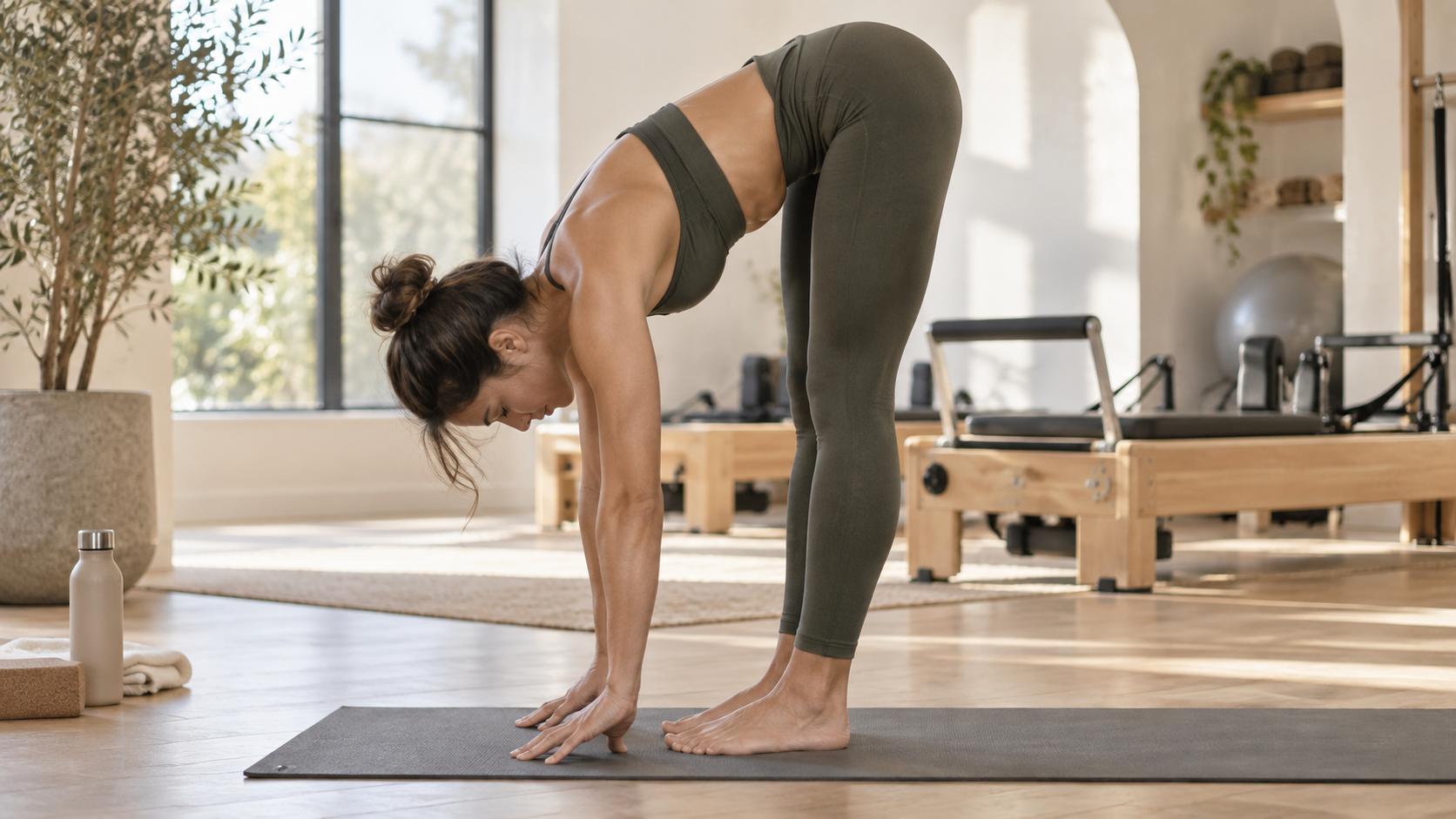
A garment may look acceptable while standing still and still fail during a class. If the issue appears after lunges, forward folds, seated stretches, or repeated hip movement, a static fitting photo is not enough evidence.
This first description is already useful. “The pants are bad” gives a supplier almost nothing. “The front waistband folds inward after five forward bends, while the back remains stable” gives the pattern maker and production team a starting point.
A fuller abdomen can be part of the cause without making it the customer’s fault
This is the part that many quality discussions avoid.
A fuller abdomen or a different waist-to-hip proportion can push a close-fitting waistband downward during bending or sitting. The abdominal area may move forward and downward as the body changes position. If the front rise is short, the waistband is placed too low, or the garment is already close to its comfort limit, the body can create a downward force at the top edge.
That does not automatically mean the customer chose the wrong size. It also does not automatically prove a manufacturing defect.
It means the garment and body shape may not be compatible in that movement.
Research on commercial leggings has shown that garments carrying the same size label can differ in actual dimensions, including waistband and rise-related measurements, from one brand to another. Research on clothing fit and body shape also treats body shape as a significant part of fit problems rather than assuming that one circumference measurement explains the whole body.
For a brand, the practical implication is important:
If the intended customer has a fuller abdomen, a strong waist-to-hip difference, or a preference for high-rise coverage, that is not an unusual exception to design around later. It belongs in the original fit brief.
The question changes from “Why does this customer not fit our leggings?” to “What body and movement is this product promising to support?”
The three-way diagnosis
Do not decide from one photograph. Compare the complaint across three dimensions: wearer, garment, and condition.
1. It is mainly a body–garment compatibility issue when:
- the issue appears with one wearer or one clear body profile;
- the approved sample behaves normally on other wearers;
- the same garment remains stable when tested in a different size or on a different body;
- the waistband is not visibly damaged, twisted, or poorly sewn;
- the complaint occurs only in particular movements or positions.
The next action is usually not “make the waistband tighter.” Try the adjacent size, a higher-rise option, or a pattern adjustment that gives the front abdomen more room while maintaining support elsewhere. If the brand serves this customer profile repeatedly, the issue may justify a separate fit block rather than a one-off alteration.
2. It is mainly a product or production issue when:
- several wearers with different body shapes report the same failure;
- the same position rolls on many units from the same size, color, or production lot;
- the waistband width, shape, or stitching visibly differs from the approved sample;
- the waistband is twisted, stretched unevenly, or attached with visible rippling;
- the problem appears even during light movement on a wearer who matches the approved fit sample.
Here, changing customer size advice will not solve the root problem. Hold the affected quantity long enough to compare the approved sample, an affected piece, and—if available—a piece from another size or lot.
3. It is a combined issue when:
- the failure is strongest on fuller abdomens, but the waistband also feels unusually tight;
- the garment works while standing but loses position during forward bending;
- the approved sample is acceptable on the development model but not on the brand’s actual target wearer;
- a small production difference makes an already marginal fit noticeably worse.
This is common in close-fitting activewear. A garment can be within the intended construction plan and still be poorly suited to the body profile the brand wants to attract. Conversely, a body-specific complaint can expose a pattern or waistband decision that only looked acceptable on a narrow fit model.
The smallest useful check you can do before changing the sample
You do not need a laboratory program to investigate the first complaint. You need comparable evidence.
Use one approved sample and one affected garment if both are available. Then record:
- the wearer’s usual size and the garment size;
- whether the issue appears at the front, side, back, or all around;
- the first movement that causes it;
- whether the waistband rolls inward or slides down as a whole;
- whether the fabric is digging in, overstretched, or simply losing position;
- whether the same style behaves differently on another wearer or in an adjacent size;
- whether the affected garment differs visibly from the approved sample.
Take short videos rather than only standing photographs: neutral standing, a forward bend, a squat or lunge, and the movement that triggers the complaint. Keep the camera position and garment styling as consistent as possible.
This check does not prove a root cause. It does something more useful at the beginning: it tells you whether to investigate the body–garment relationship, the garment itself, or both.
What to inspect in the garment
Waistband height and front-to-back balance
A waistband that is too short for the intended rise can be pulled downward at the front during bending. A waistband that is very wide is not automatically more stable; if the shape and tension do not match the body, it can fold instead of staying flat.
Compare the front, side, and back shape with the approved sample. Look for a front edge that is lower, a back rise that is doing all the anchoring, or a waistband that has lost its intended curve.
Seam and attachment behavior
Stretch garments need seams that can move with the fabric without creating a hard break. If the waistband is attached unevenly, stretched too much or too little during sewing, or left with inconsistent tension, the result may be rippling, twisting, or a weak area that folds during movement.
Look at the seam while the garment is relaxed and while it is being worn. A neat seam on the table is not enough if the waistband distorts as the body moves.
Fabric and waistband recovery in ordinary use
Different fabric compositions and weights can change how a waistband feels and returns after stretching. For an initial factory check, compare the handfeel, surface, and visible recovery of the affected piece with the approved sample. Stretch the same area by hand in a consistent way and observe whether one piece feels noticeably softer, looser, or less stable.
This is a practical comparison, not a standardized elasticity test. If a performance claim or contractual requirement depends on measured recovery, a defined test may be appropriate. For an ordinary small-batch investigation, do not create technical numbers that were never measured.
What to do with goods already made
The answer depends on the scope.
If one wearer is affected
Do not automatically classify the whole batch as defective. First try a size or fit alternative and determine whether the style is intended for that body profile. Improve the product page’s size guidance if the garment is otherwise consistent.
If a repeatable group of units is affected
Hold the affected size, color, or lot while you compare it with the approved reference. Count how many pieces show the same symptom. If the cause is visible construction variation, sort the goods and ask whether a credible rework is possible. Do not keep pressing, tightening, or altering the waistband without confirming that the method will preserve stretch and comfort.
If the pattern itself is unsuitable
Rework may not be a credible answer. A waistband attached correctly cannot compensate for a front rise or body balance that does not suit the intended wearer. The more honest decision may be to sell the current stock with accurate fit guidance, reserve it for a different customer profile, or revise the pattern before the next order.
Preventing the same complaint on the next order
The prevention step should be written into the handoff, not left as a verbal promise.
Record:
- the target wearer and the body profile the fit should accommodate;
- the intended waistband height and coverage;
- the approved sample and the movement conditions used for approval;
- front, side, and back fit photos or short videos;
- the difference between a fit preference and a production defect;
- the sizes, colors, and lots that need comparison before release.
If a fuller-abdomen wearer is part of the target customer, include that wearer in sample review. One development model cannot represent every customer. The purpose is not to make one garment fit every body perfectly; it is to know what the garment is designed to do, for whom, and under which movement conditions.
When a production partner becomes useful
If the issue is already present in goods made by another supplier, a photograph may help organize the conversation, but it cannot establish the cause by itself. The original pattern, fabric, construction details, size, lot, and movement condition still matter.
For a future order, Battlerobe may help compare the affected garment with a reference, decide whether the issue calls for a fit revision or a production correction, and develop a revised sample before bulk production. That is a small-batch custom development route, not a promise to repair another supplier’s inventory remotely.
When asking for an assessment, send only the evidence that changes the decision:
- the affected garment and approved sample, if available;
- size, color, lot, and affected quantity;
- a short video showing the movement that causes the roll-down;
- the wearer’s usual size and the intended target fit;
- clear photos of the front, side, and back waistband;
- the result you need: size guidance, sample correction, or a production decision.
That information makes it possible to discuss the real next step rather than guessing from a single image.
Final decision: do not fix the wrong problem
Yoga pants waistbands roll down for different reasons. Sometimes the garment is under-built or inconsistent. Sometimes the body shape and the chosen pattern are a poor match. Sometimes a small production variation turns a marginal fit into a visible failure.
The responsible response is neither to blame the customer nor to blame the factory automatically. Compare the wearer, garment, movement, and approved reference. Then choose the smallest correction that addresses the evidence.
For a small activewear brand, that discipline matters. It prevents unnecessary changes to a product that is working for its intended customer, and it also prevents a recurring fit complaint from being dismissed as a sizing problem when the pattern needs to change.
When a yoga pants waistband roll down complaint repeats, do not fix the wrong problem. First find out whether the waistband is rolling, being pushed down, or revealing a fit promise that was never properly defined.
Sources and further reading
- Clothing pressure analysis of commercial women’s leggings, Fashion and Textiles.
- Ethnicity, body shape differences and female consumers’ apparel fit problems, International Journal of Consumer Studies.