



“The color name is the same, but half the leggings look slightly warmer than the other half.”
Color shading in activewear becomes a production problem when garments that are meant to belong together no longer look like the same product. It may show across panels, between sizes, between cartons, or only under certain light. A phone photograph can exaggerate the difference—or hide it.
Before rejecting every garment or accepting a mixed shipment because “they are all black,” group the pieces and compare them under one consistent condition.
Shade is a comparison, not a feeling
Start with the product relationship. Is the customer buying a matching set, several leggings in one color, or one isolated garment? A small shade difference may be tolerable in separate products and unacceptable across a bra and legging sold as a set.
QIMA lists color shading against a color standard as a typical apparel inspection consideration. For a small brand, the first step may be simpler: keep the approved garment, place production pieces beside it, remove mixed lighting, and group what visibly belongs together.
Record whether the difference is between:
- front and back panels;
- outer fabric and lining or binding;
- different sizes or colors in the same order;
- different cartons or production days;
- the garment and the approved reference.
Use the light and the lot to find the pattern
View the garments side by side under consistent neutral light and then in the light where customers will normally see them. Do not compare one piece in direct sun with another under a warm indoor lamp.
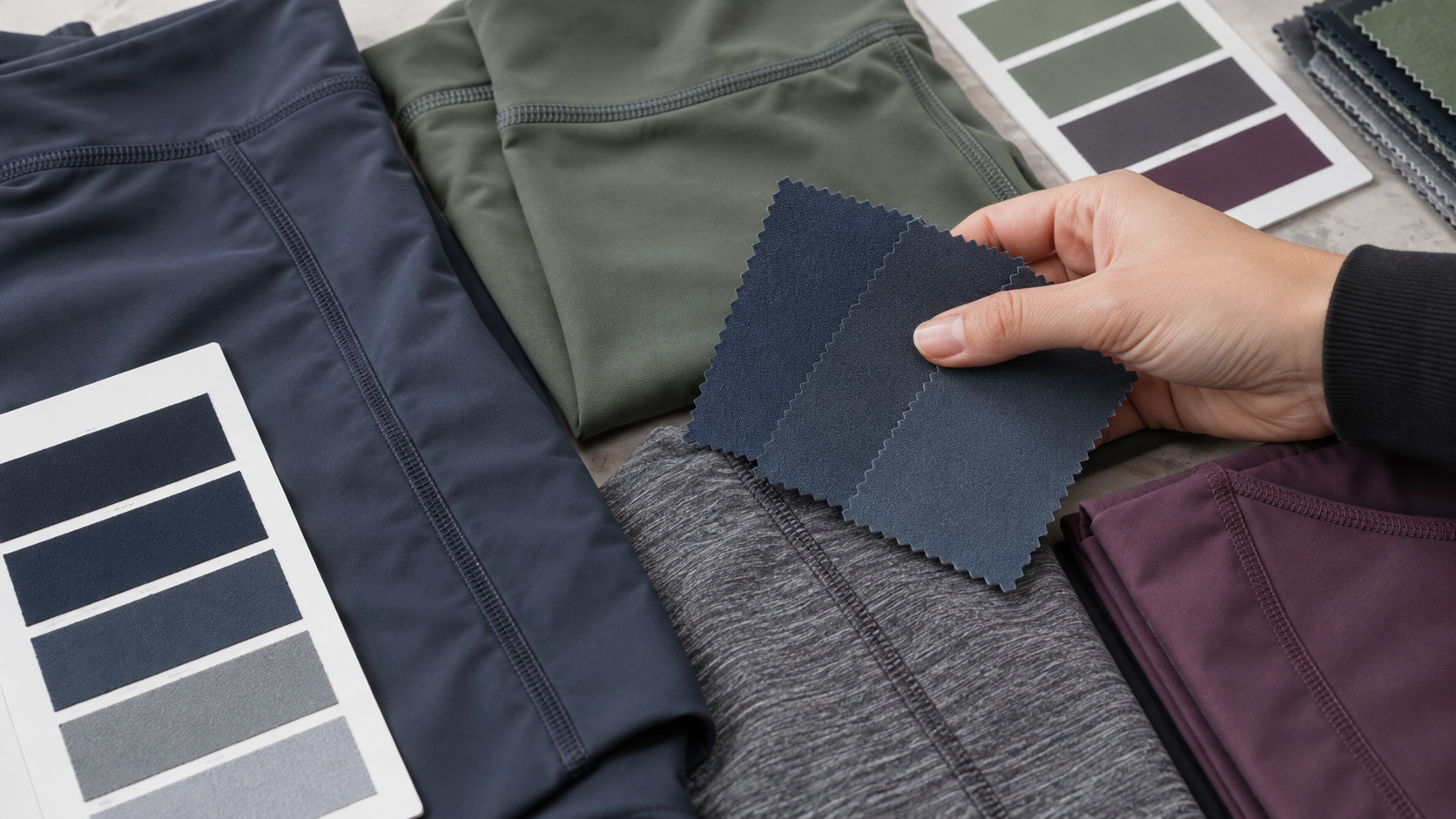
Group pieces by fabric lot, color, size, carton, and production period if the information exists. A difference that follows one lot is a different production decision from a difference that appears only between two panels in the same garment.
Three common patterns
Panel-to-panel difference
Check whether the panels came from different rolls, were cut in different directions, or received different finishing. The outer pieces may have the same color name while reacting differently on the surface.
Carton-to-carton difference
Do not mix the cartons before you understand the shade. Keep a visibly consistent group together if the product is sold as a set, and hold the group that cannot be matched to the approved reference.
Difference only in photographs
Repeat the comparison with a fixed camera position and light. If the shade difference disappears under normal viewing, it may not justify rejecting the order; if it changes the matching-set appearance, it still needs a commercial decision.
What the second comparison should answer
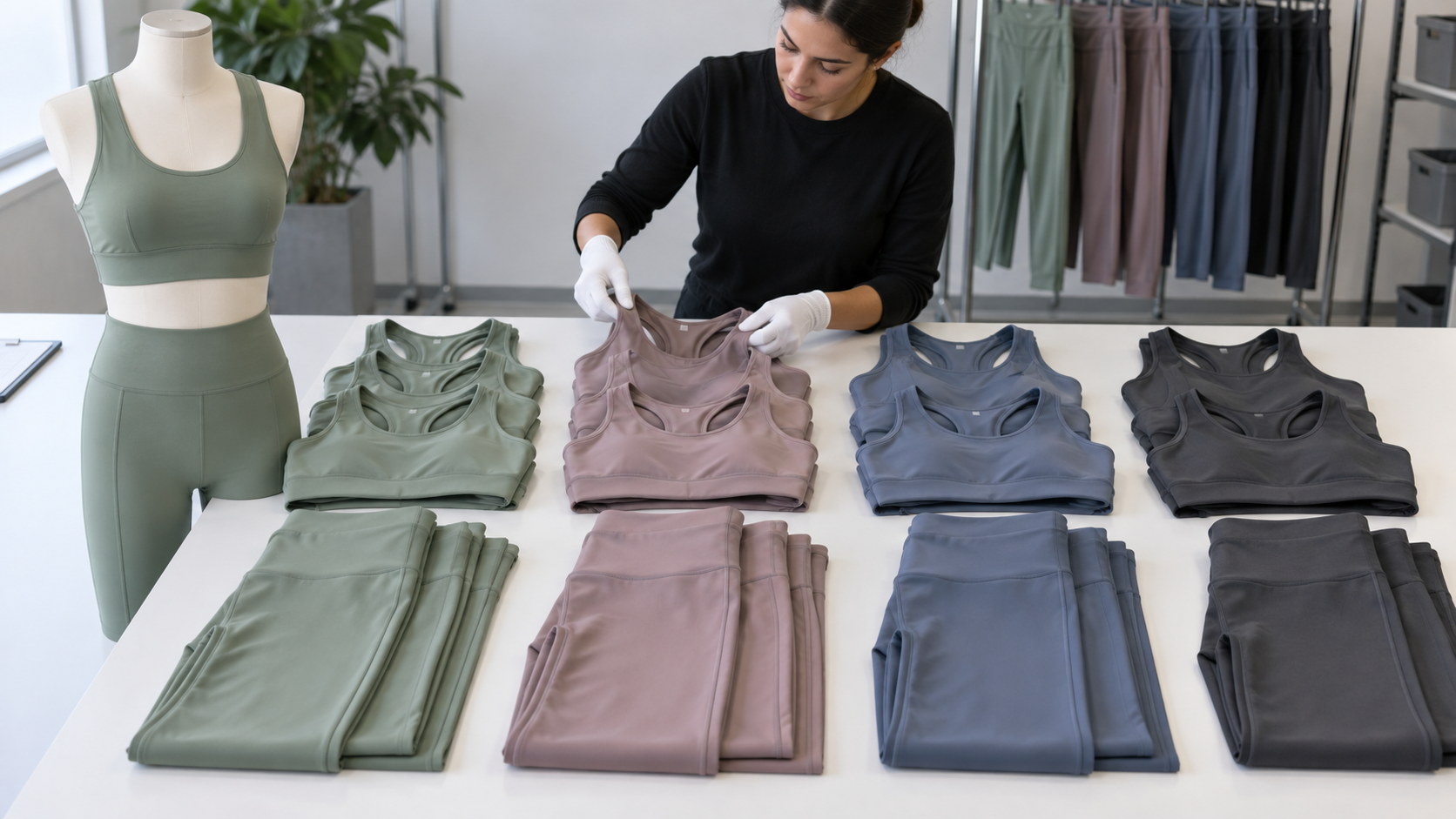
Put the approved reference in the middle and place production pieces on both sides. Ask:
- Which pieces clearly belong to the same shade group?
- Can a customer receive a matching top and bottom?
- Does the difference affect the whole garment or only one panel?
- Does the order record show a material or production boundary?
This is enough to choose a containment action. It is not a substitute for a standardized color measurement when a retailer or contract requires one.
Disposition for mixed shades
- Release: the garment and set match the approved reference within the agreed visual expectation.
- Sort: create consistent shade groups and keep matching pieces together.
- Hold: mixed shades affect a set, a major panel, or the product photograph promise.
- Escalate: the commercial or retailer requirement needs a formal color standard or third-party evaluation.
Do not relabel a visibly different shade as a new color unless the brand can sell it honestly. A name change does not solve a set that no longer matches.
Prevent the next shade dispute
Keep the approved color reference, fabric cutting, and matching-set expectation together. Define whether the shade must match across panels, across a set, or only within each garment.
At first-piece approval, compare the highest-risk color and the components that customers see together. Before shipment, keep carton and shade groups traceable rather than mixing them during packing.
Where Battlerobe becomes useful
When the product is otherwise stable but repeat production needs stronger reference control, bulk custom production planning may help carry the approved color, fabric lot, matching-set rule, and inspection checkpoint into the next order.
Send the approved sample, affected pieces, side-by-side photos under consistent light, color and lot information, and the decision required. Battlerobe can help organize a future production comparison; it cannot turn a photo into a formal colorfastness or color-difference certificate.
Final decision
Color shading in activewear should be handled by group and use condition, not by arguing over one photograph. Compare the approved reference, matching relationship, light, and lot pattern before releasing, sorting, holding, or escalating.