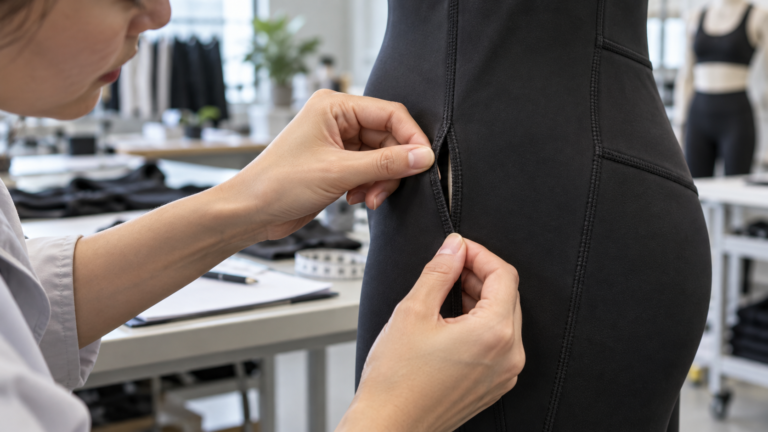


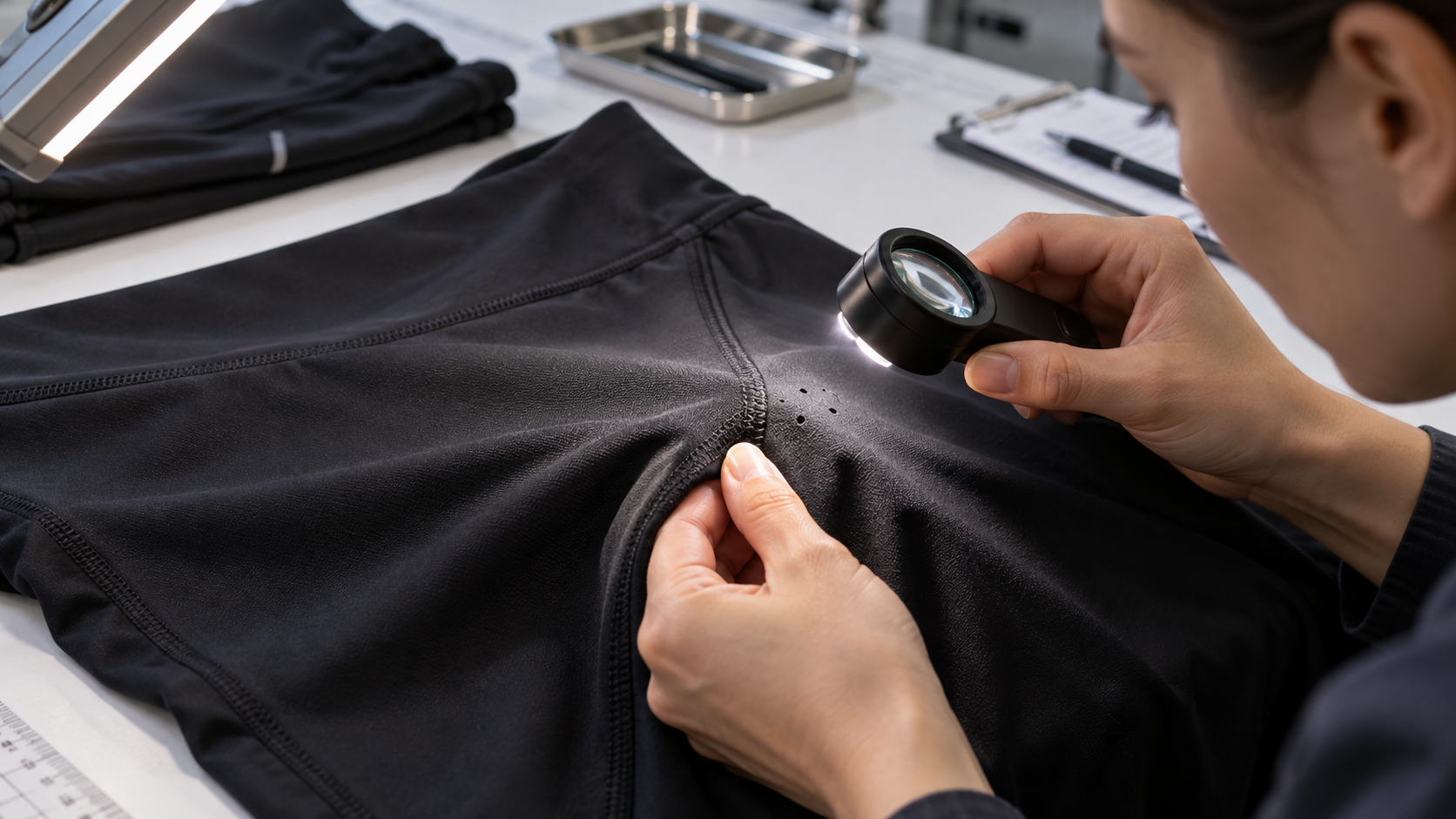
“There are tiny holes beside the seam. They were not obvious on the table, but they opened after the garment was worn.”
Small holes in activewear fabric are easy to dismiss as wear damage because stretch fabric can hide a small puncture when relaxed. A hole may instead come from a needle, a sharp or worn point, an embroidery or logo operation, a snag during handling, or a weak section in the fabric.
The location is the first clue. A hole beside a seam needs a different investigation from a random snag in the body of the garment.
Map the hole before touching it
Photograph the whole garment and then the close-up. Mark whether the damage is:
- beside a seam or stitch line;
- around a logo, label, or decorative operation;
- at a fold, pocket, or hardware contact point;
- inside the main fabric with no nearby construction;
- repeated in the same location across several units.
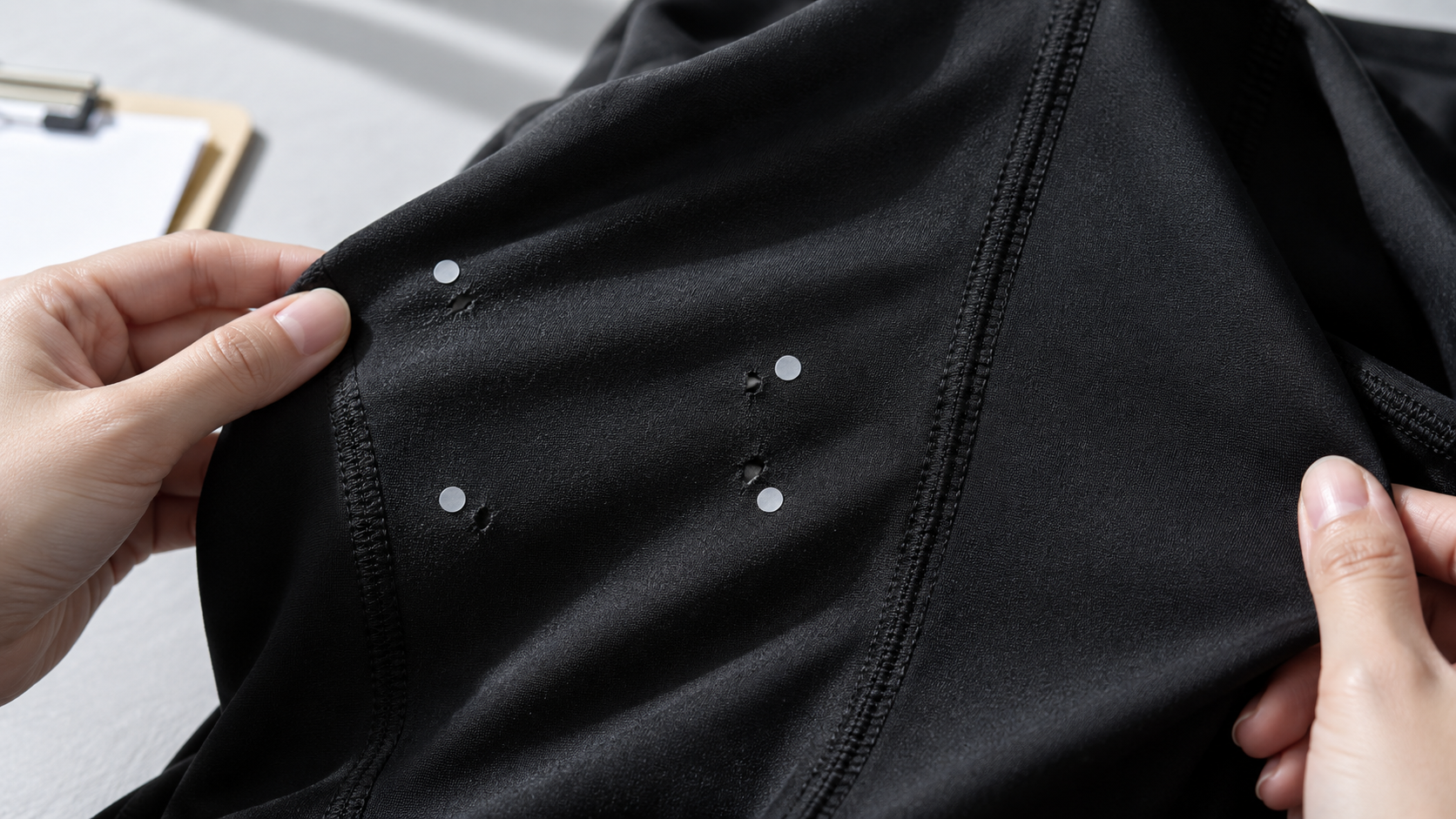
Groz-Beckert describes visible material damage beside seams as something that can be exposed by slight pulling and shearing. Its needle guidance emphasizes that needle size, point style, needle condition, and fabric type need to work together. That supports the investigation, but it does not prove the needle is the cause of a specific hole.
Use a gentle stretch and light check
Place the garment on a flat surface and inspect both sides under consistent light. Extend the fabric gently in the direction the garment moves. Look for a hole that opens, a short run, broken loops, or a cut that stays the same size.
Compare the affected piece with an approved sample and an unaffected production piece. If possible, use a fabric cutting from the same lot for a visual comparison. Do not pull until the fabric fails; the purpose is to reveal an existing weakness, not create a new one.
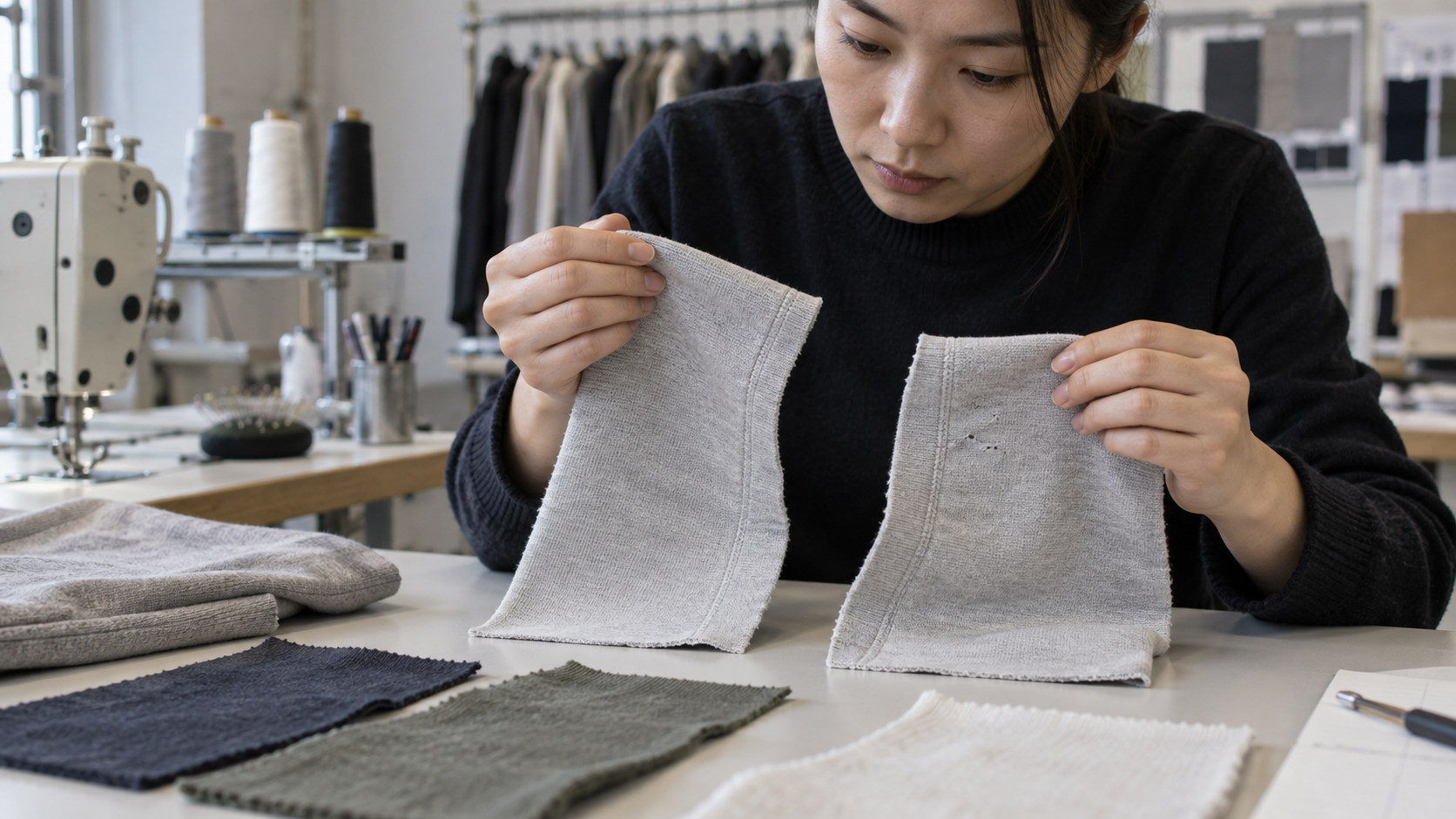
Three patterns point to different actions
Repeated holes beside the same seam
Inspect needle point, needle thickness, machine condition, stitch operation, and whether the seam is being pulled during sewing. If the same point repeats across a lot, contain the operation rather than sorting one garment at a time.
Damage around embroidery or logo work
Check the backing, stitch density, placement, and fabric stability. A decoration can stress fine stretch fabric even when the artwork looks correct.
Isolated body snags
Look for sharp tools, packaging, hardware, table edges, or handling marks. One isolated snag does not prove a fabric-wide failure, but it still matters if the garment reaches the customer visibly damaged.
What can be reworked?
A clean loose thread may be trimmed. A small hole in a non-load-bearing area may sometimes be repaired, but the repair can change stretch, appearance, or comfort. A run that opens during movement is not made safe by hiding it under a press.
- Release: the mark is cosmetic, stable, and within the approved appearance.
- Sort: isolated damage can be removed from sale without changing the rest of the group.
- Rework: only after a repair trial shows the fabric remains stable and the appearance is acceptable.
- Hold or reject: repeated holes, runs, or damage in a load-bearing or customer-visible area cannot be controlled credibly.
Prevent material damage at the first sewing trial
For fine, high-stretch, or delicate knitted fabric, inspect the first sewn pieces under gentle movement before the line continues. Groz-Beckert recommends choosing a needle as thin as possible while remaining stable enough for the operation, and matching the point style to the material.
The practical lesson is not to copy a needle number from another style. Use the actual fabric and seam, then look for holes, runs, skipped stitches, and distortion before approving the process.
When Battlerobe can help
If the damage points to a style-specific sewing, logo, or fabric decision, Battlerobe may help create a controlled sample through small-batch custom development. The relevant input is the actual fabric or garment, the affected area, the operation used, and the movement or handling condition after which the hole appeared.
Battlerobe can help organize a revised sample or future production checkpoint, but a photo cannot establish whether another supplier’s inventory is repairable or identify every hidden weak point.
Final decision
Small holes in activewear fabric need a location and scope before they need a blame assignment. Map the damage, stretch gently, compare the reference, and then decide whether to sort, rework, change the operation, or hold the material.