

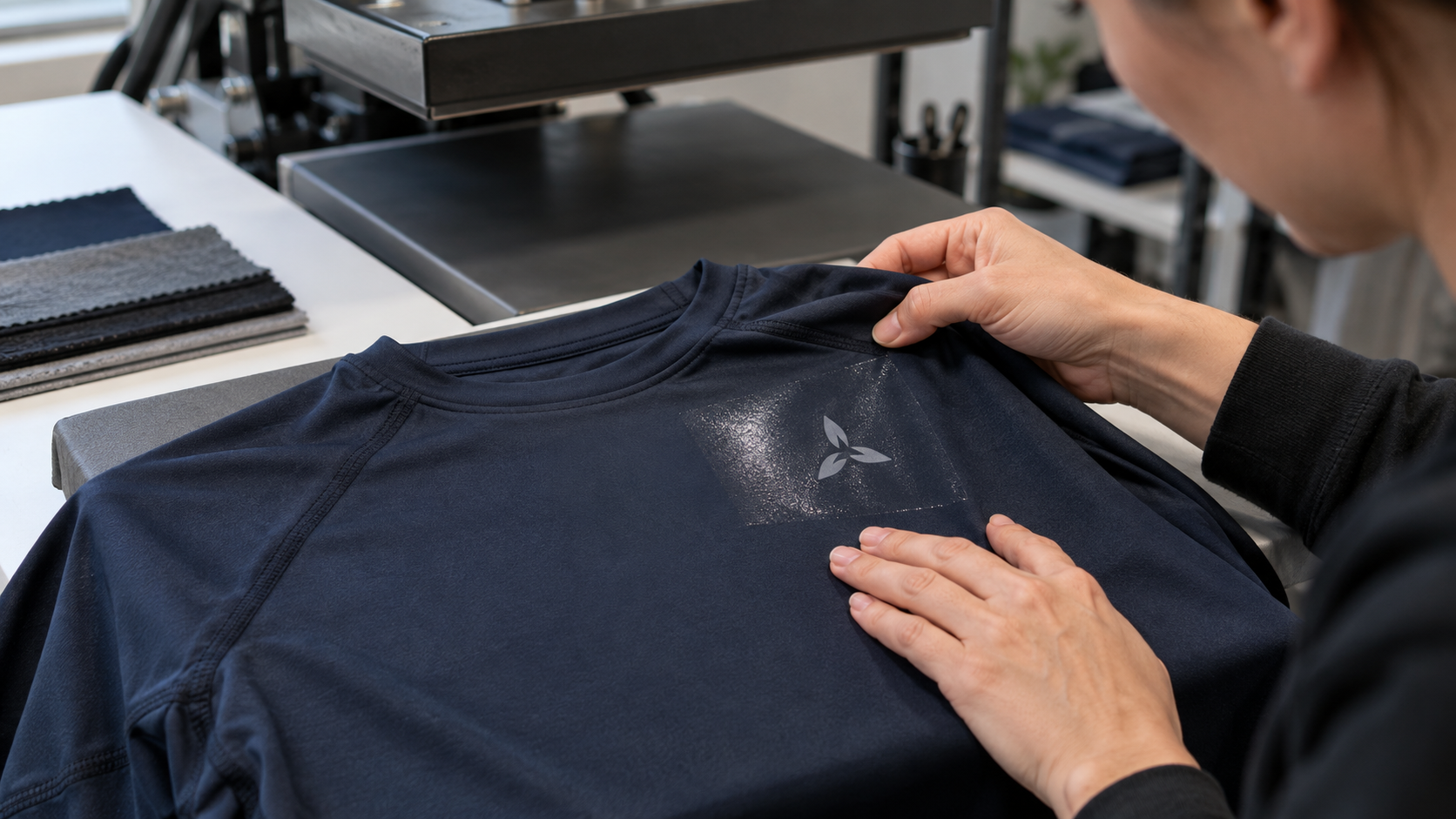
“The logo is in the right place, but the fabric around it has turned shiny.”
Heat press marks on activewear are easy to misunderstand. A logo can adhere correctly while the garment surface develops a pale, glossy, or rectangular imprint around the application area. On a dark performance fabric, the mark may be more noticeable than the logo itself.
This is not always a bad logo transfer. It may be a fabric surface and process problem caused by heat, pressure, time, platen contact, cooling, or the combination of the exact fabric and logo material.
If the decoration looks correct but the garment surface has changed, inspect the fabric process before deciding that the logo artwork or placement is wrong.
What heat press marks on activewear can look like
A shiny or lighter rectangle
The area under the press can reflect light differently from the untouched fabric. High pressure may flatten or polish the surface, especially on synthetic performance fabrics or fabrics with a brushed or soft finish.
A pale or white-looking impression
The surface may have been compressed, heated, or disturbed. The appearance can change after the garment cools, but some marks remain visible under angled light.
A scorched, melted, or distorted area
This is more serious than a temporary press impression. The fabric may have been exposed to excessive heat or an unsuitable pressing condition. A steam pass may reduce a mild mark, but it cannot reliably restore a damaged surface.
A logo that looks fine at first and changes later
Some problems appear after cooling or after the garment rests. Dye migration, adhesion changes, and repeated heating can create a result that is not visible immediately after application.
Why activewear is sensitive to heat pressing
Activewear often uses polyester, nylon, elastane, rayon, brushed knits, or blends with a surface designed to feel soft and flexible. The fabric may tolerate normal wear but respond visibly to a flat, hot, high-pressure platen.
Stahls identifies heat press marks and scorching as common challenges when decorating polyester, spandex/Lycra, and blended activewear. Its guidance also emphasizes testing the actual garment and using a transfer and process suited to the fabric.
The important word is actual. A transfer that works on a smooth polyester jersey may leave marks on a brushed nylon-elastane legging. A black color may respond differently from a pale color. A sample pressed once may look acceptable while repeated production pressing creates a wider variation.
Run a real-garment trial before production
Do not approve the logo method from a transfer swatch or a different fabric. Use the actual style, color, logo size, placement, and finishing method.
Before deciding, record:
- fabric composition and surface type, if known;
- garment color and logo color;
- logo method and transfer material;
- where the press touched the garment;
- whether the mark is visible from straight on, under angled light, or only after cooling;
- whether a gentle steam treatment changes the appearance;
- whether the logo remains secure after the relevant simple wash or wear check.
Photograph the same area before pressing, immediately after pressing, after cooling, and after any agreed finishing treatment. The purpose is not to prove a universal rule. It is to find out whether this fabric and this logo process can coexist.
Can steam remove the mark?
Sometimes steam reduces a mild press impression by allowing the surface to relax. A factory may use a steam iron after the transfer process or pass steam over the area several times, while avoiding direct damage to the logo.
But steam is not a guaranteed repair. If the fabric has been permanently polished, scorched, melted, or structurally changed, repeated steaming may waste time and create more heat exposure. Test one garment first and let it cool before judging the result.
If the mark remains clearly visible after a reasonable trial, do not keep repeating the same process. Change the heat, pressure, cover, platen, transfer, or application method—or choose a different branding route.
When to change the logo method
For a mark that cannot be reliably reduced, the answer may be to stop using heat transfer on that fabric. A sewn label, woven label, embroidered mark, screen print, or another suitable method may be more appropriate depending on stretch, placement, skin contact, and the brand’s desired appearance.
This is especially important when the logo is placed on a fabric with a visible surface finish. A logo method that protects adhesion but changes the garment around it is not a successful decoration method.
Do not assume a different logo method is automatically better. Embroidery can add bulk or change stretch. A sewn label can create a new skin-contact edge. Screen printing may interact with stretch and color. The replacement method also needs an actual-garment sample.
What to do if the order is already pressed
First sort by fabric, color, logo placement, and severity. If only one color or surface shows the mark, do not treat the entire order as identical without comparison.
Test a small group with the least aggressive credible finishing method. If the mark reduces and the logo remains secure, record that rework condition and inspect the affected goods again. If it does not reduce, stop applying more heat. Rework cannot turn a permanently altered surface into an approved reference.
If the logo itself is correct but the garment surface is not, the disposition may be a hold, replacement, or commercial decision—not a simple trimming operation.
Preventing the same logo problem
Keep an approved decorated sample, not only a blank garment and a logo file. The reference should show the logo size, placement, surface appearance, and the acceptable result after cooling.
For a new fabric, color, or logo material, run a small trial before bulk. Compare the pressed area with the untouched area under the lighting customers will see. If the fabric is heat-sensitive, the trial should include the actual pressing setup and any steam or cover-sheet method intended for production.
Stahls also recommends testing different times, temperatures, and pressures for sensitive fabrics rather than relying on one setting. The practical lesson is simple: the setting is part of the product specification when the decoration can change the garment surface.
How Battlerobe can help at the decision point
When a customer wants a logo on an existing activewear style, Battlerobe can help compare the actual fabric, placement, and branding method through a sample trial before the order is committed. The relevant route is small-batch ready-to-custom when the style is suitable for a limited branding test, or a custom development route when the logo method and garment construction need to change together.
Send the blank garment or fabric cutting, the logo artwork, the desired placement, the color, and any sample that already shows the problem. The decision may be to lower the heat risk, use steam carefully, or stop heat pressing and switch methods.
Final decision
A clean logo does not prove a clean decoration process. Inspect the fabric around the logo, test the actual garment, and decide whether the mark is temporary, reducible, or permanent. If the surface cannot be recovered, changing the logo method is more responsible than repeating the same press.
For heat press marks on activewear, the practical release rule is simple: approve the decorated garment only when the logo and the surrounding fabric both match the reference.