



“The black leggings looked fine until the first wash. Then the color marked the lining and the towel.”
Color bleeding in activewear after washing is easy to describe and easy to diagnose badly. A dark garment may release visible dye, but the practical question is not simply whether the color changed. It is whether the color release affects another panel, a lining, a customer’s other clothes, or the promise made on the care label.
Before you reject an entire color or tell customers to wash everything separately, find out which condition creates the problem and how widely it occurs.
A warm-water soak can reveal an obvious risk. It cannot prove every form of colorfastness.
What color bleeding in activewear after washing can mean
Bleeding may appear as colored water, staining on a pale contrast panel, a mark on a white cloth, or a visible change in the garment itself. These are related symptoms, but they do not always indicate the same level of risk.
A dark solid legging may release some loose surface color without seriously staining another garment. A black-and-white set, however, has a much smaller margin for error because the light panel makes transfer obvious. A garment with a bright logo, mesh lining, or pale elastic may expose the issue even when the outer fabric looks acceptable.
Color can also behave differently under washing, water, rubbing, perspiration, and light. SGS lists these as separate colorfastness conditions in textile and apparel testing. Do not turn one simple check into a universal “colorfast” claim.
Start with the garment combination, not just the darkest color
Record the style, color, fabric lot if known, and the parts that touch each other. Ask where the complaint appeared:
- Did the dark outer fabric stain a light lining or contrast panel?
- Did the garment stain a separate towel or another item in the wash?
- Did the water change color while the garment itself still looked normal?
- Did the issue occur only after a warm wash, or also after cool water?
- Does it appear on one unit, one color, one lot, or the whole order?
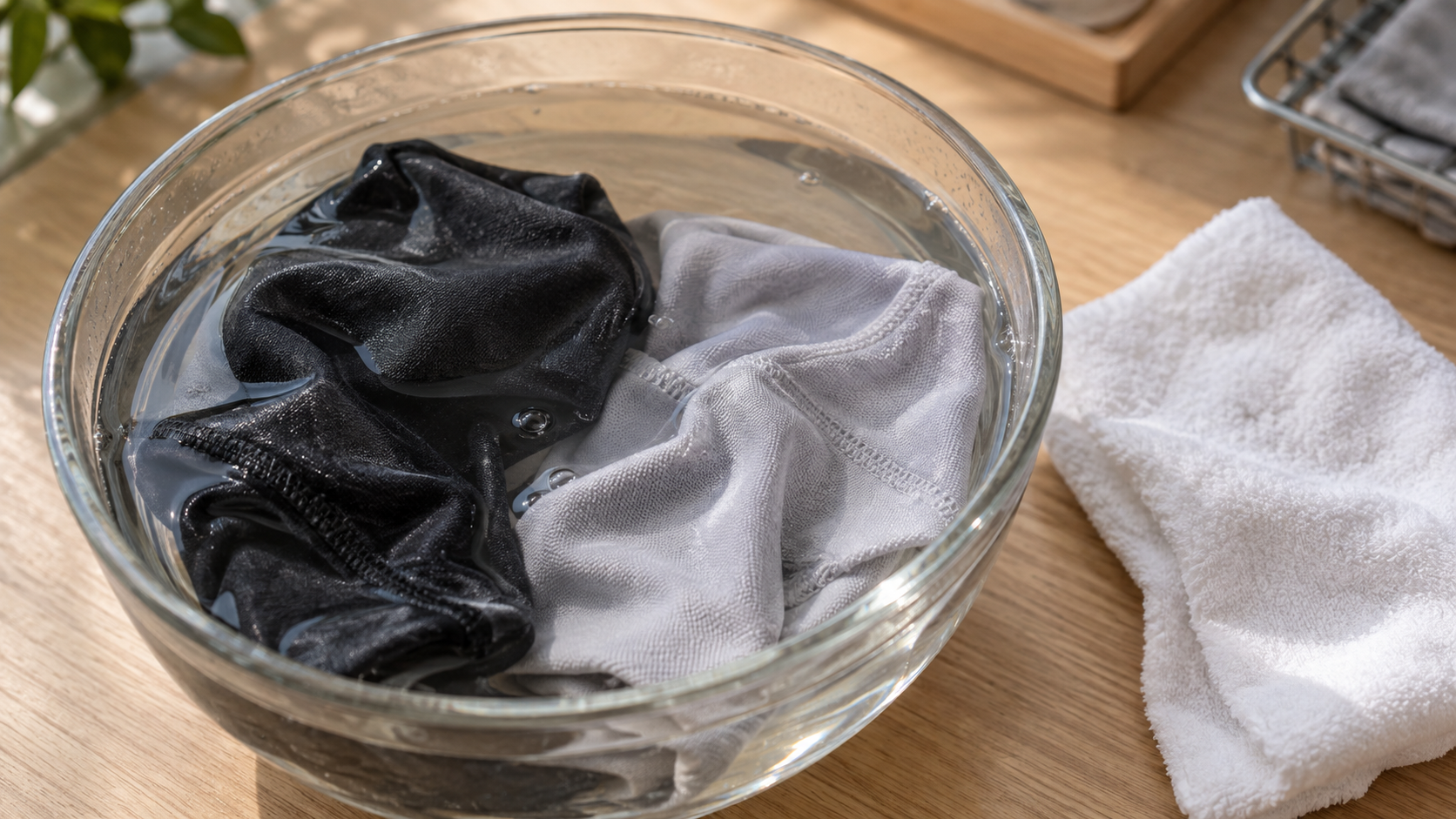
This scope check is more useful than the sentence “the black fabric bleeds.” It tells you whether the risk is isolated, structural, or tied to the way the product is sold.
The smallest practical screen
If you can do only one thing today, compare one affected garment with the approved reference in the same warm-water condition and use a white cloth to make transfer visible.
Use an affected garment if available, an approved sample, a white cloth, and water at approximately 50°C. Keep the comparison consistent: same garment area, same water condition, same approximate soak time, and the same observation point. Record the visible result rather than assigning a laboratory grade.
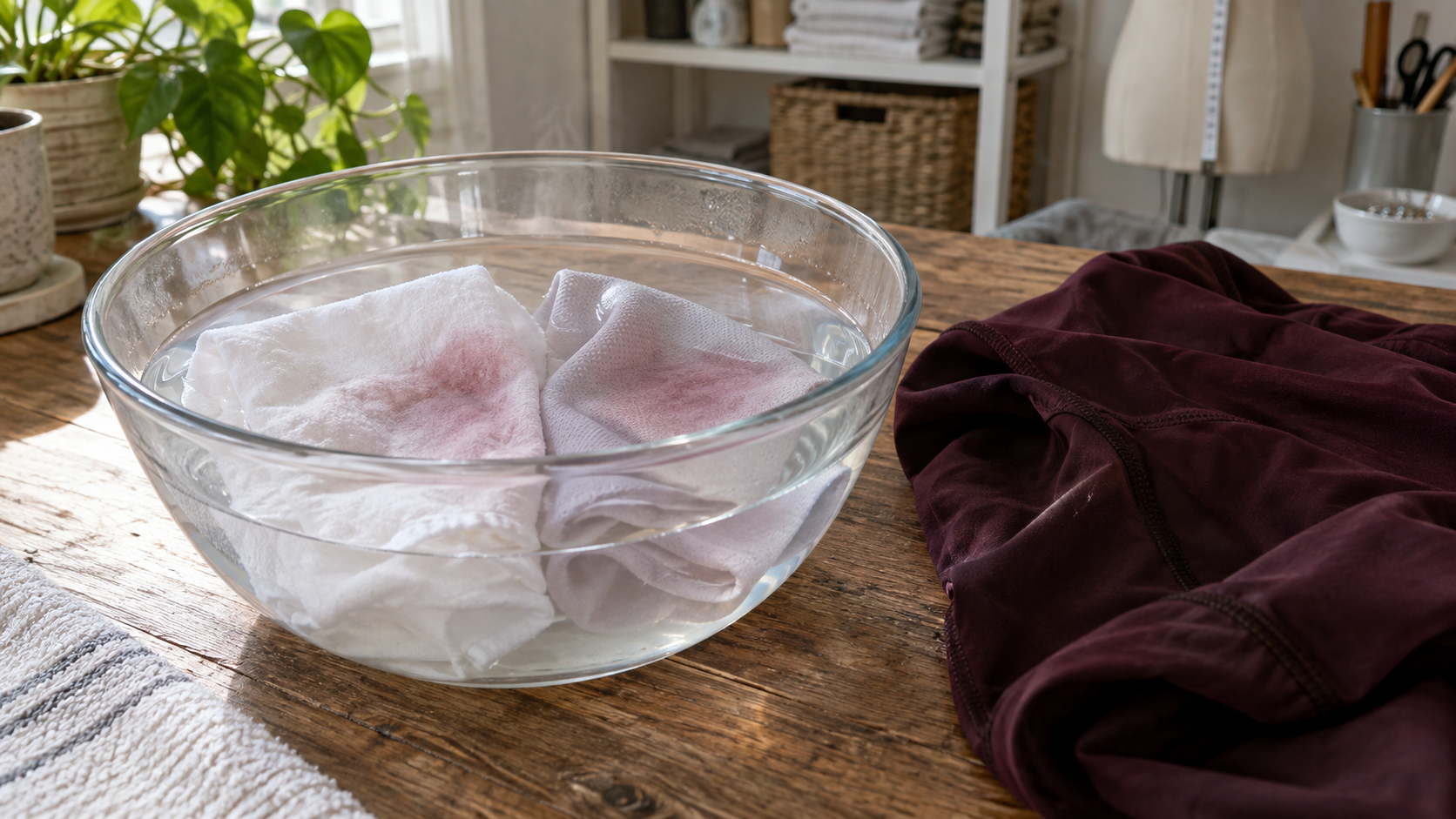
- Place the same color or contrast area in the warm water.
- Observe the water and the white cloth for visible color release.
- Compare the affected piece with the approved reference after drying.
- Repeat the comparison on a second unit if the first result is unclear.
This is a practical factory screening check, not a standardized washing, rubbing, perspiration, or lightfastness test. If a retailer, regulation, or performance claim requires formal evidence, the test condition must be agreed separately.
How to read the result
Only the water changes slightly
A slight visible release with no staining may still matter for a pale contrast garment, but it is a different decision from obvious transfer. Compare with the approved sample and the care instructions. Do not make a broad claim from one cup of water.
The white cloth or light panel is visibly stained
Hold the affected color or combination while you compare several units. If the same pattern repeats, changing the care label alone is unlikely to solve the product problem. The material or finishing route needs review.
Only one unit or lot is affected
Separate the group by color, lot, and production date. An isolated unit may need sorting; a repeating result points to a wider production decision.
The issue appears only under a customer’s exact wash condition
That condition is still relevant if customers can reasonably reproduce it. The correct response is to define the intended care boundary honestly, then decide whether the product can meet it.
What to do with goods already made
Contain first: stop packing the affected color with light garments and stop approving new units from the same group until the comparison is clear.
- Release: the result matches the approved reference and the intended care condition.
- Separate or sort: the problem is limited to a color, lot, panel, or small group.
- Change the product instruction: only when the product remains suitable under a clear and realistic care boundary.
- Hold or revise: the color transfer affects the intended product combination or cannot be controlled consistently.
Do not repeatedly wash the same inventory hoping the color will “settle” unless that process has been trialed and shown to preserve the approved appearance. More washing can change the garment without making the result predictable.
Prevent the next color dispute
Keep one approved garment and a fabric cutting for each high-risk color or contrast combination. Add the practical soak screen to sample approval when the style uses dark colors beside pale lining, mesh, binding, or logo areas.
QIMA’s apparel inspection guidance emphasizes a defined reference and product requirements. The useful lesson for a small brand is not to copy a large inspection program. It is to write down which color combinations must be compared before bulk and what visible result stops release.
Where Battlerobe becomes useful
If the problem appears before bulk, Battlerobe can help compare the approved reference, the actual fabric, and the color combination through a practical sample and production check. If the product is already stable and the issue is limited to repeat production, bulk custom production planning is the more relevant route than starting a completely new design.
Send the affected garment, approved reference, color and lot information, the wash condition, and a photo of the transfer. Battlerobe can help organize that comparison for a future sample or production route, but it cannot certify a finished order from a photograph or replace formal testing when a claim requires it.
Final decision
Color bleeding in activewear after washing is not settled by the color of the water alone. Compare the garment, the surfaces that touch it, the approved reference, and the wash condition. Then decide whether to release, separate, revise, or escalate.