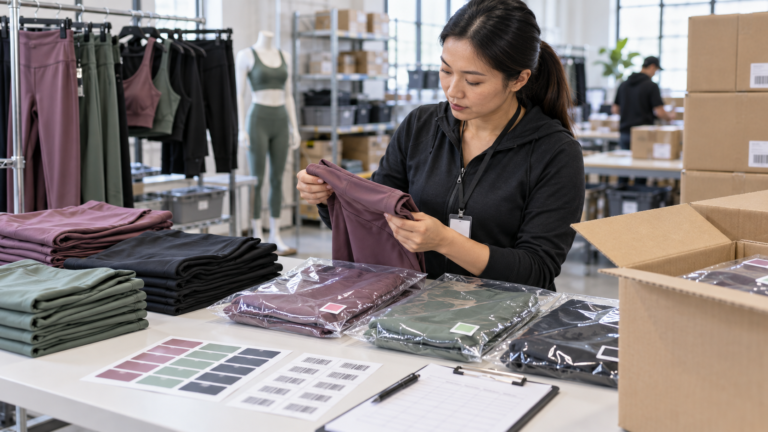


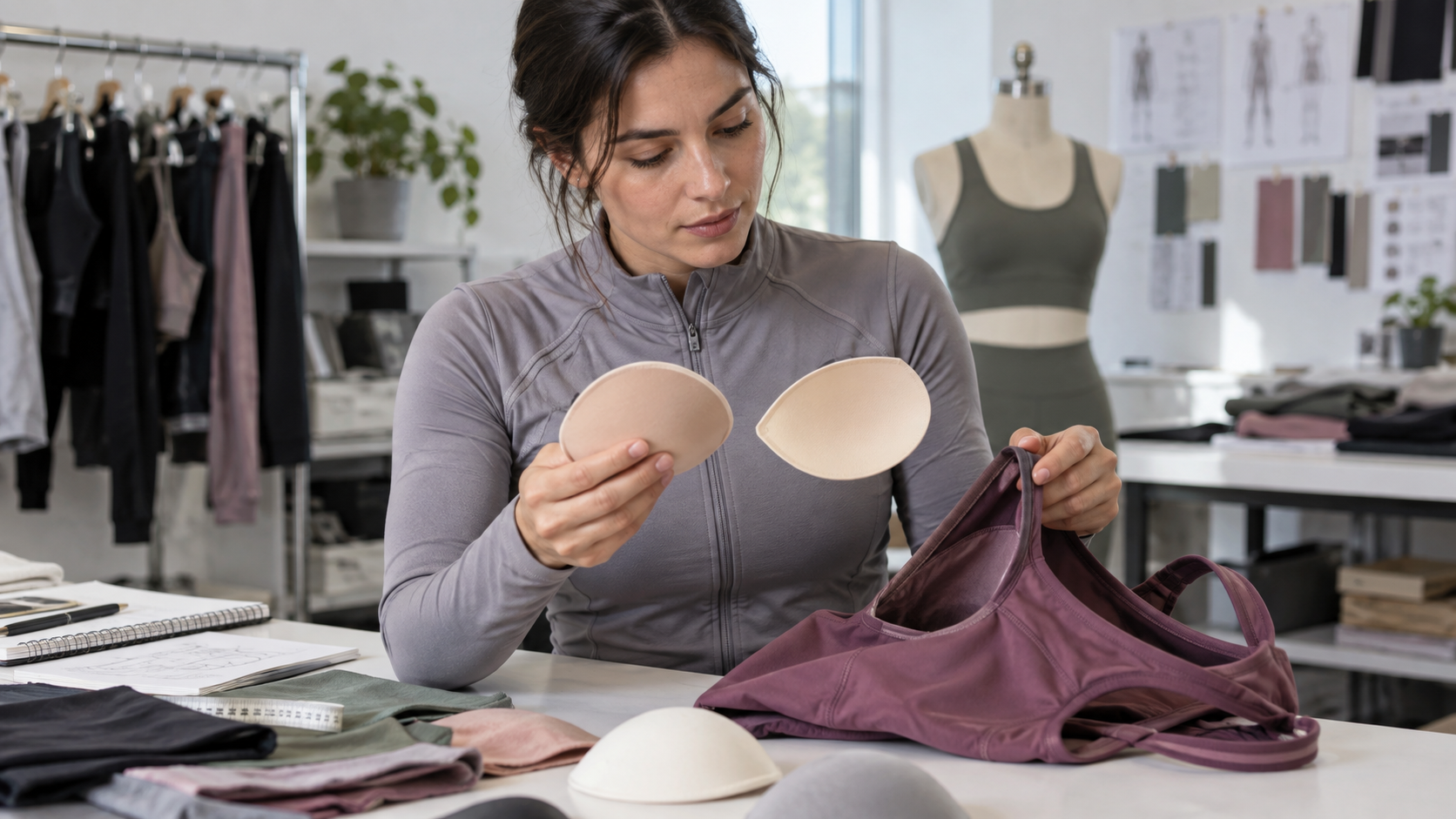
“The bra still looks fine on the hanger, but the pads turn sideways after washing.”
Removable sports bra pads shifting is not just a small comfort complaint. The pad can crease, rotate, come out through the pocket, create uneven coverage, or make the left and right sides look different. The visible symptom may belong to the pad, the pocket, the lining, the size grading, or the way the garment is handled.
Before switching immediately to sewn-in cups, find out whether the removable system is failing because the pocket is unstable or because the product should never have used a removable system for its intended customer and activity.
Start with what moves
Take out both pads and compare their shape, thickness, and left-right match. Then insert them into the garment and look at the pocket opening, the seam around the pocket, and the amount of free space around the pad.
- Does the pad rotate because the pocket is too large?
- Does it fold because the opening is too small or the pocket is too tight?
- Can the pad escape during normal insertion?
- Does the lining pull the pad toward one side?
- Does the problem appear only in one size or after washing?
Sports-bra construction guidance consistently treats the pad pocket, opening, lining, cup shape, underband, and grading as connected decisions. A pad is not a loose accessory that can be added after the garment is already approved.
Make the pocket visible before judging the pad
The quickest separator is a swap: put the affected pad in the approved garment and the approved pad in the affected garment before changing any pattern piece.
Turn the garment inside out and photograph both sides. Compare the pocket length, opening position, seam allowance, and lining tension. A pocket that looks symmetrical from the outside may have a different internal opening on the left and right.
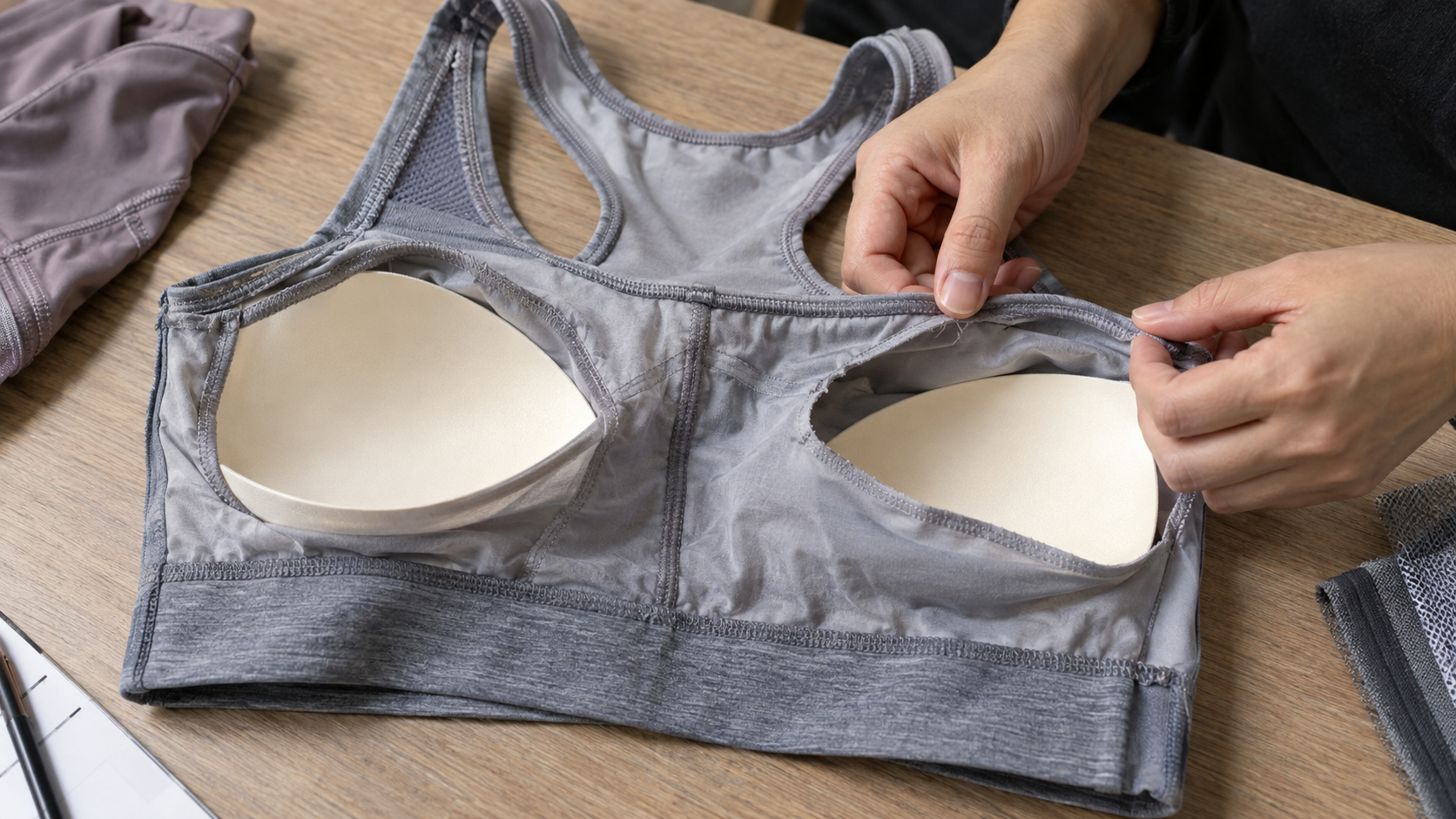
Next, insert the approved pad into the affected garment and the affected pad into the approved garment if both are available. This simple swap separates a pad problem from a garment problem.
- If the same pad shifts in both garments, inspect pad shape or stiffness.
- If every pad shifts in one garment, inspect pocket size, opening, and lining tension.
- If the issue appears only in one size, inspect grading and the relationship between pad and pocket.
Use movement and washing together
A pad can look stable while the garment is flat and still move during bending, stretching, or dressing. Have the wearer perform the intended low- or medium-intensity movement, then check whether the pad remains centered and smooth. The activity matters: a studio top and a running top do not ask the same thing from a removable insert.
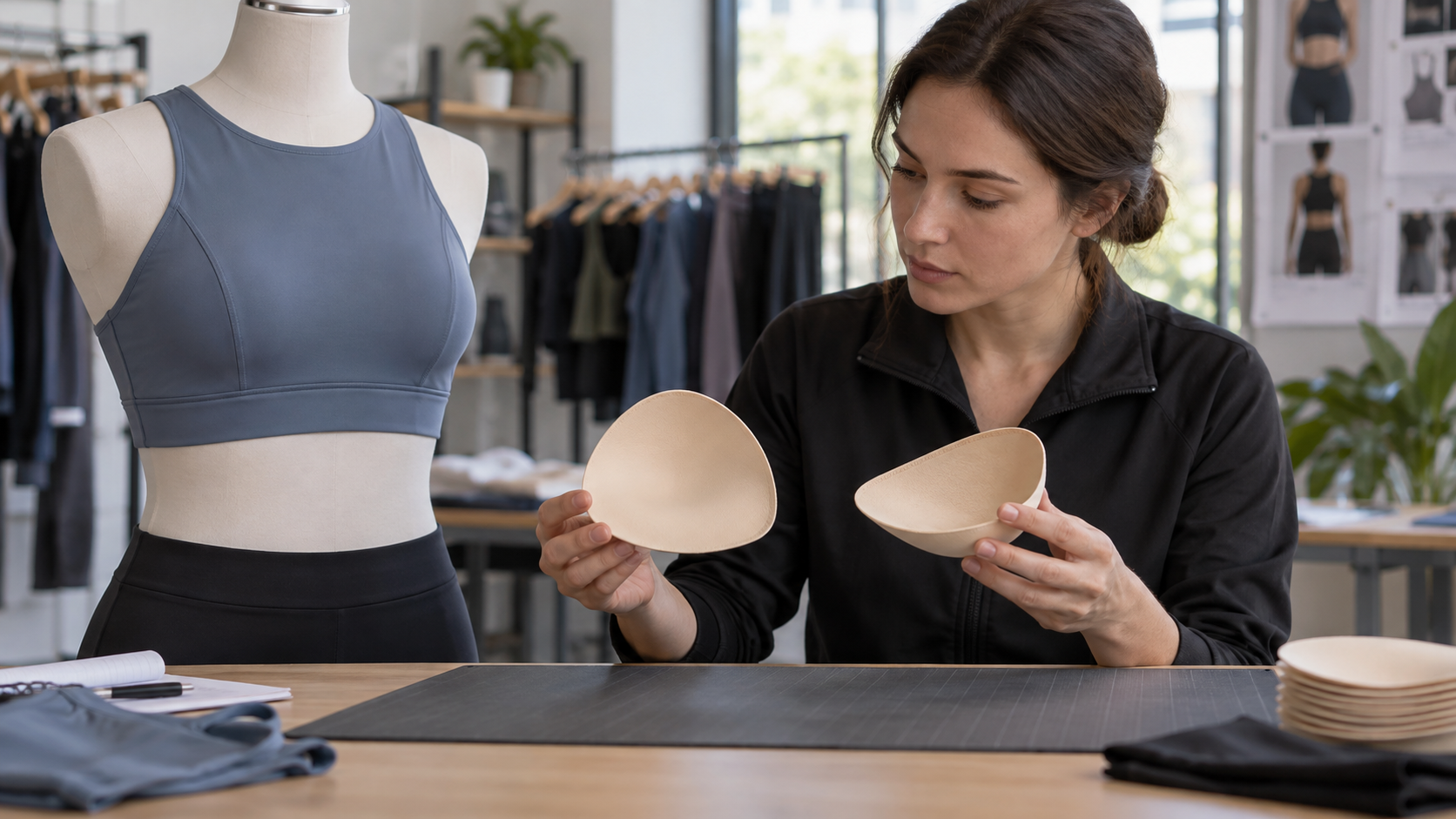
Then use the care condition the customer will reasonably follow. Wash and dry the garment and pads according to the intended care instruction, reinsert them, and compare the position. This is a practical product check, not a universal wash-durability certification.
Do not judge only whether the pad comes out clean. Check whether it twists, creases, changes left-right shape, or becomes difficult to insert. Those are the complaints the customer will experience.
When the removable system is the wrong system
Removable pads make sense when customers value adjustable coverage, easy replacement, or a softer unstructured feel. They are less attractive when the product promise depends on fixed symmetry, high movement stability, or a perfectly smooth front.
A sewn-in pad may reduce movement, but it introduces its own decisions: cup shape, stitching, edge bulk, drying behavior, and whether the fit can still be adjusted. A double-layer unpadded front may be more honest for a low-support yoga product than a poorly controlled removable cup.
The right decision is not “fixed is premium” or “removable is cheap.” It is whether the cup system stays aligned under the customer’s actual use.
What to do with current goods
Sort by size, pad type, and pocket construction. If the pad is correct but the opening is loose, a controlled rework may be possible on a limited group. If the pocket is too small, repeated handling may damage the lining and still leave the customer with a difficult product.
- Release: pads remain aligned after insertion, movement, and the intended care check.
- Rework: pocket or opening correction is repeatable and does not change the outside appearance.
- Change method: the next sample needs a fixed pad, altered pocket, different insert, or revised lining.
- Hold: the product cannot keep the promised coverage or symmetry.
Prevent a pad complaint before bulk
Approve the full system, not only the outside photograph. Keep a reference showing the pad shape, pocket opening, left-right position, and how the inside looks after insertion.
Check at least one representative size and the size most likely to expose grading problems. Ask for a movement check and a simple care check before bulk. If the brand sells several cup shapes or pad sizes, keep those variants clearly identified; mixing similar-looking inserts creates a quality problem that sewing cannot solve.
When Battlerobe can help
If the complaint reveals that the inner construction needs to change, Battlerobe may help revise the sample through small-batch custom development. The useful input is not a general request for a “better bra.” Send the garment, both pad types if available, a photo of the inside pocket, the affected size, and a short movement or care comparison.
That evidence helps decide whether to adjust the pocket, change the insert, revise the lining, alter grading, or abandon removable pads for this style. Battlerobe can organize that decision through a sample revision, but feasibility still belongs to the sample review; no remote photograph can guarantee the final fit.
Final decision
Removable sports bra pads shifting is a construction and use problem, not just an accessory problem. Swap the pad, inspect the pocket, move in the garment, and repeat the relevant care condition. Then keep, rework, redesign, or change the cup system based on what actually moves.