

Nimble Activewear’s most important asset may not be a recycled bottle story.
It may be the habit of turning customer problems into product and operating decisions: a bra needs to support a different body and activity than a soft studio top; a run short needs storage and anti-ride-up behaviour; a fabric that looks sustainable is not useful if it fails the quality standard; excess stock needs a responsible destination when demand is misread.
That is the useful way to study the Nimble Activewear brand strategy. The brand began with two friends identifying a gap between functional and fashionable activewear. Over time, the public record shows a more durable system: activity-specific product families, physical retail and wholesale, a digital pivot under pressure, customer-care investment, wear testing, and a sustainability roadmap that openly names unfinished work.
Nimble is not the newest label in the market—it launched in 2014—but it is relevant to the new-brand founder because its growth story includes the parts that polished case studies usually omit: inventory pressure, cancelled wholesale orders, operational growing pains, material choices rejected for quality or ethical reasons, and the need to decide what to do with unsold stock.
The core lesson is: make performance specificity an operating system, not just a product description.
The founding insight was a use problem, not a demographic
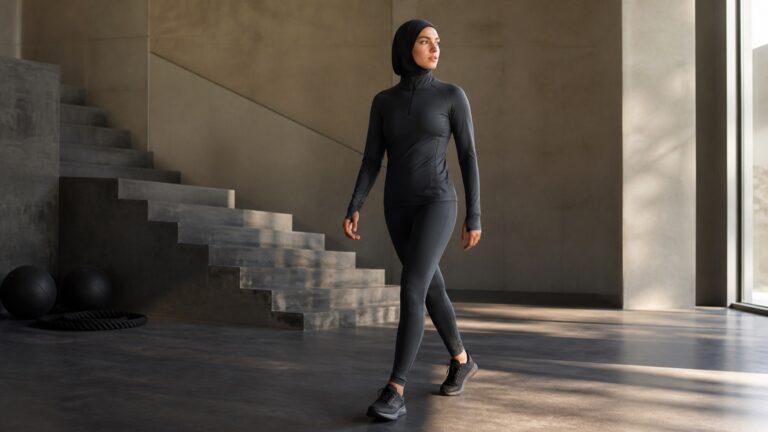
Nimble’s current About page says Vera Yan and Katia Santilli launched the brand in 2014 after feeling that activewear was either functional or fashionable, never both. It describes products designed for “all settings,” from running and running errands to simply running late.
SmartCompany’s 2017 profile gives a more detailed origin. The co-founders had known each other since school, built their website, sourced fabrics and arranged manufacturing over six months, and started the business alongside other work. The founders told the publication that they saw a gap for beautiful but functional activewear at a time when the market felt dominated by similar block-colour offerings. They opened their first Bondi Beach store in February 2016 so customers could touch and feel the product.
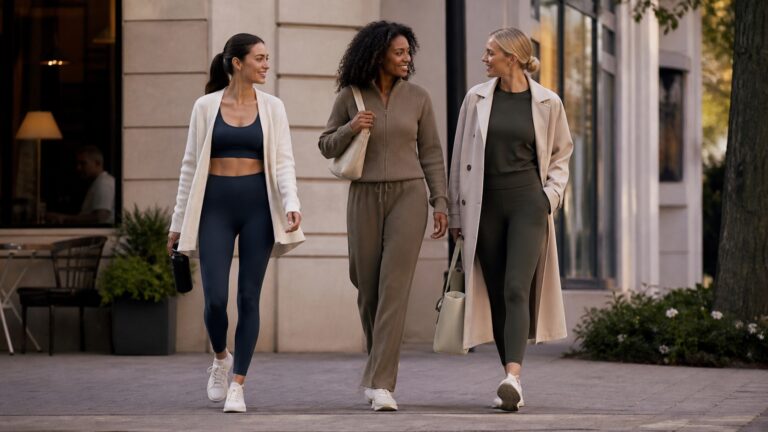
The difference between the two descriptions is instructive. “For women” is an audience. “Beautiful but functional clothing that can move beyond exercise” is a use problem. The latter tells the team what to test: fit, feel, movement, styling, retail experience and transition from gym to daily life.
There are competing explanations for Nimble’s early growth:
- The athleisure category was expanding rapidly, creating favourable timing.
- Bondi and Melbourne physical retail gave the brand a high-fit, high-touch environment.
- Recycled-material storytelling created an identity beyond style.
- Product quality, customer care and activity specificity created the repeatable reason to return.
Public evidence cannot assign percentages to those causes. But it suggests a practical principle: when the founding problem is a contradiction, the product and channel must resolve the contradiction together. A beautiful bra that cannot support the intended activity is not a solution. A technical legging that a customer refuses to wear outside the gym is only half the solution.
Reader action: write the sentence “This product replaces ___ when the customer is trying to ___.” If the blank is only “other activewear,” the opportunity is still vague. If it becomes “a changing-room decision between running, commuting and a coffee stop,” you have a product and content direction.
Nimble Activewear brand strategy: activity families reduce the cost of being specific
Nimble’s current best-seller and women’s activewear pages organise products around intensity, activity, fit, length, cup size, pockets and support. The best-seller page shows examples such as In Tempo run shorts, a no-bounce C–D bra, a run ankle legging and storage bras, with prices including A$89 for a 14 cm run short, A$109 for a C–D no-bounce bra, A$129 for an ankle legging and A$99 for an A–C strappy bra.
Those product and price details are a current snapshot, not proof that every item is a bestseller in the statistical sense. Their strategic importance is that the customer can shop by a problem rather than by a vague aesthetic. A runner can look for run, storage, no-bounce or ankle-length. A Pilates customer can look for softness and all-day comfort. A customer with a fuller bust can see a cup-range cue instead of guessing from a model image.
This is a powerful alternative to the “one legging for everyone” model. It does not require the brand to serve every customer with one perfect product. It requires the brand to be honest about differences.
It also creates a development advantage. A team can ask which failure it is solving:
- ride-up during running;
- insufficient bust support;
- no place for a phone;
- fabric too warm for a studio;
- waistband discomfort across a long day;
- length mismatch for a particular height;
- insufficient recovery after washing.
Make a failure-first brief: name the activity, the body context and the failure the product must prevent. Do not start with “a flattering legging.” Start with “a 7/8 legging that stays put during tempo running for customers who need a phone pocket and medium-to-high support.” The aesthetic can follow; the test is now observable.
The pandemic exposed whether the channel system could learn
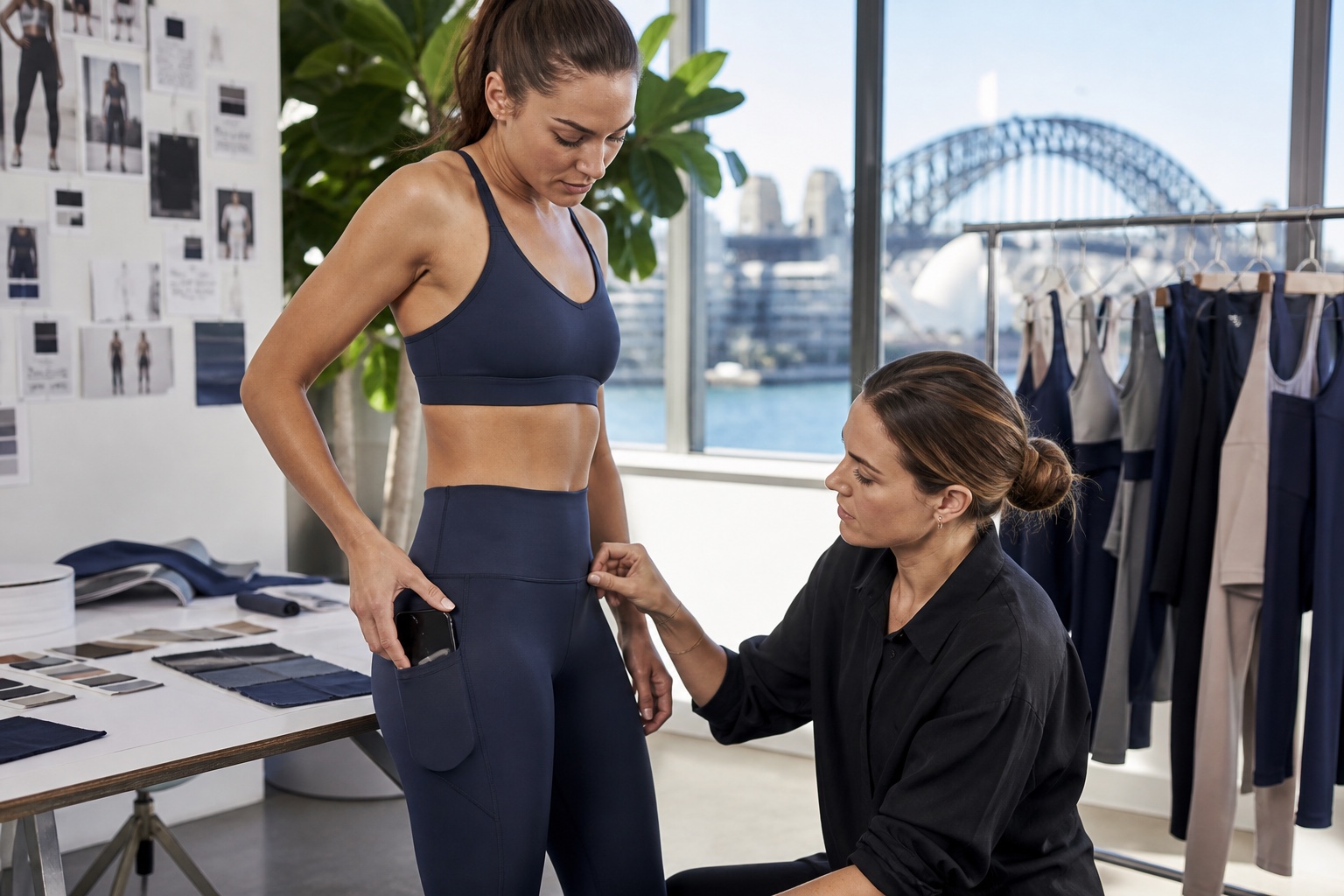
Qantas Business Rewards’ account of Nimble’s pandemic period says wholesalers cancelled orders and stores temporarily closed. The founders shifted people and resources toward online retail, increased customer-care capacity, and tracked digital media spend more closely. One founder described the business as having a “bellyful of inventory,” which turned a threat into an opportunity to learn what online demand could do.
This is more than a resilience anecdote. Inventory pressure changes the quality of decision-making. When a brand owns stock, it needs to know which products customers understand, which sizes and colours move, which questions block conversion, and which returns reveal a product problem. A digital channel can expose those signals quickly, but only if the team is willing to move resources toward customer care, merchandising and measurement.
Nimble’s earlier retail decision had been about touch and feel. Its pandemic pivot made online product explanation and service more important. The brand did not have to choose between physical and digital in theory; it had to decide which capability would solve the immediate bottleneck.
Use a channel-to-problem map:
| Channel | Problem it can solve | Signal to collect | Failure mode |
|---|---|---|---|
| Own site | Explain technical differences and capture demand | Search terms, fit questions, conversion, returns | Too much copy without clear choice guidance |
| Physical store | Let customers feel fabric and test fit | Try-on objections, size swaps, staff questions | Rent and staff cost without learning capture |
| Wholesale | Extend access and borrow retailer trust | Reorder, sell-through, customer requests | Less control over presentation and markdowns |
| Community event | Show product in movement and build belonging | Attendance, trial, referrals, post-event purchase | Good atmosphere with no product insight |
The reward is a sharper decision: choose a channel because it solves a known customer or operating problem, not because every growing brand is expected to be omnichannel.
Sustainability became more credible when Nimble admitted “not yet”
Nimble’s sustainability page is notable for the specificity of its unfinished work. It prioritises four of the UN Sustainable Development Goals and sets future targets around ethical Tier 1 suppliers, Tier 2 visibility, packaging and end-of-life solutions. It says that phase one—keeping excess stock out of landfill—and phase two—keeping samples out of landfill—are complete, while customer end-of-life solutions remain in progress.
The page gives disclosed examples. After a 2023 warehouse sale, Nimble says 450 units went to the Sports Bra Project, 1,656 to Dress for Success and 1,260 to Vinnies, with stated retail values. Those figures demonstrate a route for unsold stock; they do not prove that the company never overproduces or that donation is equivalent to circularity.
More importantly, Nimble says it has not accepted some recycled nylon options because the quality did not meet its current standard, and that some bio-based nylon options raised ethical sourcing concerns. This is a commercially uncomfortable statement, but it is strategically useful. It shows that “more recycled” can conflict with quality, price, supply location and customer experience.
The sustainability promise therefore becomes a prioritisation system:
- Do not make a material claim without chain-of-custody evidence.
- Do not switch materials if the product fails the performance or durability standard.
- Do not call future targets completed outcomes.
- Do not treat donated excess as proof that the original forecast was correct.
- Keep searching for better materials while explaining why a current compromise exists.
Build a decision log: for every material option, record performance, price, ethical sourcing, environmental evidence, supply reliability and customer implication. “Rejected” is not wasted work; it is knowledge that prevents the team from repeating an expensive experiment.
Testing is the bridge between values and a product people keep
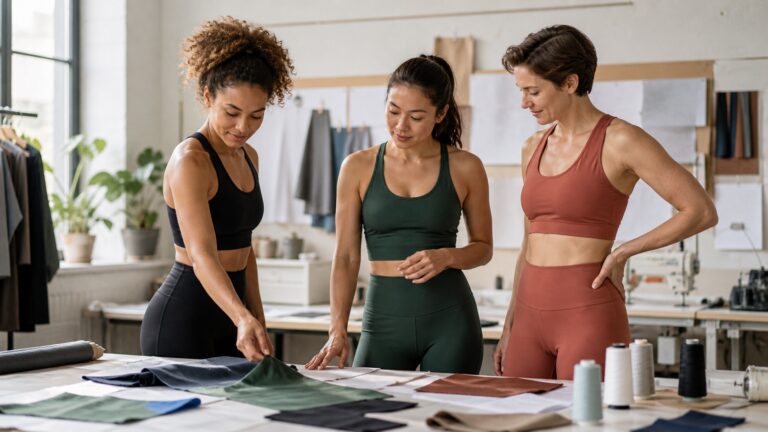
Nimble says it uses fit ambassadors and exercise experts for wear testing when developing new fabrics and fits. It also says all fabrics and products are lab, wash and wear tested for colourfastness, snagging, pilling and retention.
These are official process claims, not independent verification. But they reveal what a mature product promise has to contain. Sustainability is partly about using a garment longer; longevity cannot be communicated responsibly without testing the garment’s behaviour after use.
Customer signals add texture. ProductReview.com.au shows 4.7/5 from six reviews, including positive comments about fabric, fit and customer service, while one review mentions a fabric defect that was replaced. Trustpilot shows 4.2/5 from 208 reviews and notes that review populations may not be representative. These platforms are not market surveys. They are clues about what customers notice: fit, quality, stock questions, response speed and whether a problem is resolved.
The operating loop is straightforward:
customer complaint → classify the failure → sample or test the cause → update product or guidance → measure whether the same complaint falls
A complaint about a stiff fabric may lead to a material change, a product-page expectation reset, or a decision to reserve that fabric for a different activity. A request for a restock may reveal demand, but it may also reveal that the brand lacks a clear substitute. A positive review is more valuable when it identifies the behaviour worth preserving.
Run a monthly signal review: group returns, customer-service tickets, reviews, store notes and social comments into product failures, expectation failures, availability failures and service failures. Do not let “customer feedback” remain a mood board. Give it an owner and a next test.
Community works best when it produces product knowledge
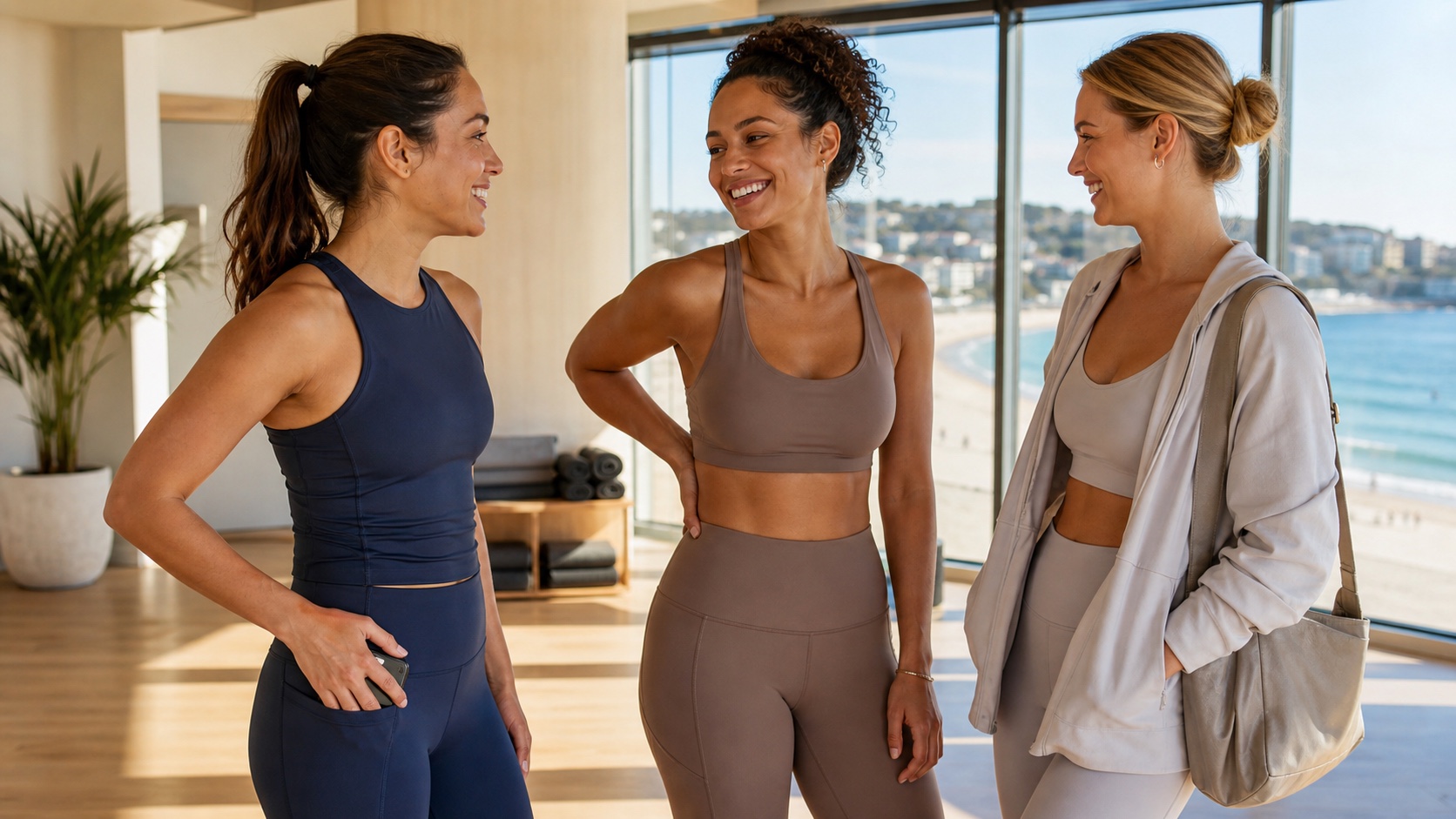
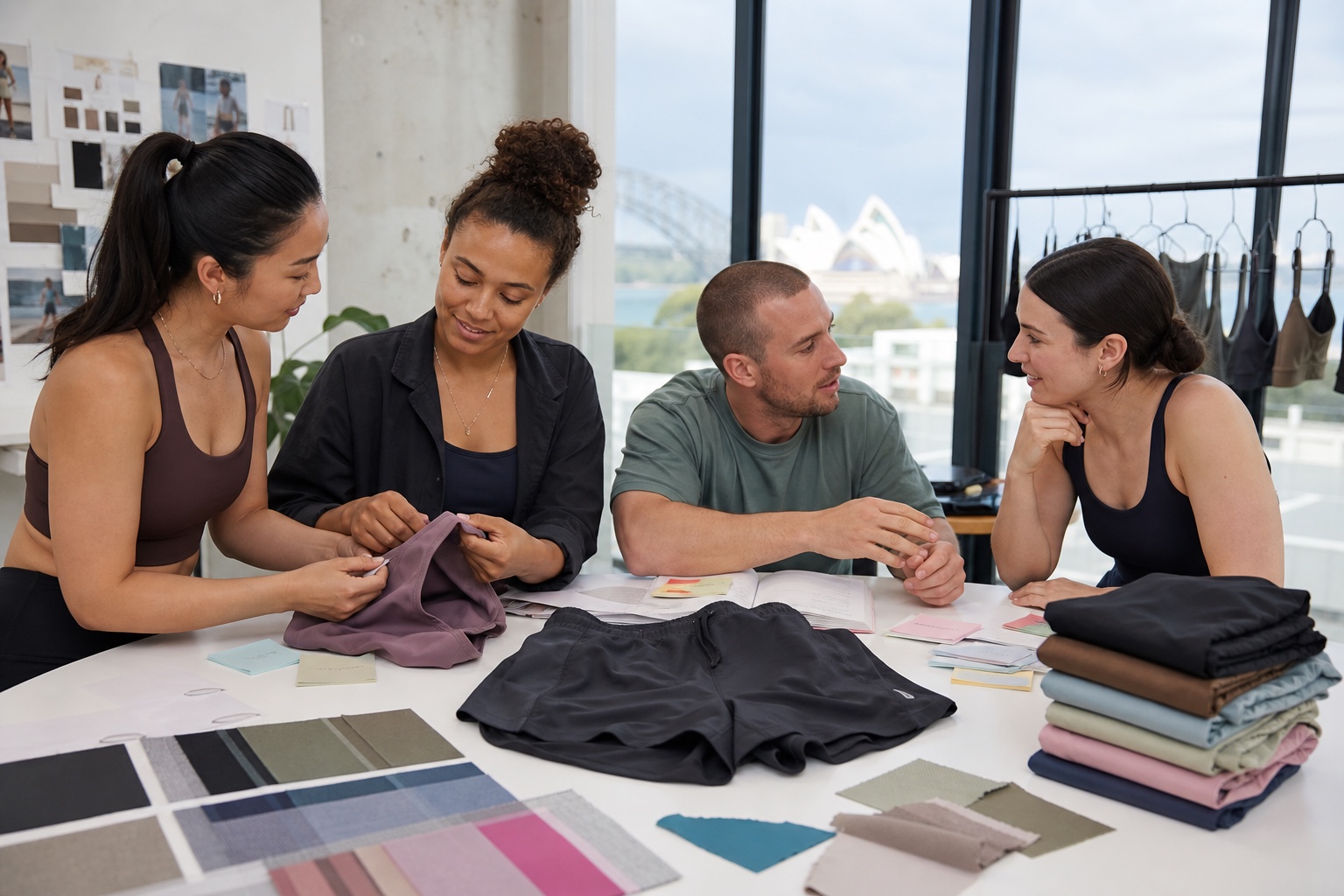
Nimble has used run clubs, Pilates collaborations and charity partnerships to connect movement with community. The sustainability page mentions a partnership with The Confident Girls Foundation, donations linked to International Women’s Day, and community event ticket proceeds connected to charity. Local reporting also describes coastal runs and Sunday Pilates sessions.
These activities can build emotional trust, but a community event is not automatically a growth engine. It becomes strategically valuable when it does at least one of four things: creates trial, reveals a use problem, generates repeat behaviour, or makes the brand useful in a customer’s real routine.
A run club can reveal whether a short rides up after ten kilometres. A Pilates class can expose whether a bra is comfortable in prolonged floor work. A store event can reveal which colour and fit combinations customers reach for. A charity partnership can reinforce purpose, but it should not be used to distract from the product’s actual environmental or labour footprint.
Give every event a learning question: “Which support level do runners ask for?”, “Where does the waistband move?”, “Which customers need a shorter length?”, or “What makes a first-time visitor return?” The emotional outcome matters, but the learning outcome keeps the community connected to the product.
What an emerging brand should copy—and what it should not
Test now
- Choose one activity, body context and failure to solve.
- Build one hero product with one clear support/intensity promise.
- Test fit, wash, pilling, colour, retention and the exact movement the product claims to serve.
- Organise customer feedback into product, expectation, availability and service failures.
- Use one small community or retail test to produce a specific learning question.
Build after proof
- Add a matching product only when it shares a real customer occasion and fit logic.
- Add a second intensity family when the first family has a clear boundary rather than a vague “versatile” claim.
- Use wholesale or stores when touch, fit, access or local trust is the bottleneck.
- Create an excess-stock and sampling plan before the first large production run.
- Publish a dated sustainability roadmap with completed, in-progress and future sections.
Do not copy directly
- Do not copy a recycled-bottle number without chain-of-custody and product context.
- Do not treat positive reviews as representative market research.
- Do not open stores because the brand story looks better in a physical space.
- Do not accept a “sustainable” material that fails the customer promise simply to improve a headline.
- Do not call charity redistribution a complete circular system.
Where Battlerobe becomes relevant
Nimble’s lesson creates a concrete production requirement: a product brief must preserve the performance failure it was designed to solve. “Make a recycled legging” is incomplete. “Make a 7/8 running legging with a secure waistband, phone pocket, squat-proof opacity and tested shape retention after washing” is a development brief.
Once an emerging brand has identified the customer, activity, fit direction and pass/fail tests, Battlerobe’s bulk custom production service can support fabric and colour coordination, sampling, branding, bulk production, quality control and repeat orders for approved activewear products.
The value is not that a factory can solve an unknown market problem. The value is that a clear operating specification can be sampled, corrected, approved and reproduced. Battlerobe also cannot certify an environmental claim or replace lab, wash, wear and customer testing. Those evidence responsibilities belong to the brand.
Prepare before sampling: activity and intensity, target body context, failure to prevent, fabric composition, hand feel, support, length, pocket or closure details, size range, branding, quality tests, acceptable tolerances and the quantity that matches the evidence you actually have.
The decision: let feedback change the product, not just the caption
Nimble is valuable because its public record shows a brand learning under pressure. It started with a clear contradiction, built physical touchpoints, faced cancelled orders and closed stores, moved attention online, invested in customer care, kept a performance-testing process, and built a sustainability roadmap that includes both progress and unresolved problems.
The strongest transferable mechanism is feedback-to-specificity: the closer the brand gets to a real activity, body context and failure, the more useful its product, content, channel and manufacturing decisions become.
The first test is one product designed around one failure, measured across movement, wash and customer response. Scale after the product passes its tests, the right customers understand its use, returns reveal manageable friction, and the production route can reproduce it. Stop if the brand is collecting feedback without changing anything, if “sustainable” is doing more work than the garment, or if new categories are being added faster than the team can learn from the last one.
A strong activewear brand does not need to claim that every product is perfect. It needs to show that each decision is getting more specific, more honest and more useful to the woman who will actually wear it.
Sources and further reading
This case study separates current official product and sustainability pages from historical founder reporting, business case material and customer-review platforms. Historical revenue figures are not treated as current financial performance, and review ratings are used as directional friction signals rather than representative market statistics.
- Nimble Activewear: About and founding proposition
- SmartCompany: founders, early revenue and Bondi store history
- Qantas Business Rewards: pandemic pivot and online operations
- Nimble: current best sellers, prices and product filters
- Nimble: current activity and intensity merchandising
- Nimble: sustainability roadmap, testing and excess-stock examples
- Nimble: curated wholesale stockists
- Nimble: current stores
- ProductReview.com.au: customer signal snapshot
- Trustpilot: customer-service and representativeness context
- Beautyheaven: historical product review