

DFYNE did not become a serious activewear challenger because leggings were a new invention. They were not.
The more useful question is why one relatively young gymwear brand made its product promise easy to see, easy to discuss, and increasingly easy to extend across a collection.
Founded in Glasgow in 2021 by Oscar Ryndziewicz, DFYNE was reported by TheIndustry as the top company in The Sunday Times 100 in 2025, with £66.8 million in sales and more than 517% three-year sales growth. The Independent reported the same ranking and sales figure.
Those numbers describe an exceptional outcome, not a formula. Public sources do not prove that one campaign, one seam, or one influencer caused the result. But DFYNE does offer a valuable operating case: how a new activewear brand can turn a specific fit identity into a product system, a content system, and a learning system.
This is the part worth studying if you are building an emerging brand today.
1. DFYNE made the product promise visible before it made the company famous
Much activewear positioning is difficult to see. “Technical,” “comfortable,” “premium,” and “made for movement” can describe hundreds of brands.
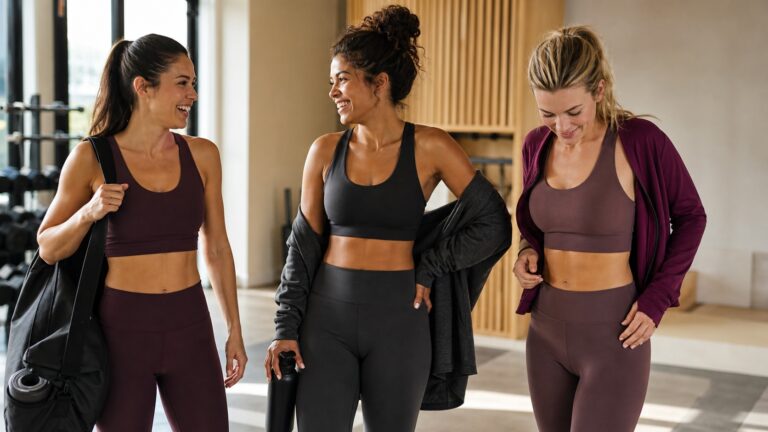
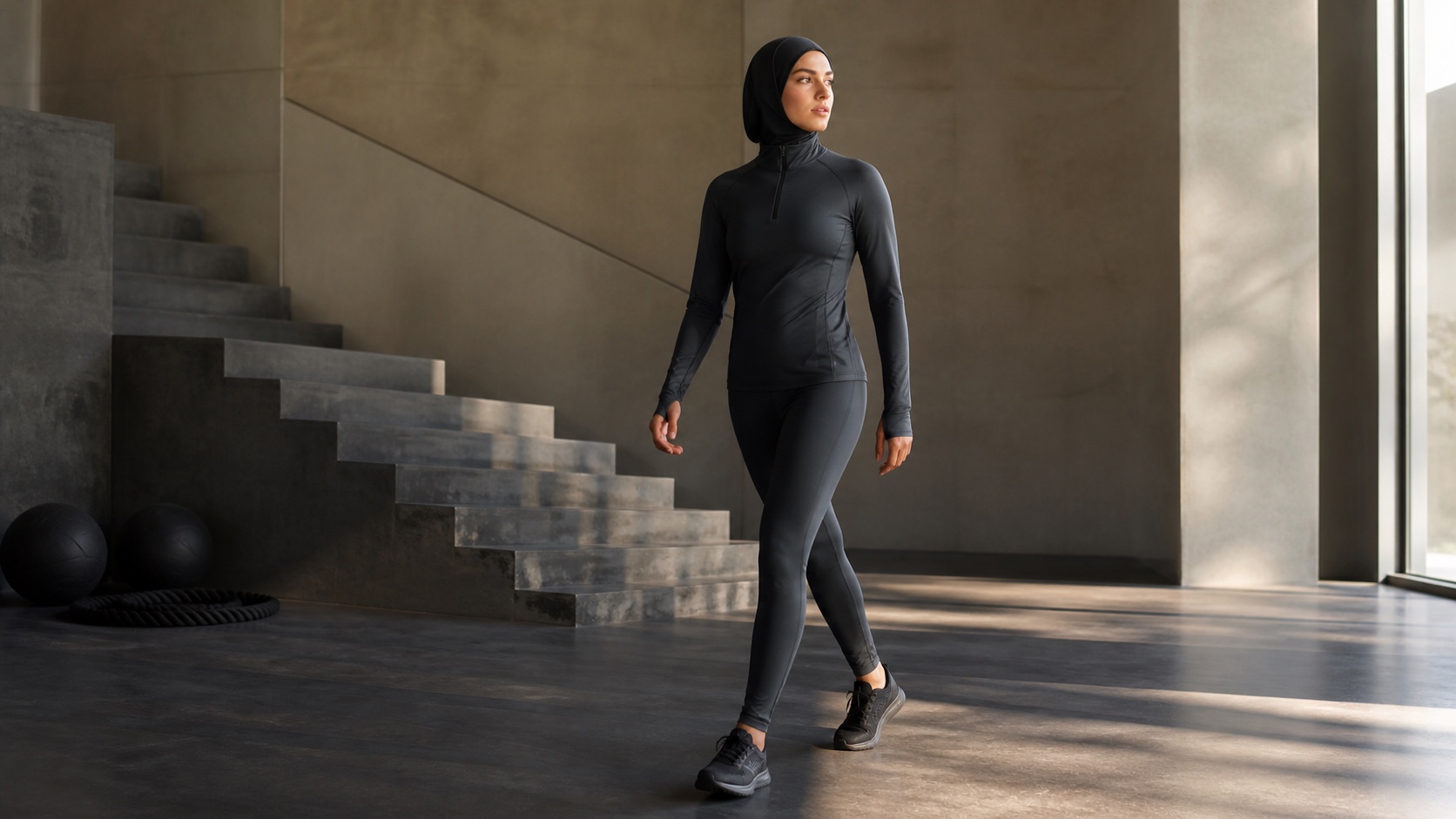
DFYNE’s core women’s collections are more legible. The official product language talks about compression, contouring, waistband height, stretch, and the way the garment frames the wearer’s shape. Its Impact leggings, for example, are described as combining firm sculpting fabric with a flexible scrunch, glute contouring, a mid-to-low ribbed waistband, and a 90% nylon / 10% elastane composition. Those are brand-stated specifications and claims, not independent performance tests, but they give the customer something concrete to inspect.
That distinction matters. A customer can disagree with whether a garment feels good, but she can understand what she is being invited to evaluate.
Reader payoff — a positioning diagnostic: write your product promise without using “comfortable,” “high quality,” or “flattering.” If a customer cannot point to a neckline, waistband, seam, fabric behavior, or wearing occasion that makes the promise visible, the promise is probably still advertising language.
2. The real brand code is not “scrunch”; it is a negotiated fit outcome
It would be easy to copy the most visible DFYNE detail: the scrunch or contour line. That would also be the shallowest lesson.
DFYNE’s own product and support pages reveal a more useful pattern. Dynamic is described as higher-waisted, more supportive, and more visibly contoured. Impact is positioned with a lower waistband, tighter fit, and a subtler contour effect. Origin shifts to a cut-and-sewn construction and a less restrictive feel. Revive is deliberately softer and non-compressive. These are not simply colour variations; they are different negotiations between body effect, support, comfort, and occasion.
In other words, DFYNE is not selling one universal fit. It is naming several answers to a recurring customer question:
How do I want this garment to make me feel and look while I train?
That is stronger than a single visual trick because it can support repeat purchase. A customer who likes the brand’s body-conscious point of view can move from a firm gym legging to a softer off-duty style without having to learn a completely new brand.
Use this product-architecture test: classify your first three products as (1) a visible acquisition product, (2) a dependable fit or performance anchor, and (3) an occasion-extending piece. If all three do the same job, you have a colour drop, not an architecture.

3. DFYNE’s social advantage was probably product legibility, not social media in isolation
Trade coverage of DFYNE’s earlier growth pointed to global influencers as one contributor to its success. The brand also operates a direct-to-consumer store with named collections, frequent colour options, visible reviews, size guidance, and a 60-day return policy in its current support materials.
It is tempting to reduce this to “send products to influencers.” But a creator can only demonstrate what the product makes visible. A contour zone, a waistband change, a movement test, a colour family, or a before-and-after styling moment gives content a subject.
This creates a useful causal distinction:
- Distribution puts the product in front of people.
- Product legibility gives people a reason to stop, compare, comment, and remember.
- Customer response tells the brand which promise deserves another product.
DFYNE may benefit from all three. Public evidence cannot tell us the precise contribution of each, so the responsible conclusion is narrower: a visible product code makes social distribution more productive than a generic garment with a larger media budget.
Run a content test before you approve a new sample: ask three people who do not know the design brief to describe the garment from a three-second front view, back view, turning shot, and close detail. If they all notice the same intended feature, you have a content-ready code. If they notice unrelated things, the design may be attractive but strategically unclear.
4. A named collection reduces choice friction—but increases operational responsibility
DFYNE’s current site does not ask the customer to navigate an undifferentiated wall of leggings. It organizes the range into families such as Defy, Vision, Impact, Dynamic, Signature, and Revive, with product categories and fit language around them.
Naming a family does two jobs. It gives the customer a shortcut—“I prefer the softer family” or “I want the more sculpting fit”—and it gives the brand a reusable container for new colours, tops, shorts, and layers.
But every collection family also multiplies the hidden operating matrix:
style × colour × size × fabric or construction × region × replenishment timing.
A large colour menu can look like abundance while quietly creating mismatched demand between tops and bottoms, uneven size availability, and too many versions of the same fit to quality-check. DFYNE’s public pages show strong commercial breadth, but they do not disclose sell-through, return rates, or colour-level inventory economics. That missing information is exactly why a smaller brand should not copy the visible breadth too early.
A safer opening collection: hold the silhouette and fabric constant while testing two core colours and one experimental colour. Track product conversion, set attachment, sell-through by size, return reasons, and requests for the next colour. Add breadth only when the data tells you which variable is creating demand.
5. Fit is a marketing promise that eventually becomes a production system
“Sculpting” is a compelling word, but it is also an operational liability. The customer experiences the promise through stretch recovery, opacity, waistband pressure, gusset comfort, seam placement, grading, and whether the garment behaves consistently across sizes.
DFYNE’s support guidance acknowledges that different collections require different fit decisions. Its current product pages also give size-specific model information and tell customers that Impact has a firm fit, with sizing guidance for those between sizes. That is good merchandising because it reduces uncertainty at the moment of purchase. It also reveals a challenge: the more deliberately different the collections feel, the more carefully the fit standards have to be documented.
Customer discussions provide a useful counter-signal. Some users praise the sculpting effect, while others discuss being between sizes or noticing differences between batches. These are anecdotal comments, not evidence of a widespread defect. They do show the kind of friction a body-conscious brand must actively monitor: a fit code creates stronger desire, but it also makes inconsistency more noticeable.
The practical rule: before expanding a “signature” fit into more colours, test it on the actual target size curve in motion. Record waistband comfort, stretch recovery, opacity under tension, seam stability, and return reasons. A signature fit that works only in the campaign sample is not a brand asset yet.
6. The founder story is useful—but it is not the growth mechanism by itself
A founder account published in the notes for The Bottleneck Podcast describes DFYNE as beginning from a £6,000 credit-card bet and later growing into one of the UK’s fastest-growing private companies. That is a compelling origin story, but it should be treated as a founder-reported narrative rather than audited proof.
The more transferable part is not the amount of starting capital. It is the implied discipline of making a small number of decisions legible: who the product is for, what the product is supposed to do visually and physically, which channel can reach that customer, and which operating metric tells the team whether to continue.
Small brands often misuse founder stories as permission to remain informal. DFYNE’s scale suggests the opposite lesson. Informality may help a company start; it does not replace controlled product information, consistent grading, clear approvals, or a repeatable replenishment process.
Do this now: make one source of truth for every approved style containing the measurement chart, fabric composition, colour standard, logo placement, sample version, fit comments, and QC requirements. You do not need enterprise software at the beginning. You do need version control before the next supplier or reorder exposes its absence.
7. What an emerging brand should test, build, and refuse to copy
DFYNE’s case becomes more useful when its lessons are sorted by stage.
Test now: a visible promise
Choose one customer identity, one primary activity, and one emotional result. Build a small product family around a feature the customer can see and feel. Use creator content to test whether people understand the feature without a long explanation.
Build later: proprietary fit and collection logic
When the same fit request appears repeatedly in comments, returns, DMs, and repeat orders, convert it into measurements, construction details, and a grading standard. Then extend the fit into an adjacent product only if the new product creates a new occasion or increases set attachment.
Do not copy yet: breadth, scarcity, or influencer volume
DFYNE’s current breadth and visibility are outputs of a much larger operating system. A new brand that copies the number of colours, the size of the catalogue, or the frequency of drops may simply turn uncertainty into dead stock. Likewise, sending more product to creators cannot repair an unclear fit promise.
Decision rule: if you cannot explain which customer signal would make you add, revise, or stop a product, you are not ready to scale the assortment.
8. The production decision should follow the evidence, not the ambition
This is where the DFYNE lesson becomes practical for a founder building a new activewear line. A visible fit code is not created by choosing a similar-looking reference garment. It is created through repeated decisions about pattern, fabric, grading, construction, branding, and quality control.
If the concept is still uncertain, reduce variables: one hero silhouette, a small number of colours, a clear target customer, and a defined use occasion. If the fit promise is becoming the reason customers choose the brand, invest in sample revisions that test the promise on the intended size range. If repeat demand is proven, production can shift toward consistency, replenishment, and unit economics.
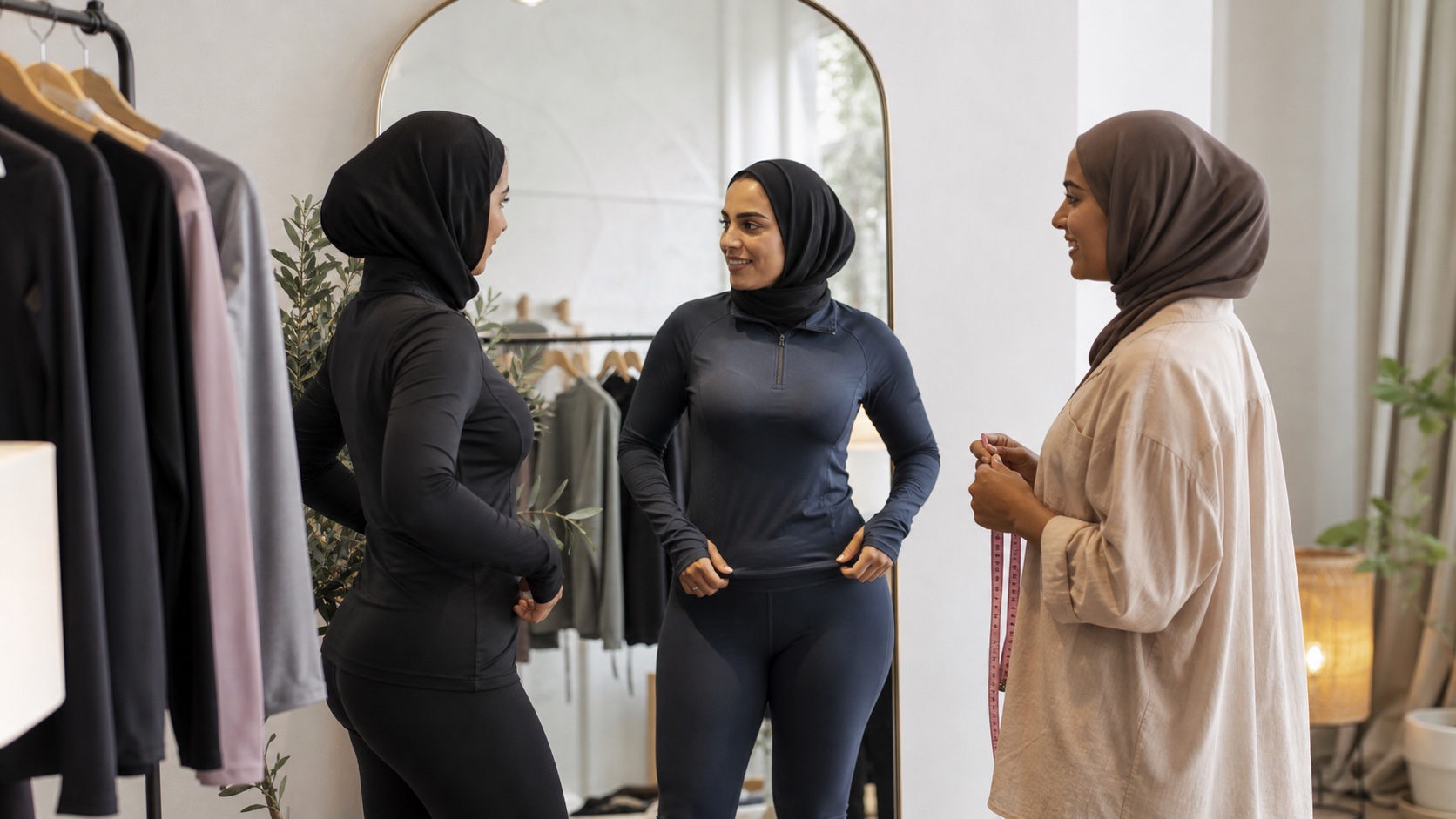
Battlerobe’s activewear product-development and bulk-production route is most relevant at the point where a brand has a confirmed design or needs help turning an approved reference into a controlled production specification. The current service page describes support for pattern and fit development, fabric and colour selection, branding, sampling, approval, bulk production, and quality inspection. That does not remove the need for the founder to define the customer, target fit, quantity, size curve, and delivery market; it gives those decisions a structured path into sampling and production.
Prepare these inputs before asking for a production plan: a product reference or sketch, target quantity, colour count, size breakdown, fabric performance requirements, branding and packaging needs, destination market, and the fit problem the garment must solve. The right next step may be a sample revision rather than a large order.
9. The next DFYNE problem is harder than getting noticed
DFYNE’s reported growth proves that a Glasgow-founded activewear challenger can become much larger than its age would suggest. It does not prove that growth can continue simply by adding colours, creators, or collection names.
The next strategic problem is consistency. Can a brand keep a recognizable fit promise as the assortment expands? Can it distinguish genuine repeat demand from launch urgency? Can it preserve product learning when customer conversations, suppliers, and internal teams become more numerous?
That is the deeper lesson for a founder today. The opportunity is not to make “DFYNE leggings.” The opportunity is to own a specific customer-perceived outcome, make that outcome visible in content, document it in product specifications, and use evidence to decide when the next version deserves inventory.
If you are still discovering the outcome, test cheaply. If the outcome is clear but the fit is unstable, keep sampling. If customers are reordering the same solution, build the production system that protects it.
In activewear, the strongest brand code is not the detail that photographs best. It is the promise that survives movement, returns, reorders, and the next supplier meeting.
Sources and further reading
- TheIndustry: DFYNE tops The Sunday Times Hundred list
- The Independent: health and wellness firms in the fastest-growing UK companies
- FashionNetwork: new lines to support DFYNE’s growth
- DFYNE About and DFYNE Impact product description
- DFYNE collection and fit guide
- The Bottleneck Podcast notes with Oscar Ryndziewicz