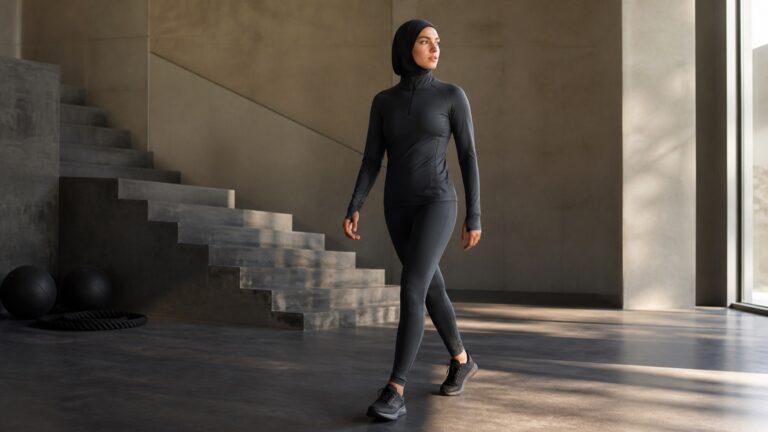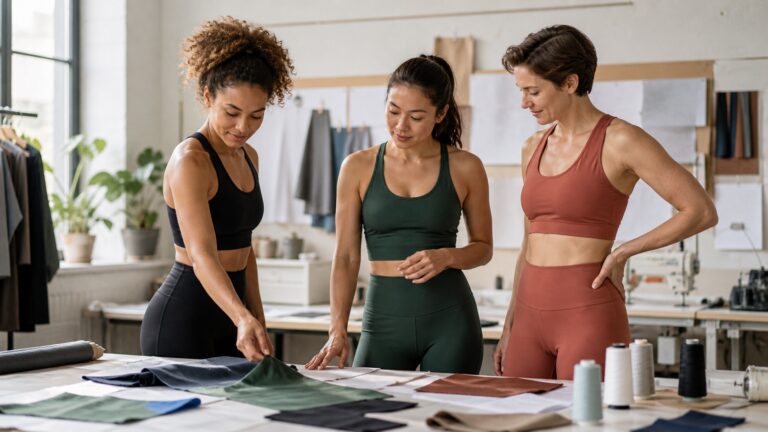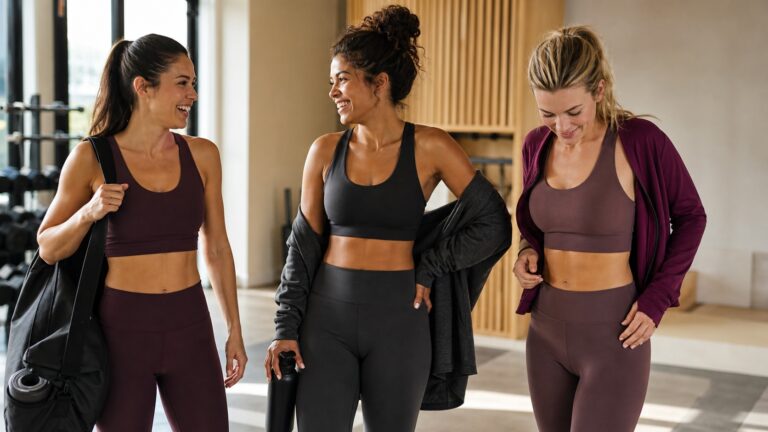


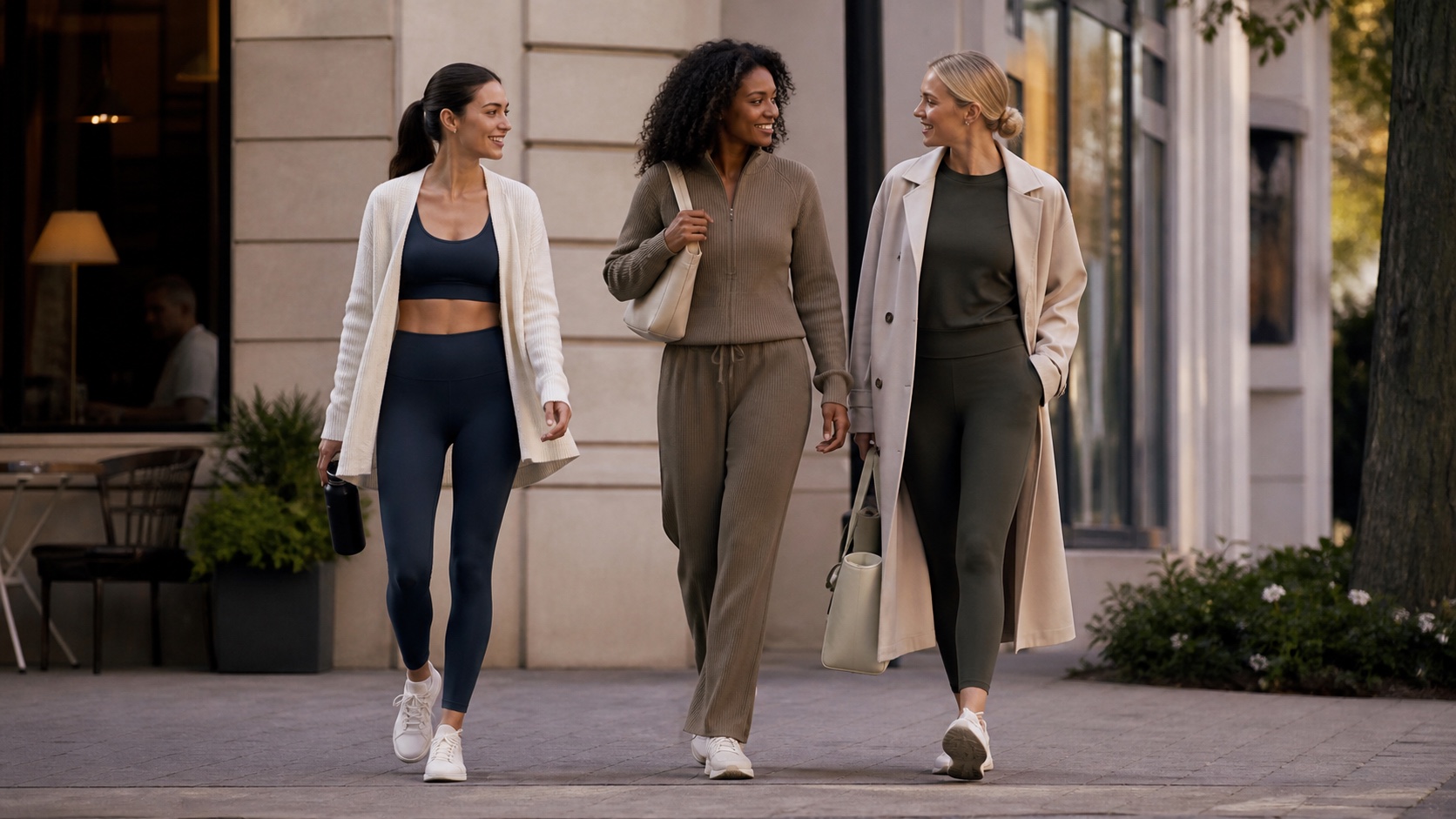
Varley is often placed in the activewear category because that is where the story began for many shoppers.
But the brand’s own language is more ambitious. Varley describes itself as a contemporary lifestyle brand and says it is building “a wardrobe for how you live and move.” Its current assortment reaches from active leggings and bras to knitwear, outerwear, everyday staples, Club pieces, and alpine layers. In 2024, Forbes reported revenue above $83 million, up from $44 million in 2023, more than 1,000 retail locations, and 12x growth over the prior five years.
The important lesson is not that every activewear brand should add sweaters. Varley changed the unit of competition. Instead of asking a customer to buy another workout garment, it asked whether one coherent wardrobe could support the gym, travel, errands, social life, and home. The business then used wholesale as a distribution and learning system before adding owned stores.
That is a more demanding strategy than “studio to street.” It requires the product, channel, price, merchandising, and production decisions to agree with one another.
The customer problem was a wardrobe problem
Varley was founded by Lara and Ben Mead in 2014. The official story links their beginning to a shared interest in movement and describes the brand as rooted in versatility, elegance, and ease. Those words can sound like ordinary lifestyle copy until they are compared with the current assortment: active fabrics sit alongside knitwear, outerwear, everyday staples, and more occasion-specific pieces.
The customer is therefore defined less by one sport than by a day. She may train, commute, meet a friend, work from a café, travel, and return home without wanting to change her entire visual identity. Activewear becomes one layer in a wardrobe rather than a separate uniform reserved for exercise.
This gives a founder a useful reframing. Before expanding categories, map the sequence of occasions around the customer:
- What does she wear before the workout?
- What does she need during the workout?
- What layer lets her leave the studio without looking like she is still in uniform?
- Which piece remains useful when she is not exercising?
The answer should determine the next product. If a new layer does not solve a real transition, it may only increase SKU count.
Product families made versatility legible
Varley’s current legging collection names three active fabric families: Always, FreeSoft, and Assure. The brand describes Always as light and second-skin, FreeSoft as structured and supportive, and Assure as the most compressive. The sampled US collection showed prices around $98 to $128 for leggings, depending on fabric and style.
Named fabrics are not automatically a moat. They become useful when each one answers a different customer question. Do I want softness and stretch? A more structured hold? A polished, sculpting feel? The fabric name then functions as a decision architecture, reducing the need for the shopper to understand technical specifications from scratch.
The same logic can travel into the broader wardrobe. A soft active legging, a matching layer, and a knit or outerwear piece can share colour, proportion, and handfeel even when their construction differs. The customer is not only buying individual items. She is buying confidence that the next item will belong with the first.
Try this assortment exercise: choose one core fabric or handfeel and map three roles around it—a movement product, a daily anchor, and an occasion-extending layer. Hold the colour palette tight. If the three products do not make each other easier to buy, the collection is not yet a system.
Wholesale was more than a sales channel
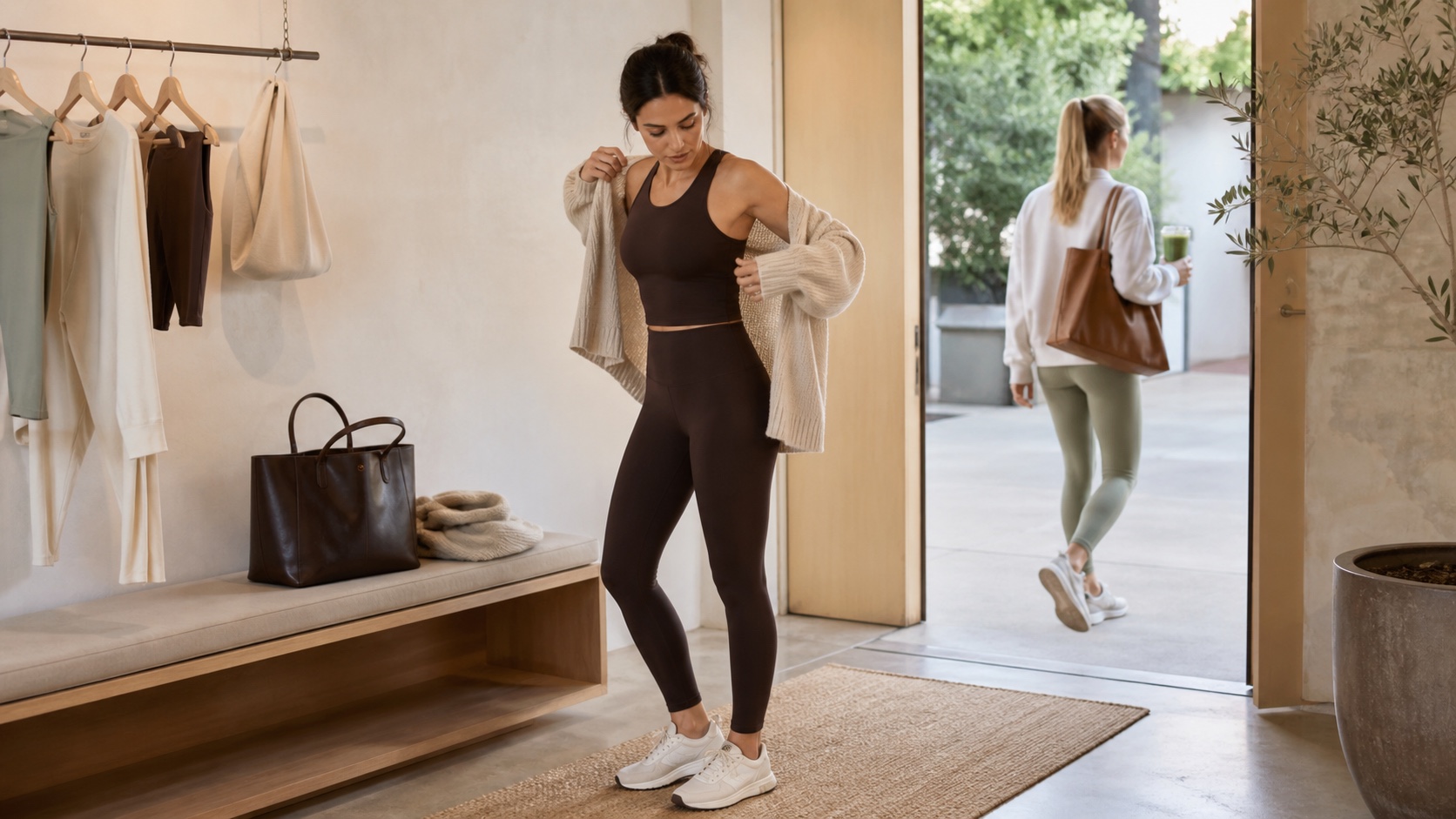
Varley’s path is especially instructive because it did not follow the pure DTC playbook. Forbes reported that the company used wholesale partnerships to introduce the brand to customers and gather retailer and buyer feedback. Its official site now says the brand is present in more than 1,000 points of sale worldwide, while the founders have added stores in London and a US flagship in New York.
Wholesale can create problems—margin pressure, fewer direct customer relationships, and the risk of being dependent on a buyer’s calendar. In Varley’s case, the available evidence suggests it also supplied three forms of learning:
- Context: a retailer sees what else the customer considers in the same shopping trip.
- Merchandising: a buyer tests whether the products make sense together on a rack or floor.
- Credibility: a respected store reduces the perceived risk of trying a newer label.
This does not prove wholesale caused the reported revenue growth. Revenue also reflects product, timing, brand image, capital, and retail demand. It does show why the channel can be strategically different from simply buying traffic. A retailer can expose a product to a customer in a physical context and return a harder question: does this piece earn space next to the alternatives?
Small-brand test: do not start with a large wholesale list. Place a tightly edited capsule with one retailer whose customer matches your intended wardrobe. Ask for weekly feedback on try-on objections, missing sizes, colour requests, and which items are purchased together. Treat the retailer as a learning partner, not merely a purchase order.
Owned stores completed the story—but raised the stakes
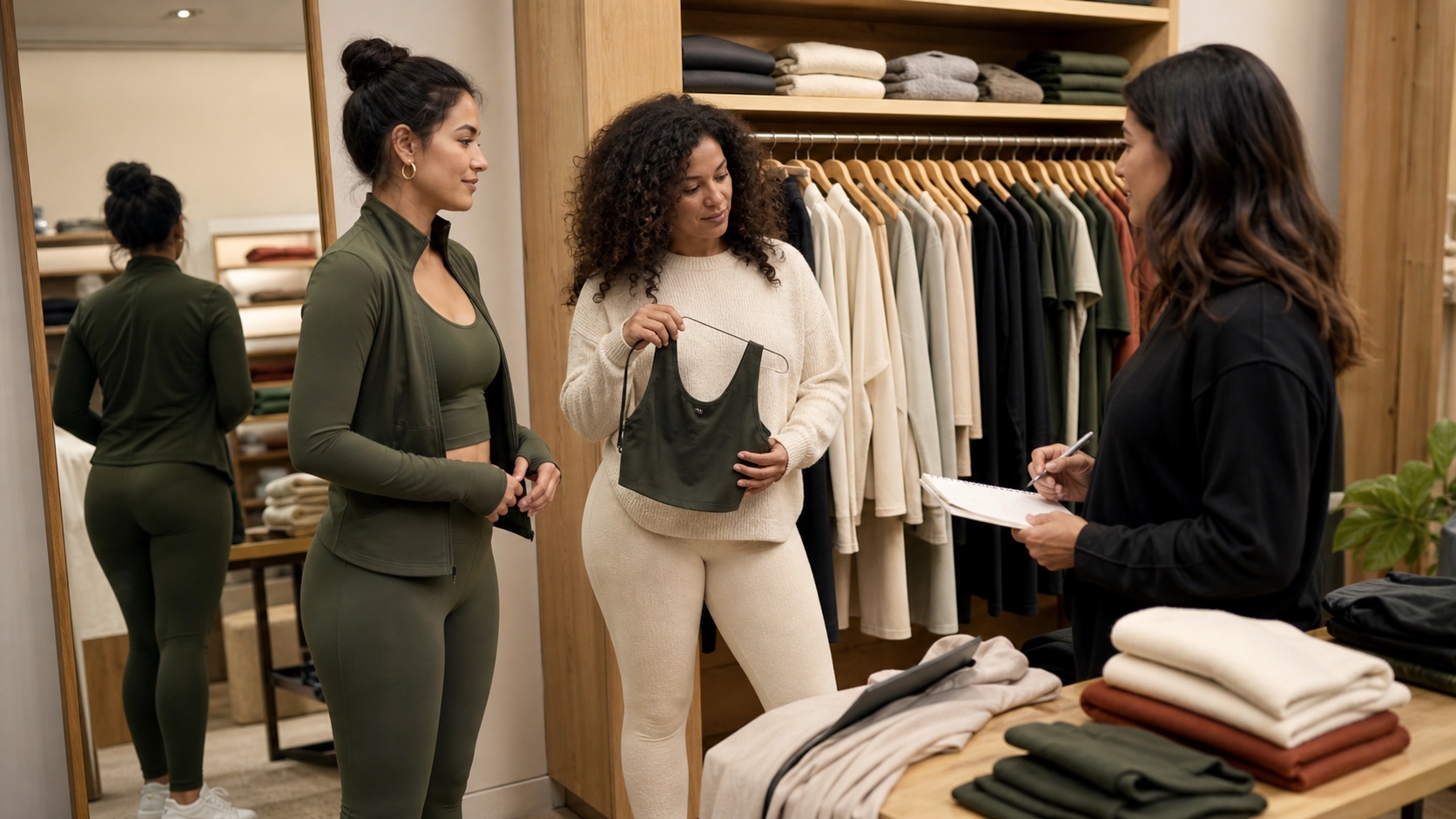
Varley’s stores are not described as simple inventory boxes. The brand says each space is designed to reflect its quiet confidence and make customers feel at home. The founders have also explained that an owned store lets shoppers see the entire collection as it is meant to be merchandised, rather than a handful of pieces in someone else’s environment.
That distinction matters for a wardrobe brand. When the customer sees leggings beside a jacket, knitwear beside a bra, and colours across categories, the business can communicate relationships that a single product page cannot. The store becomes a form of product education.
But a store also converts an aesthetic idea into a fixed cost. It requires rent, staffing, inventory depth, replenishment, local demand, and a level of service consistent with the price. The transferable lesson is not “open a flagship.” It is to create a place—physical or digital—where the full product logic can be understood.
For an early brand, that place might be a temporary pop-up, a wholesale shop-in-shop, a well-designed try-on appointment, or an online edit that shows the same customer through three moments of the day. Earn comprehension before committing to permanent space.
Quiet luxury is a system, not a colour palette
Varley benefited from a market environment that rewarded polished neutrals, tennis references, soft tailoring, and elevated casualwear. Forbes framed part of the recent story through tenniscore. Timing matters, but it is not enough to explain the brand’s endurance. A trend can win a click; a wardrobe system has to survive the next season.
Varley’s responsibility page reinforces the same operating idea. It says the brand prioritizes longevity and timeless colours, uses responsibly sourced, recycled, and certified materials where possible, and identifies bluesign-approved Move and Always fabrics. It also says collections are cut to order to minimize waste and that the company is working with Fairly Made to measure product impact and traceability.
These are company claims and some are ongoing initiatives, not independent proof of environmental performance. The more useful reading is that a “buy less, buy better” position creates obligations: durable handfeel, consistent dye lots, reliable construction, repair or care information, and enough product confidence to justify a higher price.
Operational question: if you claim longevity, which product test will demonstrate it? Wash recovery? Pilling? Seam strength? Colour stability? The claim should point to a test, and the test should point to a production specification.
The hidden complexity of becoming a wardrobe
Varley’s strategy is powerful because each new occasion can increase customer value. It is dangerous for the same reason. A single activewear line may already contain style, colour, size, inseam, fabric, and channel variables. Add knitwear, outerwear, seasonal weather, and wholesale accounts, and the number of ways inventory can be wrong grows quickly.
The answer is not to reject expansion. It is to expand by occasion rather than by temptation. A new product should do at least one of three jobs:
- bring a new customer into the existing visual system;
- increase the number of days or contexts in which an existing customer can wear the brand;
- make a proven product easier to style, replenish, or buy as a set.
If it does none of these, it is probably an experiment and should be budgeted as one. Do not quietly treat experimental breadth as core inventory.
What the case proves—and what remains uncertain
The public evidence supports a clear sequence: a 2014-founded brand positioned around life and movement, a product architecture extending beyond activewear, wholesale-led distribution and feedback, an expanding retail footprint, and reported revenue growth. It supports the interpretation that Varley’s wardrobe proposition is strategically important.
It does not isolate the contribution of wholesale, tenniscore, store design, fabric families, founder relationships, or price. The reported $83 million-plus revenue is not a measure of product-level repeat purchase or profitability by channel. The official “cut to order” statement also does not disclose how the policy operates across every style or market.
That uncertainty improves the lesson. A founder should not copy Varley’s surface—neutral colours, expensive leggings, and a store. The founder should test whether her own customer wants a credible transition from one occasion to another, and whether the operation can deliver the same quality across the transition.
Turning a wardrobe idea into a production decision
Start with three to six pieces: one movement anchor, one matching or attach-rate piece, one daily layer, and only then an occasion extender. Define the customer, use occasion, handfeel, support level, size range, and target price before asking for a quote.
When the concept needs real fit and fabric work, Battlerobe can be considered as a product-development and production partner for the appropriate stage. The useful brief is specific: reference images, intended movement, fabric feel, stretch and recovery expectations, colour plan, branding, size grading, first quantity, and launch timing. A small-batch custom sample can answer questions that a mood board cannot. Bulk production makes sense only after the approved style and quality standard are stable.
Measure the capsule by:
- which product brings the first purchase;
- which pairings are bought together;
- which occasion appears in customer reviews and user content;
- return and alteration reasons by size and fabric;
- full-price demand and reorder requests before adding another category.
The decision
Varley’s real growth engine was not “activewear became fashion.” It was a disciplined change in the question the brand answered. The customer was no longer choosing only a legging for a workout; she was choosing a wardrobe that could move with her without losing coherence.
This strategy suits a brand with a clear visual and material point of view, enough product discipline to edit, and a channel willing to provide real feedback. The first test is a small cross-occasion capsule. Scale when the products sell together, customers report genuine use beyond the studio, quality survives the wider wardrobe, and the channel economics remain healthy. Stop when expansion adds unrelated SKUs faster than it adds useful occasions.
Sources and evidence notes
- Varley: About the brand, history, stores, people and points of sale
- Forbes: Varley’s reported revenue, wholesale path, retail expansion and growth context
- Varley: Current legging fabric families and price snapshot
- Varley: Responsibility, materials, production, packaging and traceability claims
- Varley WellSaid: Positioning and store-development interview