
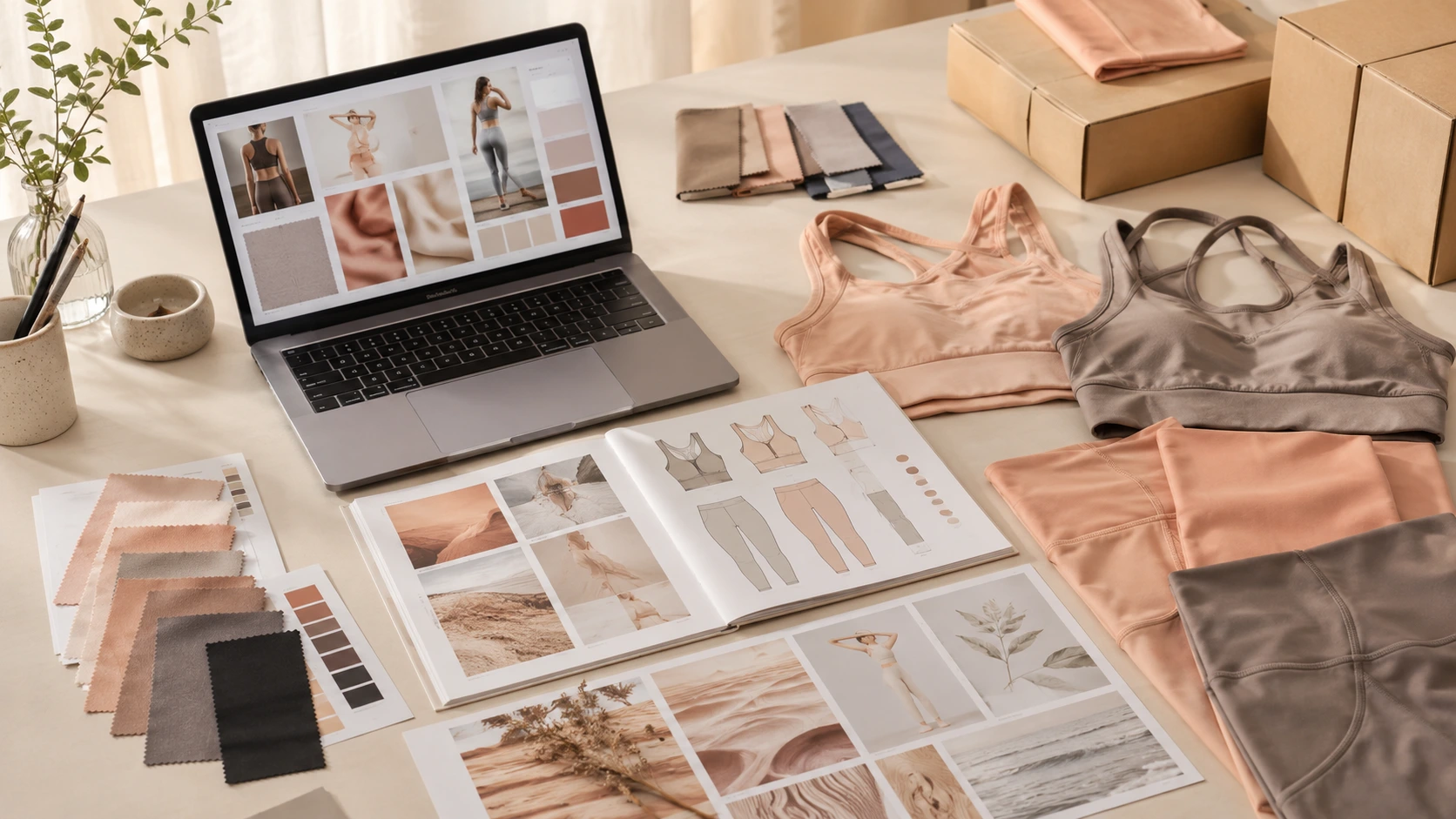
For a new activewear brand, the first collection is not just a group of products. It is the first real test of your brand direction, customer positioning, product style, and production plan.
Many new yoga, Pilates, fitness, or athleisure brands start with an ambitious idea. They want many styles, many colors, different fabrics, unique cutting, custom packaging, and a complete brand look from the beginning. This can feel exciting, but it can also make the first launch harder to control.
A first collection does not need to be large. It needs to be clear.
The goal of your first collection is not to cover every possible customer. It is to help you understand what your market responds to, which products are worth repeating, and which direction your brand should grow next.
Below are practical steps new activewear brands can use to plan their first collection with more clarity and lower risk.
1. Start by Defining Who Your Brand Is For
Before choosing styles, colors, or packaging, you need to answer one basic question:
Who are you designing this collection for?
An activewear brand can serve different types of customers. Some brands focus on yoga and Pilates users who care about comfort, stretch, fabric feel, and body movement. Some focus on gym and training users who need support, compression, durability, and performance. Others focus on lifestyle activewear, where the product needs to work for both movement and daily outfits.
Each customer group has different expectations.
For example, a Pilates-focused collection may need softer fabrics, elegant lines, and a clean studio look. A training-focused collection may need stronger support, more compression, and more durable seams. A lifestyle activewear collection may care more about color coordination, silhouette, and how the pieces can be styled outside the gym.
When your target customer is clear, your first collection becomes easier to plan. You can choose fewer styles with more confidence instead of trying to make everything at once.
2. Keep the First Collection Focused
One common mistake new brands make is starting with too many products.
A large product range may look more complete, but it can also increase sample cost, production complexity, inventory pressure, and decision fatigue. For a first launch, a smaller and more focused collection is often more practical.
A simple first activewear collection may include:
1–2 sports bra styles
1–2 leggings, shorts, or bottom styles
1 top or tank style
1 outer layer, skirt, or one-piece style as an additional category
This gives your brand enough variety to create a complete visual collection, while still keeping the launch manageable.
For brands that want to test the market faster, starting from existing ready-made activewear styles can be a practical route. With Battlerobe’s Small-Batch Ready-to-Custom option, brands can choose from existing designs and customize brand elements such as logo, hang tags, logo packaging bags, and shipping bags.
This route is different from full custom development. Fabric, color, and pattern cutting changes are not supported for ready-to-custom styles. Instead, it helps new brands build a branded collection faster with lower starting quantities.
3. Build Collection Consistency, Not Just More Styles
A strong first collection is not only about how many products you offer. It is also about whether the products feel connected.
Customers should feel that your products belong to the same brand story.
You can create collection consistency through:
A clear color direction
Similar fabric feel or visual texture
Consistent logo placement
A unified photography style
Clear product naming
Matching packaging presentation
For example, instead of launching ten unrelated colors, a new brand can start with three or four core colors. Instead of mixing many different fabric effects, you can keep a consistent feel across the first product group. Instead of changing logo placement on every product, you can use a clean and repeatable branding method.
This makes the collection easier to understand and easier to present on your website, social media, product catalog, and sales channels.
A small collection with a clear visual identity often looks more professional than a large collection with no direction.
4. Choose the Right Production Route Early
Your production route will affect your starting quantity, sample timeline, customization depth, and launch budget.
New activewear brands usually have three possible routes.
The first route is ready-to-custom production. This is suitable for brands that want to move faster, test the market, and reduce development risk. You start from existing activewear designs and customize brand elements such as logo, hang tags, packaging bags, and shipping bags. For Battlerobe’s ready-to-custom route, MOQ starts from 20 pieces per design, with mixed sizes and available colors supported. The minimum order quantity per order is 60 pieces.
The second route is small-batch custom development. This is more suitable for brands that already have a clear product idea and need original style development. This route can involve more product communication, sampling, fitting, and adjustment. You can learn more about this option on our Small-Batch Custom Development page.
The third route is bulk custom production. This is usually better for established brands, importers, retailers, or sourcing teams that already have stable order volume and clear product requirements. For larger-volume custom projects, visit Bulk Custom Production.
Choosing the right route early helps you avoid wasting time on a process that does not match your current stage.
For many new brands, the best approach is to start with a lower-risk first collection, test customer response, and then move into deeper custom development after the brand direction becomes clearer. You can also compare all options on our Solutions page.
5. Plan Your First Collection Around Testing
Your first collection should help you answer real business questions.
Instead of only asking, “What styles do I like?” ask:
Which products are easiest to sell?
Which size range receives the most demand?
Which colors or looks get the strongest response?
Do customers prefer sets or single pieces?
Does the logo placement feel premium?
Does the packaging improve brand perception?
Which products are worth reordering?
These answers are more valuable than simply launching many styles.
A first collection should be treated as a structured market test. After the first launch, you can use customer feedback, sales data, and buyer questions to plan the next collection more accurately.
This is especially important for activewear because fit, comfort, fabric feel, and body movement experience all affect customer satisfaction. A product that looks good in photos still needs to perform well in real use.
6. Think About Branding Details from the Beginning
Even when you start from ready-made activewear styles, branding details matter.
For small-batch ready-to-custom products, you may not change the fabric, color, or pattern cutting, but you can still build a more professional brand experience through details such as:
Logo application
Hang tags
Logo packaging bags
Shipping bags
Product naming
Visual presentation
Collection photography
These elements help your products feel less like generic stock items and more like a real brand collection.
For new brands, packaging and presentation can be especially important. A clear logo, clean hang tag, and consistent packaging can help customers remember your brand, even before you move into full custom development.
You can explore activewear product categories on our Products page to see how different styles can fit into your first collection plan.
7. Leave Room for the Second Collection
Your first collection should not be a one-time project. It should help you prepare for the next step.
After launching your first collection, review what happened:
Which styles sold fastest?
Which products received the most questions?
Which sizes needed more stock?
Which colors or available options performed better?
Which product photos attracted more attention?
Which styles are suitable for reorder?
Which products should be improved or replaced?
These insights can guide your second collection.
For example, if a sports bra and leggings set performs well, your next step may be to add more matching tops or shorts. If customers ask for more unique fit or fabric options, it may be time to consider small-batch custom development. If one style sells consistently, it may be ready for larger-volume production.
A good first collection does not need to be perfect. It needs to create useful feedback.
Conclusion
For new activewear brands, the first collection should be clear, focused, and realistic.
You do not need to launch too many styles at once. Start with a defined customer group, choose a focused product range, build a consistent collection look, and select a production route that fits your current stage.
Ready-to-custom styles can help new brands launch faster with lower starting quantities and basic brand customization. Small-batch custom development can support more original product ideas. Bulk custom production is better for brands with larger and more stable order plans.
If you are planning your first yoga, Pilates, fitness, or lifestyle activewear collection, Battlerobe can help you review your product idea, target quantity, customization needs, and timeline.
Start by exploring our activewear product categories, comparing the right production route, or sending your project details through Start Your Project.