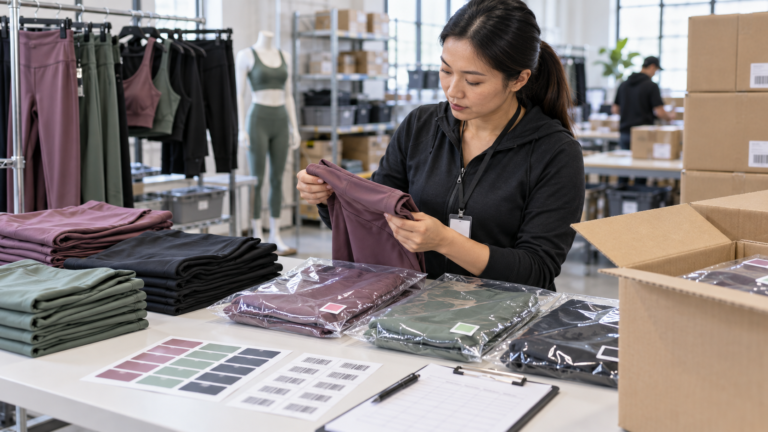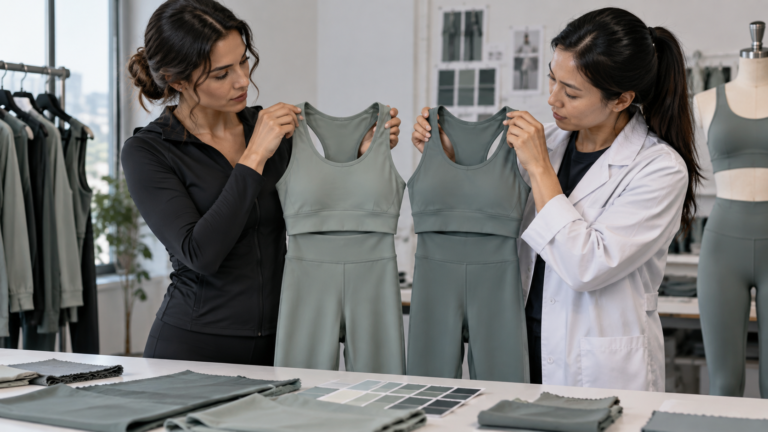


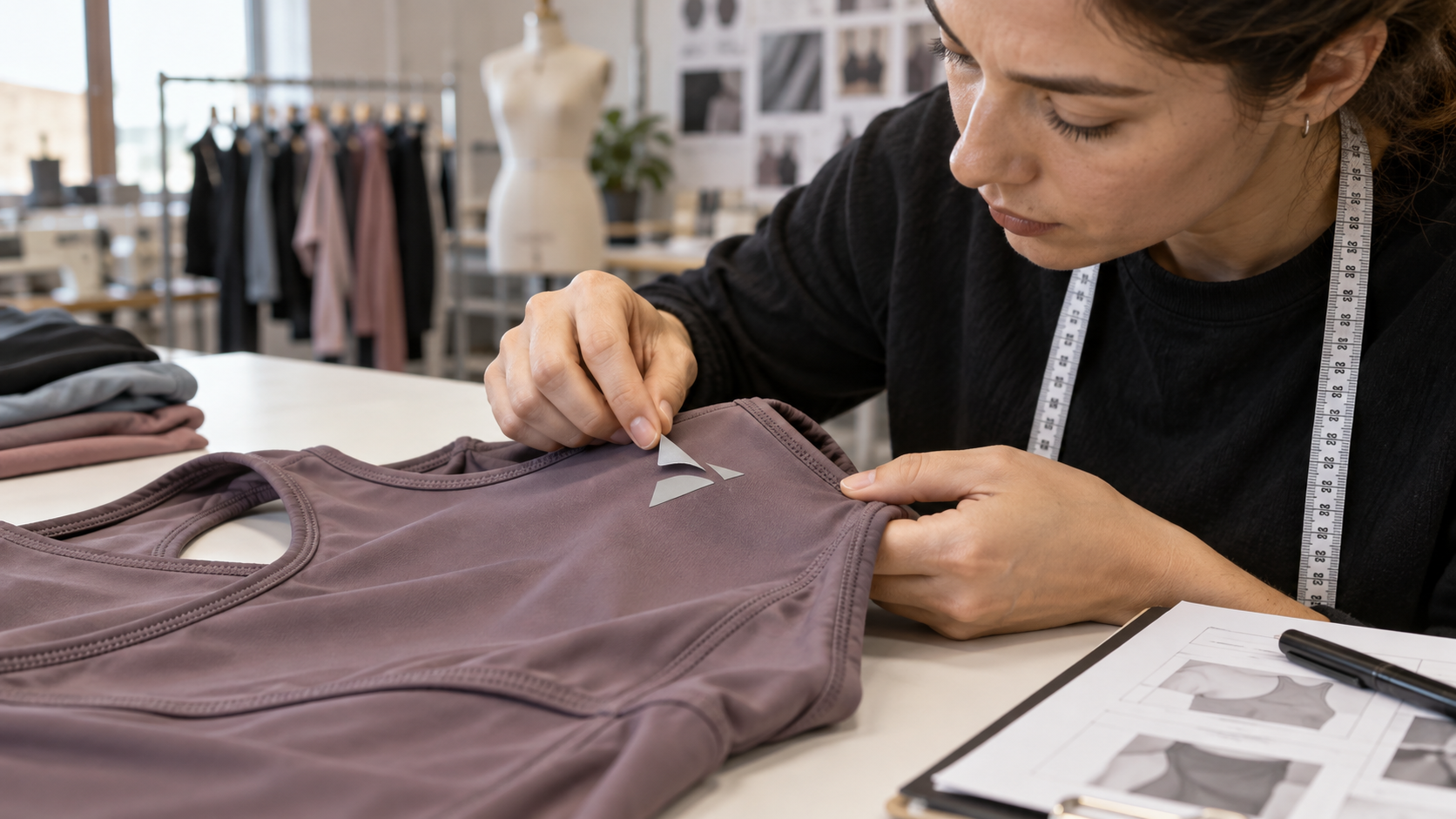
“The logo looked perfect when we packed the order. After the first wash, the edge started lifting.”
Activewear logos peel after washing for several reasons, and the first visible failure does not always tell you which one happened. The transfer may be incompatible with the fabric surface, the application may not have bonded evenly, the garment may have been stretched too soon, or the care condition may be harder than the logo method can tolerate.
Before pressing the logo again or blaming the customer’s washing machine, compare the affected piece with the approved decorated sample and inspect where the failure begins.
Look at the edge before looking at the artwork
A peeling logo usually gives a useful clue at the boundary:
- One corner or edge lifts: bonding or pressure may have been uneven in that area.
- Fine cracks spread through the design: the transfer may be too rigid for the garment’s stretch or care condition.
- The whole design lifts: compatibility, application, or surface preparation deserves priority.
- Only layered or small details fail: artwork construction and material compatibility may be involved.
Stahls warns that incompatible heat-transfer vinyl layers can peel or crack after washing. That is useful evidence about transfer systems, but it does not identify the cause in a particular order. The actual fabric, logo material, application setup, and care condition still need comparison.
Run the smallest useful comparison
Use one affected garment, one approved decorated sample, and—if available—one blank garment from the same material. Record the logo size, placement, fabric color, and when the failure appeared.
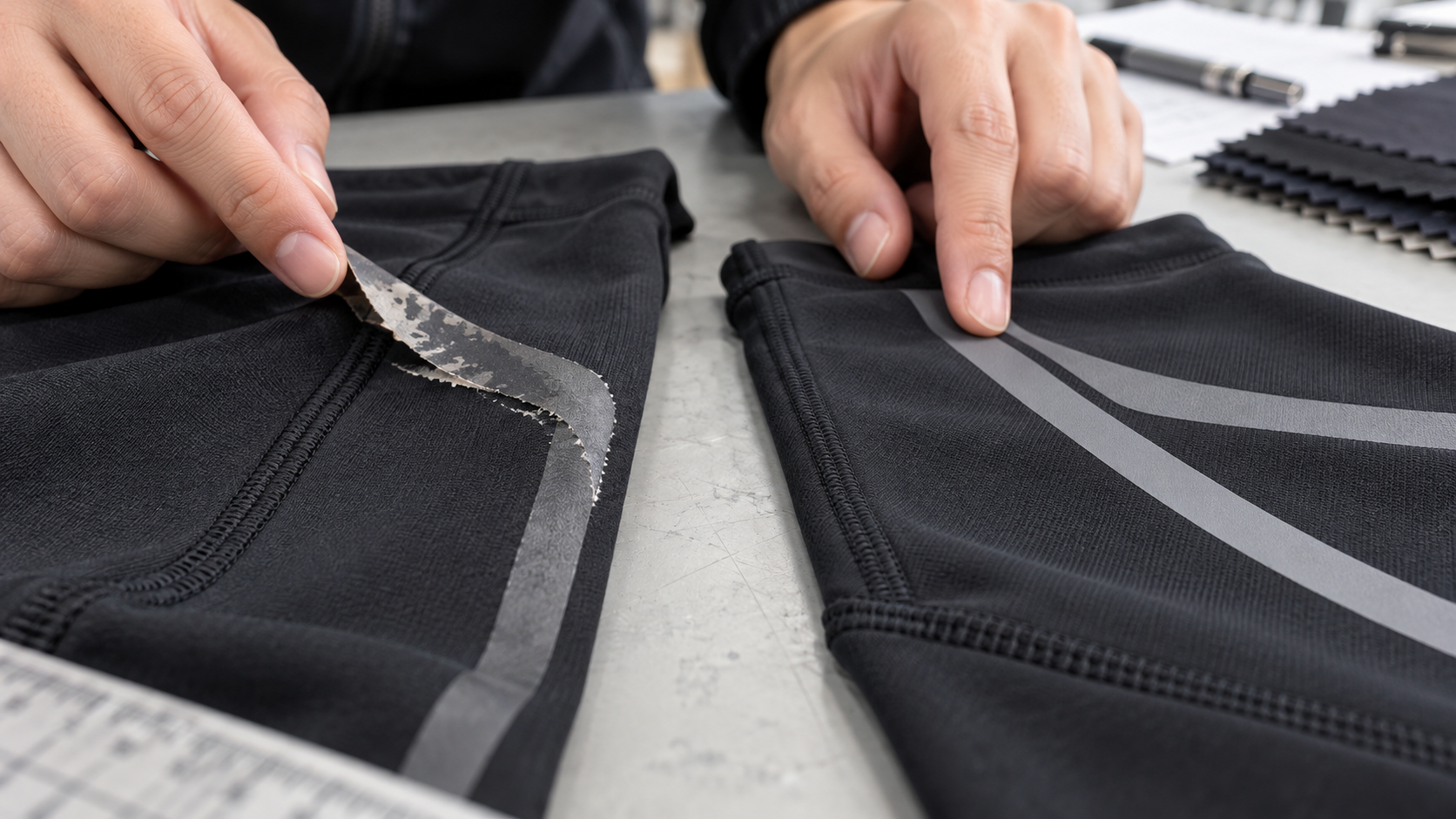
Inspect the same logo before and after the care condition that created the complaint. Look at the perimeter, fine lettering, corners, and the fabric directly around the design. Then extend the garment gently in the direction the logo experiences during wear.
This is a practical comparison check. It does not create a universal wash-life guarantee. If the logo is tied to a retailer requirement or performance claim, a defined decoration test may be needed separately.
Separate logo material from application problems
The approved sample also fails under the same condition
The original method may not be suitable for the product promise, even if the sample looked good at launch. Decide whether the customer will reasonably wash and stretch the garment in the same way. If yes, the method needs a new trial rather than a cosmetic touch-up.
The approved sample stays intact but bulk fails
Compare fabric lot, logo material, machine condition, pressing surface, temperature, pressure, dwell time, and cooling or handling. One changed input may be enough to explain the difference, but a photograph cannot prove which one.
Only one color or fabric surface fails
Do not assume the logo file is the problem. A brushed, coated, very smooth, or highly elastic surface may require a different application route from a basic jersey, even when the garment shape is identical.
Two images are better than a repair argument
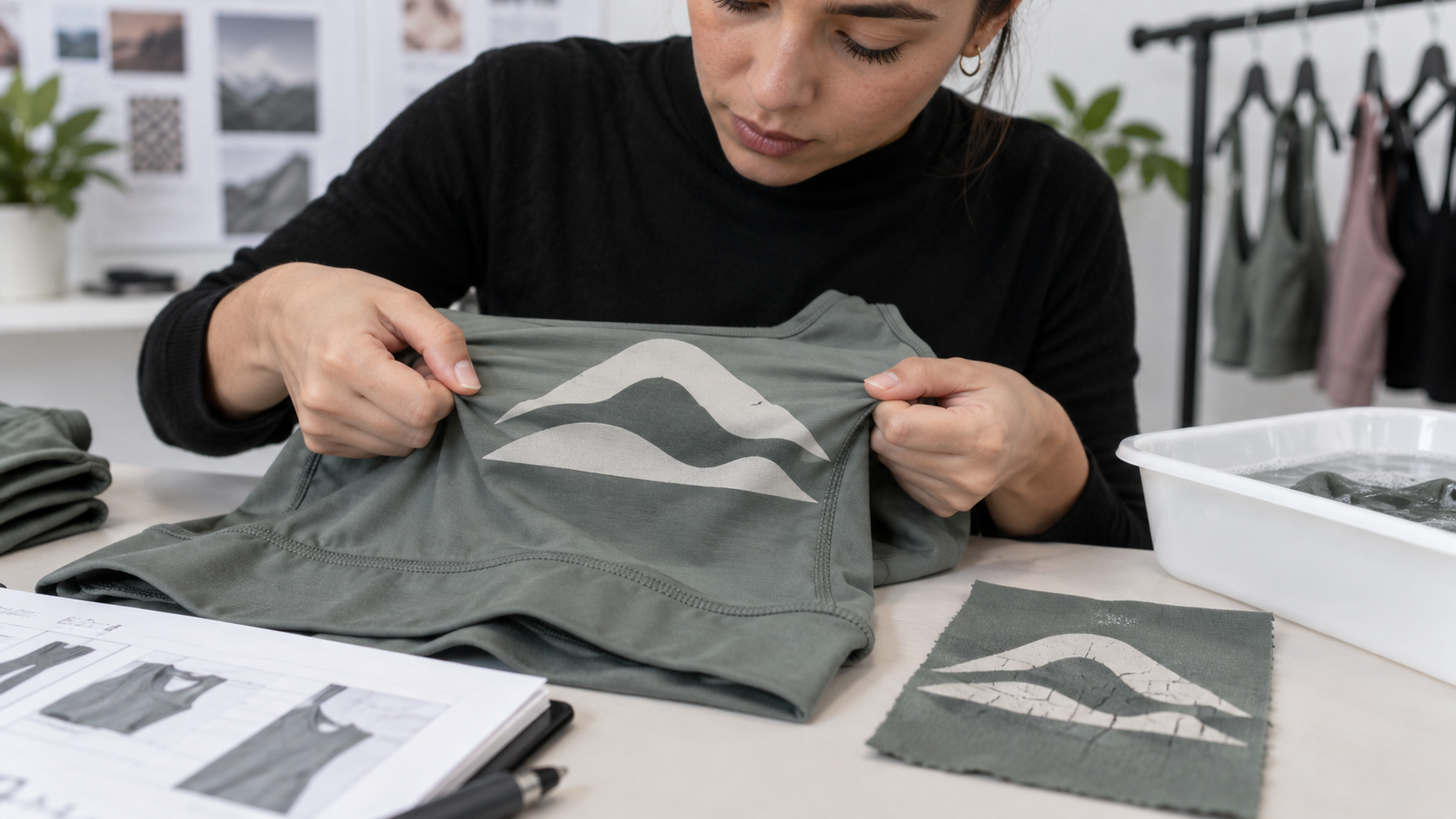
Photograph the logo straight on and from a shallow angle. A glossy edge, lifted corner, or fabric distortion can disappear in a front-facing product photograph. Keep the affected and approved pieces under the same light so the comparison remains useful.
If a steam pass or controlled re-press is considered, try it on one affected garment first. If the logo bonds but the surrounding fabric becomes shiny or pale, the rework has created a second quality problem.
What to do with current goods
- Release: the logo matches the approved reference after the intended care and movement check.
- Sort: failure is limited to a color, lot, placement, or production group.
- Rework: only when the correction is trialed, repeatable, and does not damage the fabric.
- Hold or change method: the logo cannot meet the intended care and stretch condition.
Do not send every garment back through the same press just because it worked once. If the method is the problem, repetition only increases the number of damaged pieces.
Prevent a peeling-logo dispute
Approve a decorated garment, not only a logo file and blank sample. Keep the transfer type, layers, placement, pressing instruction, and acceptable edge appearance with the physical reference.
For a new fabric or a logo placed on a high-stretch area, perform a small actual-garment trial before bulk. Compare the logo after the relevant care condition, then keep the failed trial as a warning if the method is rejected.
When Battlerobe becomes useful
If the logo problem requires a different transfer, label, print, or garment construction, Battlerobe may help run a revised sample through small-batch ready-to-custom or a custom development route when the method and fabric need to change together. The route depends on whether the garment itself is stable.
Send the affected garment, approved decorated sample, logo artwork, fabric information, placement, care condition, and the outcome you need. Battlerobe can help organize the next sample decision; it cannot certify or repair another supplier’s finished inventory from a photograph.
Final decision
Activewear logos peel after washing when the decoration and the garment are not behaving as one system. Find out whether the failure follows the material, the method, the care condition, or the production group before deciding to rework or change the logo route.