

“The sample felt soft and substantial. The bulk fabric feels thinner, rougher, or simply different.”
Bulk activewear fabric feels different is one of the hardest production complaints to settle because “handfeel” is real but not automatically measurable in the same way as garment length or logo placement.
It can describe a true material change. It can also come from fabric finishing, dyeing, brushing, pressing, storage, garment construction, or the difference between holding a loose sample cutting and wearing a finished garment.
Before arguing about whether the fabric is “the same,” compare the approved reference and bulk garment under the same conditions and identify what changed: surface, weight, stretch feel, recovery feel, color, construction, or all of them.
Why bulk activewear fabric feels different without a simple substitution
Finishing and surface treatment
A knit can feel smoother, drier, softer, brushed, or more compact depending on finishing. A fabric that has been handled, steamed, pressed, washed, or stored differently may not feel exactly like a loose cutting kept in a sample folder.
Dye lot and color
Different colors can feel different even when the base fabric is intended to be the same. Dark colors, pale colors, and saturated colors may receive different dyeing conditions or finishing responses. Compare the same color before concluding that the entire fabric quality has changed.
Material identity or supplier change
A supplier may use a substitute yarn, a different blend, a different weight, or a different finishing route. The label may still look similar while the garment’s surface and movement feel have changed. A composition label alone may not capture every attribute that matters to the customer.
Construction changes the hand in the finished garment
A flat fabric cutting has no seams, waistband, lining, logo, or body tension. A finished garment may feel firmer, heavier, or rougher because of seam bulk, panels, pressing, or an added component. Compare the same area and the same construction where possible.
Storage and time
Heat, moisture, compression, and long storage can influence how a garment feels when first opened. That does not mean storage explains every complaint. It means the comparison should be made after the samples have been allowed to relax under similar conditions.
Start with a side-by-side comparison
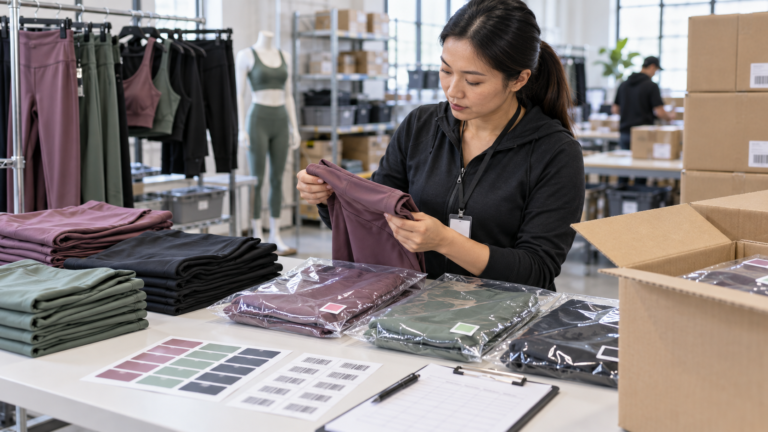
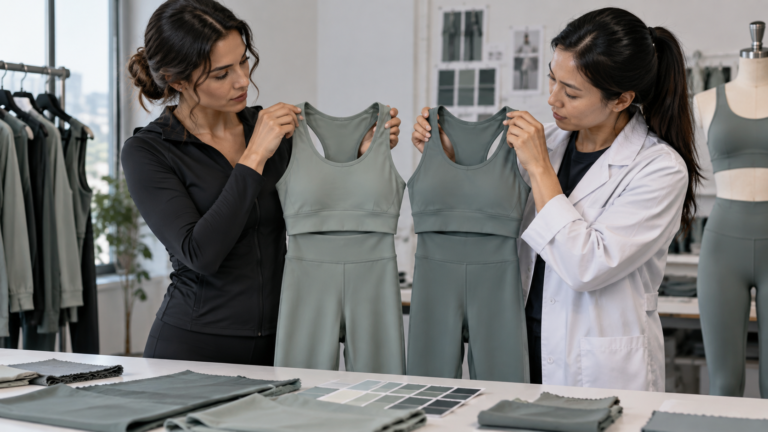
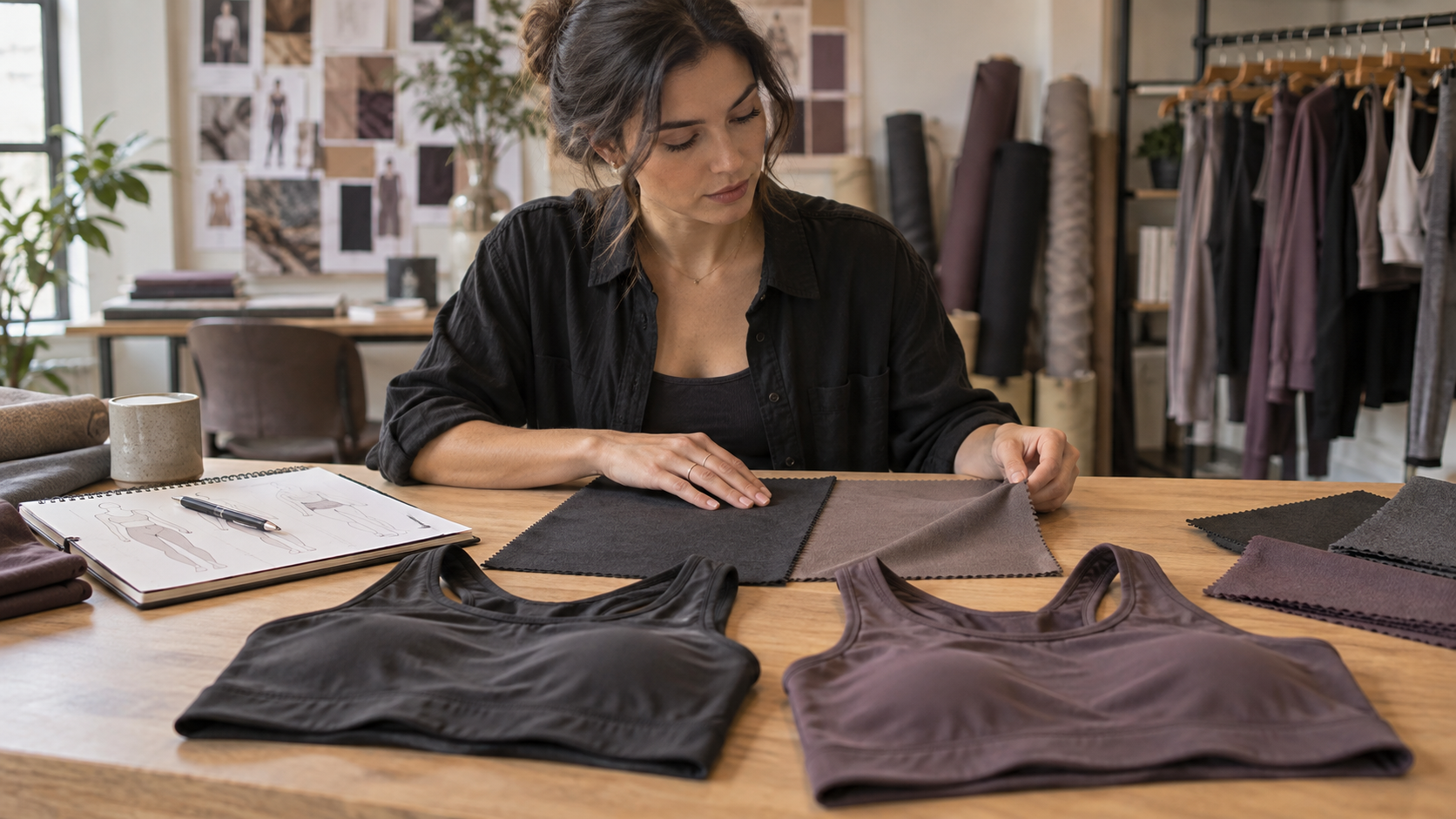
Do not compare from memory. Put the physical approved sample, a fabric cutting if retained, and one or more bulk garments on the same table.
Compare:
- surface smoothness or brushing;
- visual density and color;
- handfeel when relaxed;
- how the fabric feels when gently extended by hand;
- how quickly it appears to return after release;
- seam, waistband, lining, and logo differences;
- fabric label, roll, color, and production information.
If possible, compare more than one bulk unit. One garment may have been pressed, folded, or stored differently. A repeated difference across several pieces is stronger evidence than one unusual piece.
What the comparison can tell you
The fabric feels different but the garment performs the same
This may be a preference or communication problem rather than a production defect. If the color, coverage, fit, stretch feel, and surface meet the approved expectation, record the difference and decide whether the customer needs a closer handfeel match in the next order.
The fabric feels different and fit or coverage also changes
Now the issue is more consequential. A difference in weight, stretch behavior, recovery feel, or surface may change how the garment fits or performs. Hold the relevant color or lot long enough to compare the physical material and finished garment with the approved reference.
Only one color or lot feels different
Trace the difference by color, roll, dye lot, and production date. Do not reject a whole fabric family until you know whether the problem follows one group.
The approved reference cannot be found
This is an evidence problem. You can describe the current garment, but you cannot prove a deviation from a reference that was never retained. The next order should keep a physical swatch or sample and a short written handfeel description, even if no laboratory test is required.
What small brands should not do first
Do not start with a complicated testing list simply because the complaint is subjective. A laboratory result may be appropriate when a contract, retailer requirement, performance claim, or material dispute depends on measured evidence. It is not automatically the best first step for every small-batch order.
Do not ask the factory to “make it softer” without identifying which sample and which surface you mean. Softness can be changed by finishing, fabric choice, garment construction, or handling. A vague request invites a new difference.
Do not rely on the fiber composition label alone. “Nylon and elastane” or “polyester and elastane” does not tell the whole story of weight, knit structure, finishing, brushing, or feel.
What to do with the current order
If the difference is isolated and does not affect the promised function, sort the affected group and decide whether it can be released with an internal note or customer-facing adjustment. If the difference affects fit, opacity, comfort, or the product’s positioning, hold the relevant group while the material and sample are compared.
A simple hand-and-eye comparison is useful for screening obvious differences, but it does not prove chemical composition or every performance property. If the brand must prove a material claim, send representative samples for the defined test rather than describing a hand check as a laboratory result.
How to make handfeel reproducible next time
Keep three things together:
- the physical approved garment or fabric swatch;
- the fabric identity and color or lot information;
- a short description of what matters: smooth, brushed, cool, compact, soft, firm, light, or another observable quality.
Photographs cannot fully capture handfeel, but they can show surface, brushing, color, and construction. A short video can show how the garment moves. Use those records beside the physical reference instead of replacing it.
Before a reorder, compare the new material to the retained reference and approve the actual color and construction. QIMA’s apparel inspection guidance treats approved-sample comparison, color shading, size fitting, workmanship, and material-related checks as separate inspection points. That is a useful reminder: “same fabric” is not one single check.
When Battlerobe becomes useful
If your supplier says the bulk fabric is the same but the garment clearly feels different, Battlerobe may help organize a sample-to-bulk comparison and decide whether the next step is release, sorting, a material clarification, or a revised sample. For a future order, bulk custom production is most useful after the material and approved reference are stable enough to control.
Send the approved sample, one or two bulk garments, a fabric cutting if available, color and lot information, and a description of the change you care about. “It feels wrong” is the starting complaint; the useful handoff identifies whether the difference is surface, weight, stretch feel, recovery feel, color, or construction.
Final decision
When bulk activewear fabric feels different, do not dismiss the complaint as subjective and do not declare substitution from one touch. Compare the same area, same color, same construction, several units, and the retained approved reference. Then decide whether the difference is cosmetic, functional, limited to a group, or important enough to change the next order.