

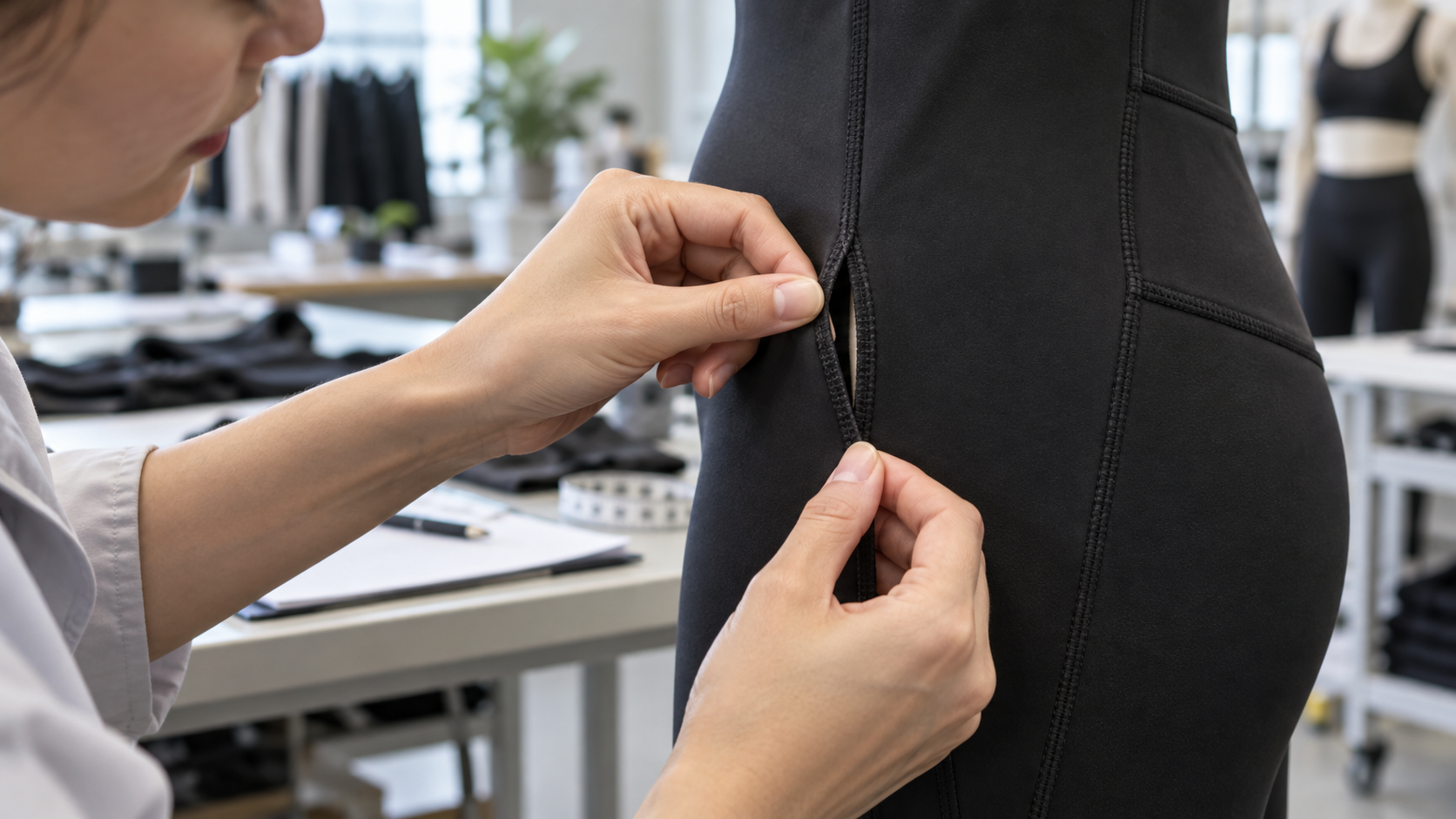
“The stitches are still there, but the fabric has opened beside the seam.”
Seam slippage in activewear is different from a broken thread or a seam that simply pops. The stitches may remain intact while the fabric yarns move away from the seam and leave a permanent-looking gap. On a close-fitting garment, that gap can become a fit, coverage, or durability problem during wear.
Do not solve it automatically by adding more thread. First find out whether the fabric is moving beside the seam and whether the problem repeats in the same construction.
What the gap looks like
Lay the garment flat and inspect both sides. A true slippage pattern usually sits beside the stitch line rather than at a single broken stitch. It may become clearer when the garment is gently stretched across the seam.
Coats describes seam slippage as fabric yarns sliding away from the seam and creating a permanent gap. It notes that slippery continuous-filament fabrics can be more vulnerable, but the garment’s seam allowance, stitch density, seam type, and load direction still matter.
The useful question is not “Are the stitches strong?” It is “Is the fabric still holding the seam in the way the garment requires?”
Check the affected seam in three positions
- Relaxed: photograph the gap without pulling the garment into shape.
- In normal movement: extend the garment in the direction the seam carries load.
- Against the reference: compare the same seam on the approved sample and another production unit.
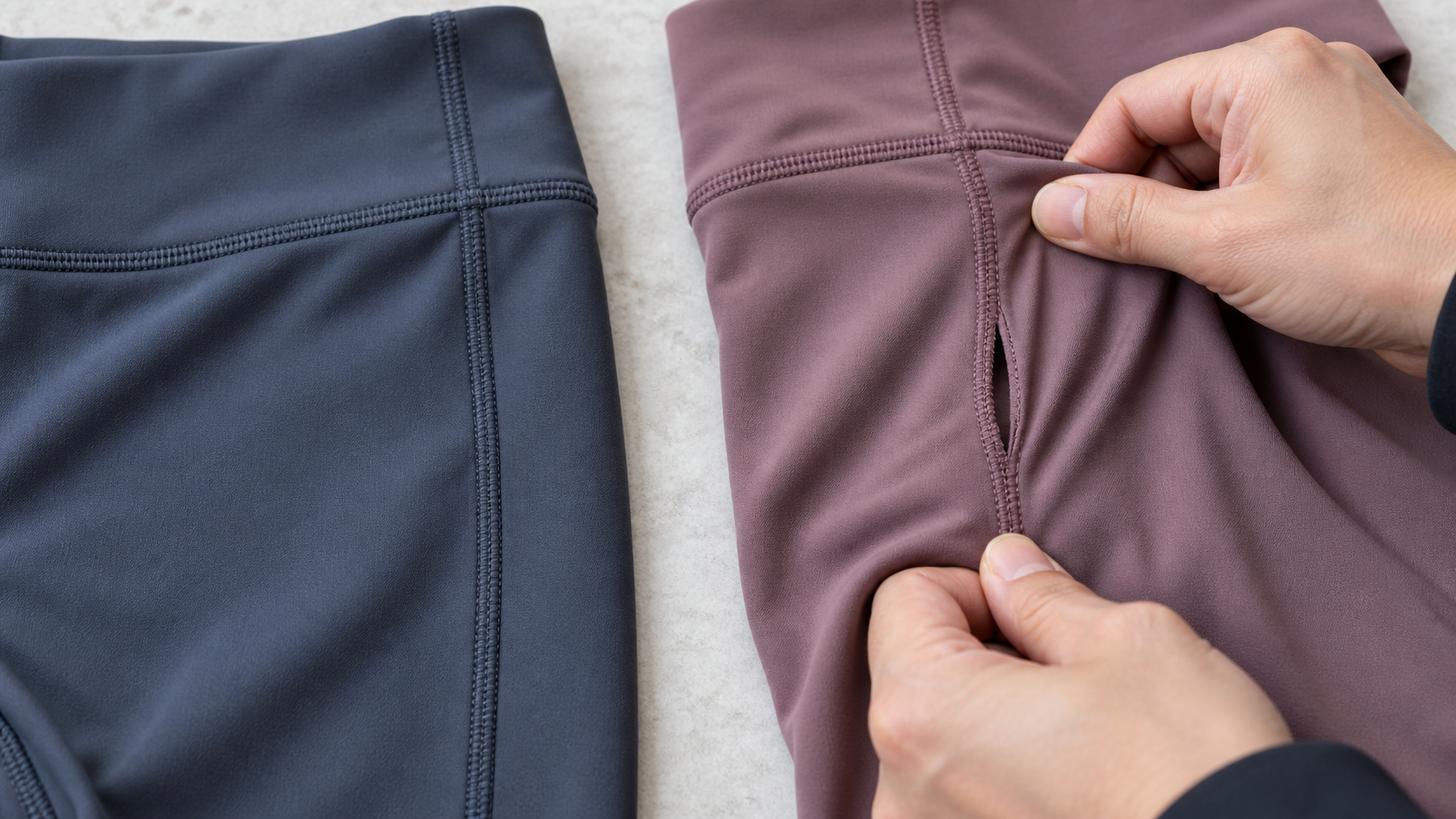
Mark the location: inseam, side seam, gusset, waistband, armhole, or a point where another component is attached. If the gap appears only at one attachment or curve, construction and load concentration move higher on the cause list.
Four clues narrow the cause
Slippage appears on a slippery fabric
Material behavior may be the limiting factor. Compare the same seam on a different fabric or the approved sample. This does not mean the fabric is unusable; it means the seam construction must carry the material honestly.
The seam allowance is visibly narrow
A narrow bite leaves less fabric to hold the load. Check the cut edge and the actual sewn margin on several units before deciding whether the pattern or operation changed.
The gap appears only during a high-load movement
That movement may be exposing a fit or pattern problem as well as a seam problem. Compare size, wearer, and garment tension. A seam that is safe in a loose studio top may not be safe in a tight legging.
The same seam slips across a production group
Hold the group and check whether it follows one fabric lot, one operation, or one construction. A repeated pattern should not be treated as isolated customer handling.
Do not hide the gap with a second stitch line
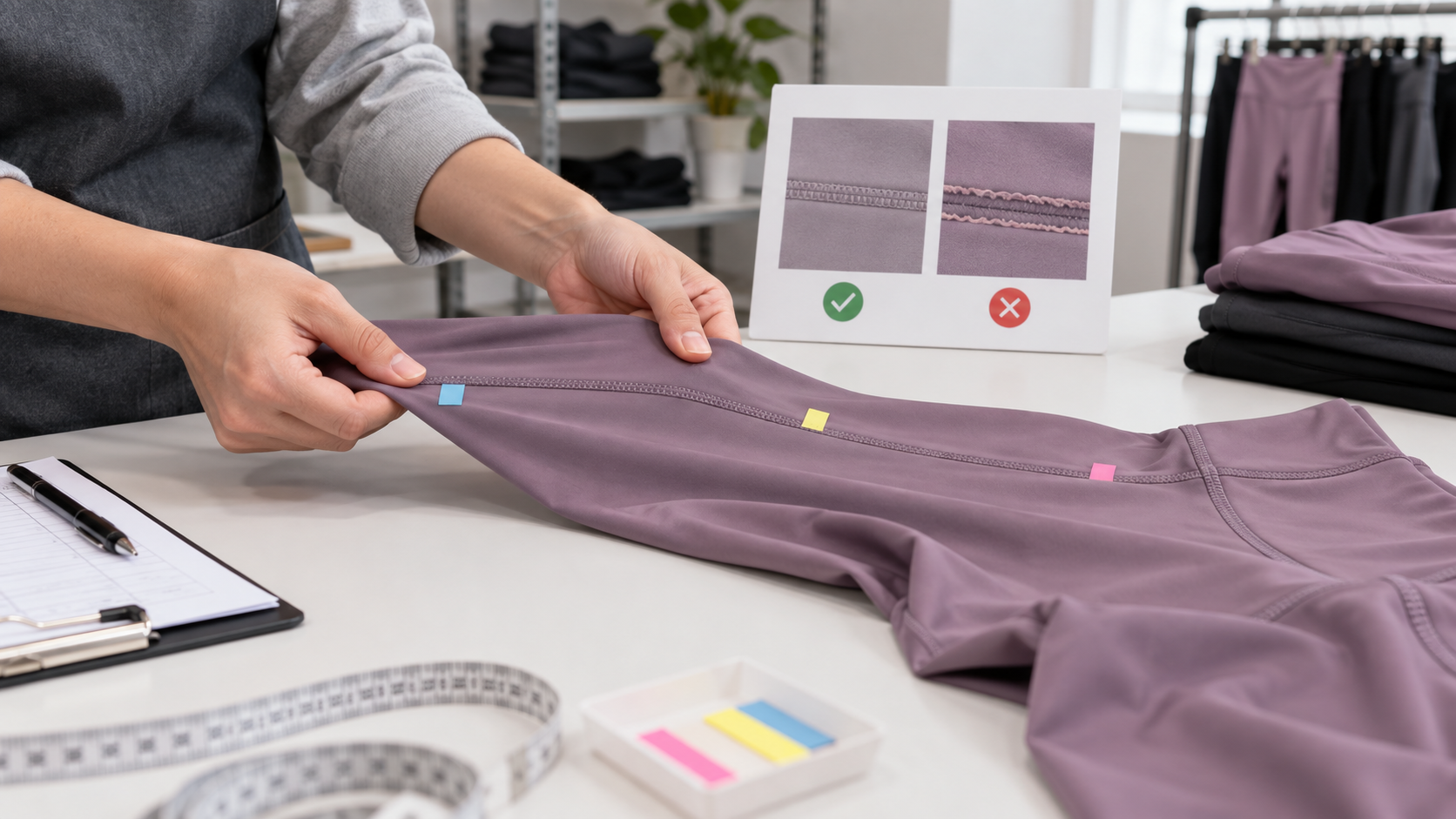
Adding another stitch line can make the garment look more secure while leaving the original fabric damage in place. It can also make the seam stiffer or shift the problem to the next point of strain.
Use one affected piece for a controlled rework trial. Compare the repaired seam in movement and against the approved appearance. If the fabric has permanently opened, the result may not be recoverable through stitching alone.
Disposition for goods already sewn
- Release: the seam matches the approved sample under the intended movement.
- Sort: the gap is limited to a small, identifiable group and does not affect the product promise.
- Rework: the revised seam is trialed and remains comfortable and secure.
- Hold or redevelop: the same construction slips repeatedly or affects coverage, fit, or durability.
If the issue is limited to a fuller wearer or one extreme size, investigate pattern load as well as sewing. If it appears across different bodies and units, treat the construction as the main risk until evidence shows otherwise.
Prevent it at sample approval
Approve the actual seam on the actual fabric, not only a flat pattern or a generic stitching sample. Mark the seam allowance, seam type, and the movement that matters in the production reference.
QIMA includes seam slippage among garment inspection checks, but a small brand does not need to copy a formal inspection system for every order. It does need to define which seam must remain closed, in which use condition, and what stops release.
When Battlerobe can help
When seam slippage exposes a pattern or construction decision, Battlerobe may help compare the fabric, seam, and fit through small-batch custom development. The relevant output is a revised sample and a clearer production reference, not a promise that a stronger thread will solve every gap.
Send the approved sample, affected garment, a close-up and movement photo, fabric information, location of the seam, and the size/color scope. That packet lets the next step focus on seam allowance, stitch construction, pattern load, or material choice.
Final decision
Seam slippage in activewear is fabric moving beside the stitch line. Confirm the gap, its scope, and its movement condition before deciding whether to sort, rework, change construction, or stop the style.