

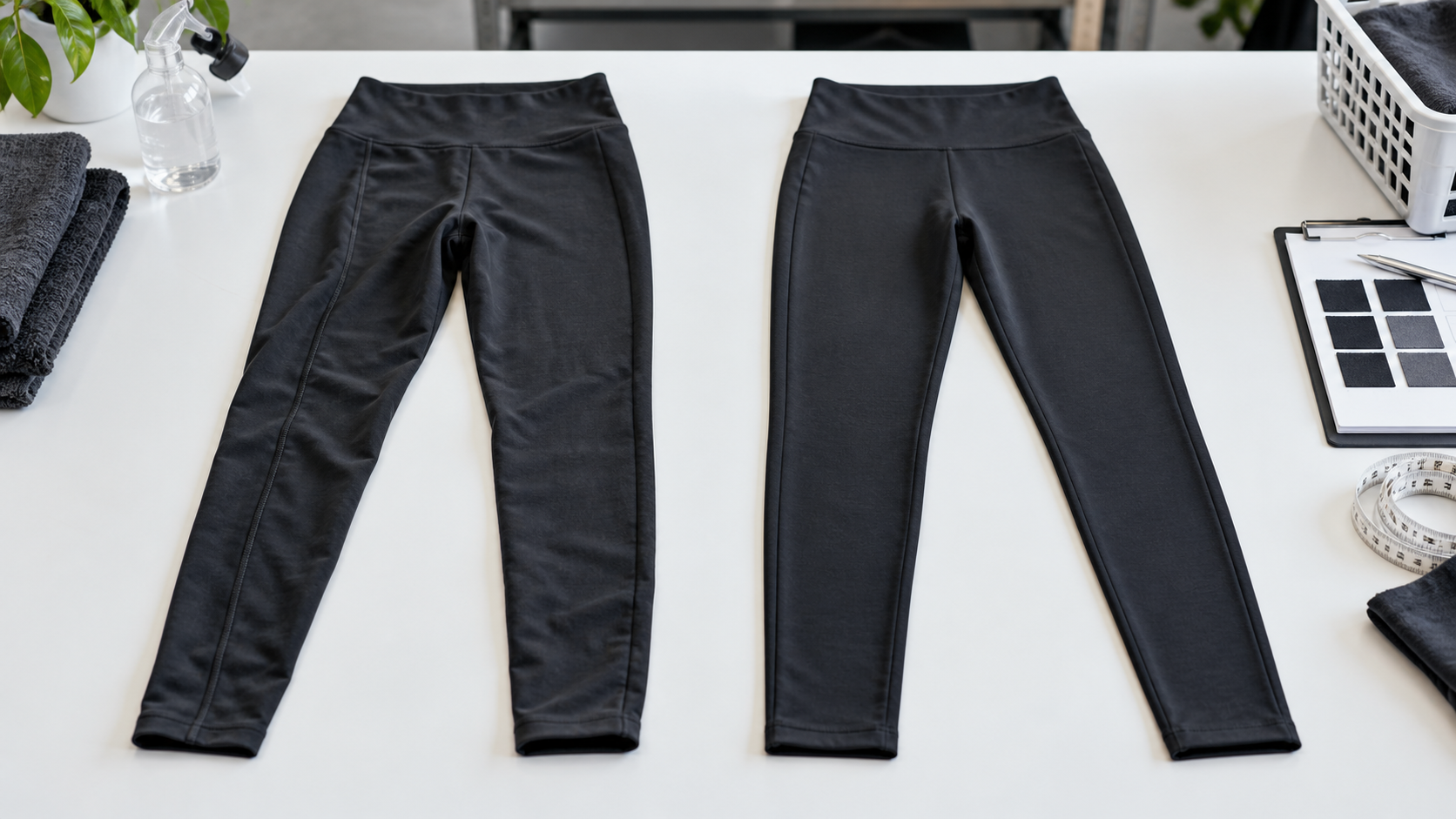
“The leggings were straight on the table. After washing, the side seam moved toward the front of the leg.”
Leggings side seams twisting after washing can look like a sewing mistake, a bad pattern, or a customer putting the garment on incorrectly. Sometimes it is one of those things. It can also come from the knit fabric’s tendency to rotate, the direction used in cutting, how panels were matched, or how the garment relaxed after treatment.
Do not correct a twisting leg by simply pressing the seam back into place. First find out whether the garment returns to the same shape after rest and whether the approved sample behaves the same way.
Twist is a shape problem with a trigger
Look for the trigger: does the seam move after washing, after being worn, while the garment is stretched, or immediately after sewing? A side seam that is already displaced on the table suggests one set of causes. A seam that looks straight before washing but rotates afterward suggests another.
Compare:
- front and back leg panel alignment;
- the direction of the visible knit rows or surface texture;
- the side seam at hip, knee, and hem;
- the approved sample beside the bulk piece;
- one size, color, and fabric lot against another.
Research on knitted fabric spirality links the phenomenon with changes in seam displacement, garment distortion, and shape retention. That does not prove the cause in your order, but it explains why a straight-looking piece can become visibly rotated after washing or relaxation.
Use a before-and-after flat check
Do the flat check before putting the garment on a model. If the side seam is already displaced when the garment is relaxed, styling the garment on a body will only make the evidence harder to read.
Lay the approved sample and affected garment flat without forcing the legs into a better position. Photograph the waistband, side seam, knee area, and hem. Then let both pieces rest in the same way before comparing them again.
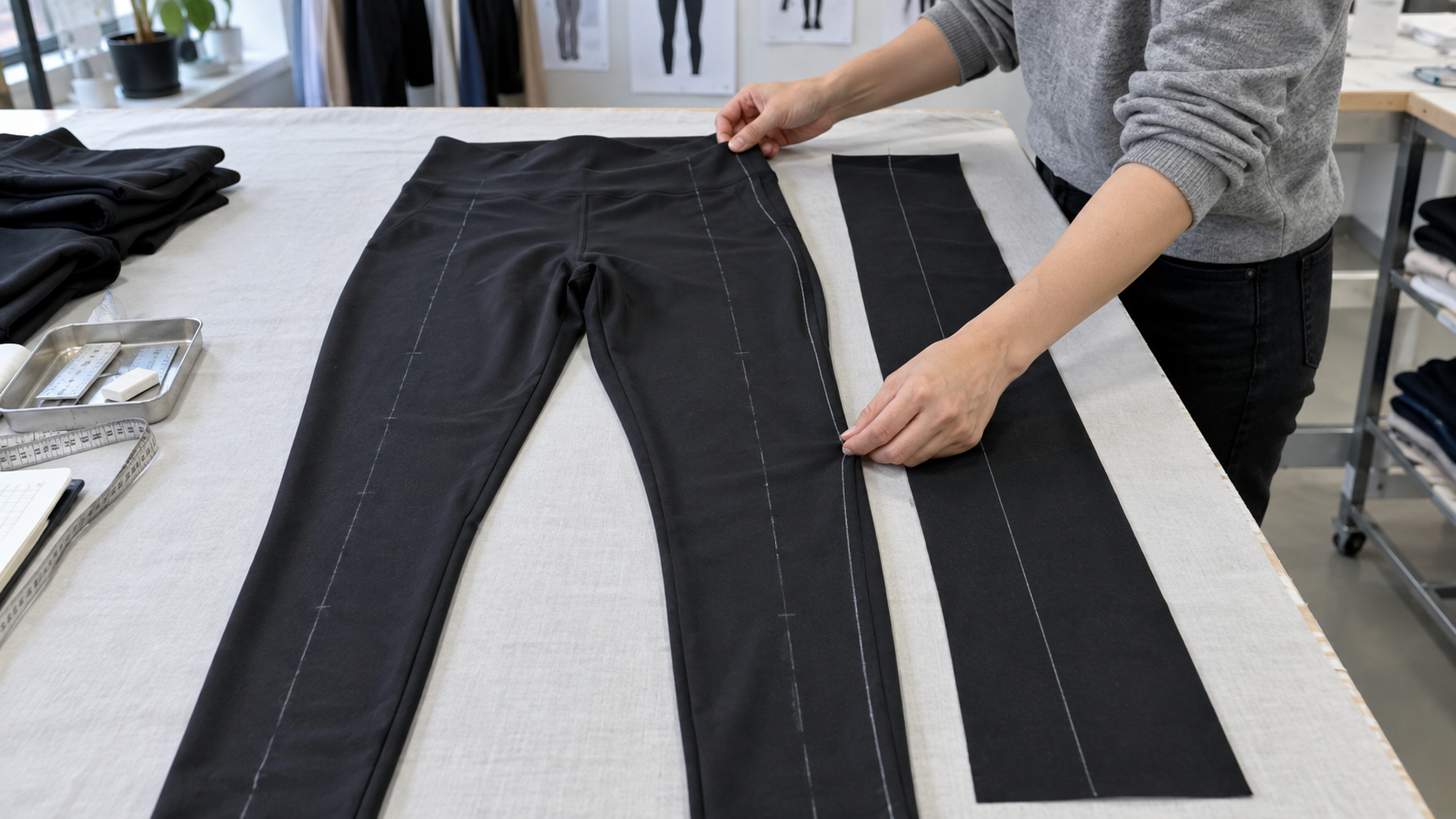
For a simple screening check, use the same wash or soak condition that created the complaint, then dry both pieces consistently. You are not trying to calculate a universal spirality percentage. You are asking whether the production garment changes more than the approved reference under the condition customers will use.
Three patterns point to different next steps
The whole leg rotates in one direction
This pattern makes fabric behavior, cutting direction, and panel orientation more likely. If many sizes and colors rotate in the same direction, the issue is less likely to be one customer’s body or one isolated seam.
Only one panel or one seam is displaced
Check the pattern piece, notches, seam allowance, and sewing alignment. A panel can be cut or joined slightly off even when the finished garment looks acceptable while relaxed.
The garment twists only on one color or lot
Compare fabric construction, finishing, and relaxation history. Do not assume every color uses material that behaves identically just because the composition label is the same.
Check the garment on a body, but do not blame the body first
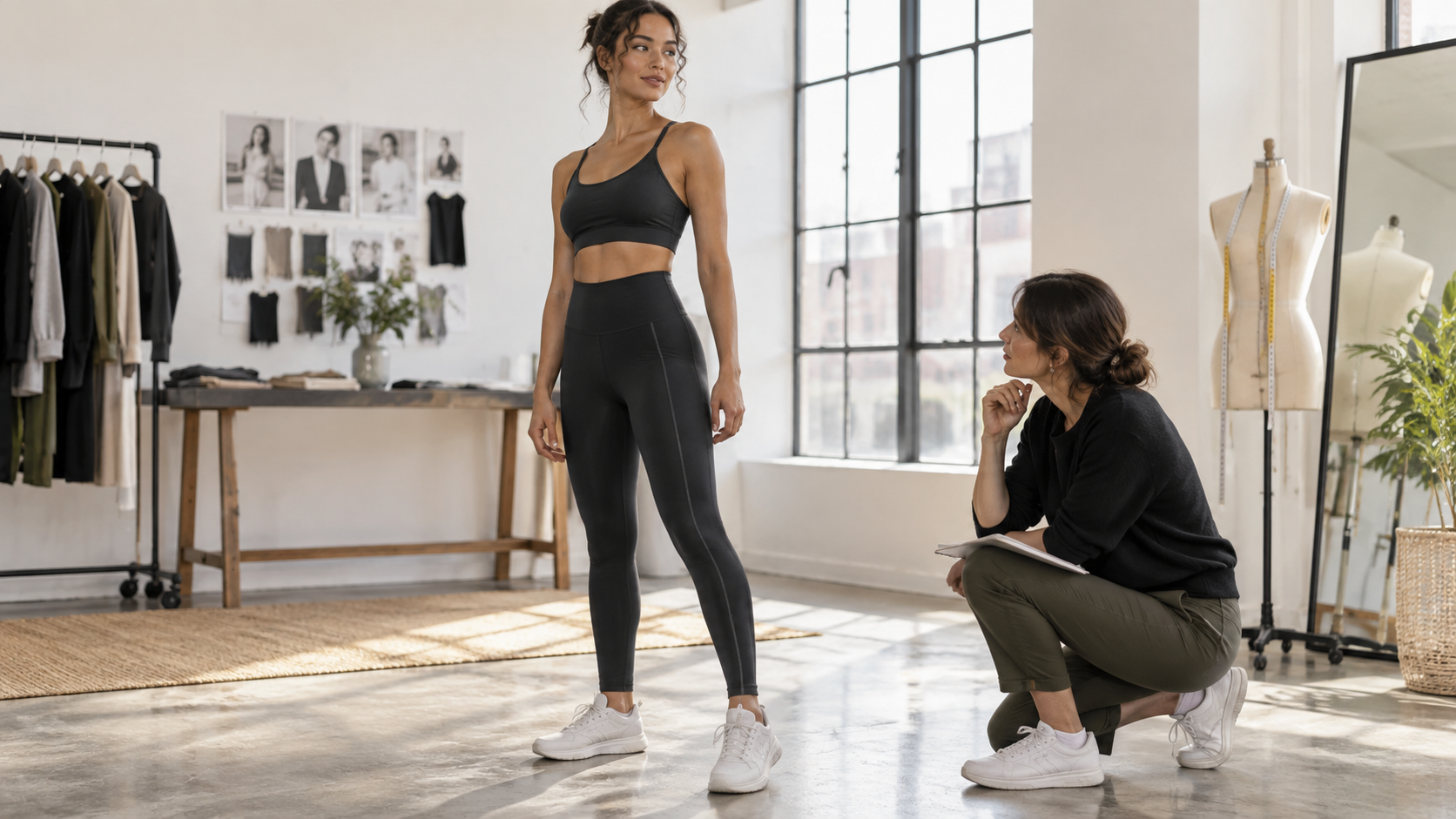
A fuller hip, different leg shape, or tight fit can make a small pattern imbalance more visible. The useful comparison is one garment on more than one body or one body in the approved and bulk references. If the seam rotates in the same direction on different wearers, the garment deserves more attention than the wearer.
On a model, check whether the seam is creating pressure, restricting movement, or simply looking visually off. A cosmetic rotation on a loose studio pant may be a different commercial decision from a tight legging whose seam keeps moving into a high-friction area.
What to do with affected leggings
Hold the color, size, or lot that shows the pattern until the scope is clear.
- Release: the garment remains within the approved visual and movement condition.
- Sort: the twist is limited to identifiable units or a material group.
- Rework: only when the correction can restore alignment without creating new tension or shine.
- Revise the next sample: the pattern, cutting direction, panel match, or fabric route needs to change.
Pressing a twisted leg flat can make an individual piece look better for a photograph while leaving the cause untouched. If the shape returns after wear or washing, the temporary improvement is not a reliable release decision.
Prevent the complaint at sample approval
Keep a physical approved sample and a photo of the side seam in a relaxed position. For a new knit, ask for the same garment to be reviewed after the relevant simple wash or rest condition before bulk approval.
Mark the panel direction and the side seam position in the production reference. The goal is not to burden a small order with a formal fabric research program. It is to remove one ambiguity that can otherwise appear only after the inventory is finished.
Where Battlerobe fits
If the sample exposes a repeatable shape or cutting issue, Battlerobe may help compare the reference garment, fabric behavior, and panel construction through small-batch custom development. This is the appropriate fork when the next sample needs a pattern or construction adjustment, not when a finished order only needs a cosmetic press.
Send the approved sample, affected garment, size and color, before-and-after photos, and the wash or rest condition. Battlerobe can help turn that evidence into a revised sample or a clearer production checkpoint, but a photo alone cannot guarantee that a finished pair will remain straight in every use condition.
Final decision
Leggings side seams twisting after washing should be judged against a reference under the same condition. Trace the direction of the twist, its scope, and its effect on movement before deciding whether to release, sort, rework, or redevelop.
For leggings side seams twisting after washing, the useful release record is the same garment before and after the relevant care condition, not a single flat photograph.