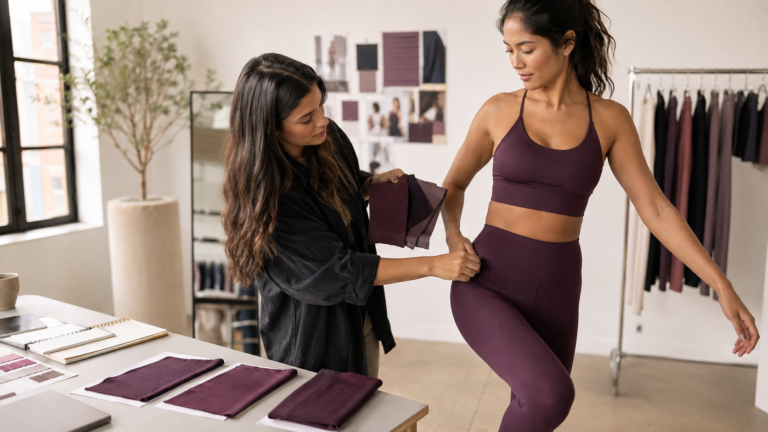


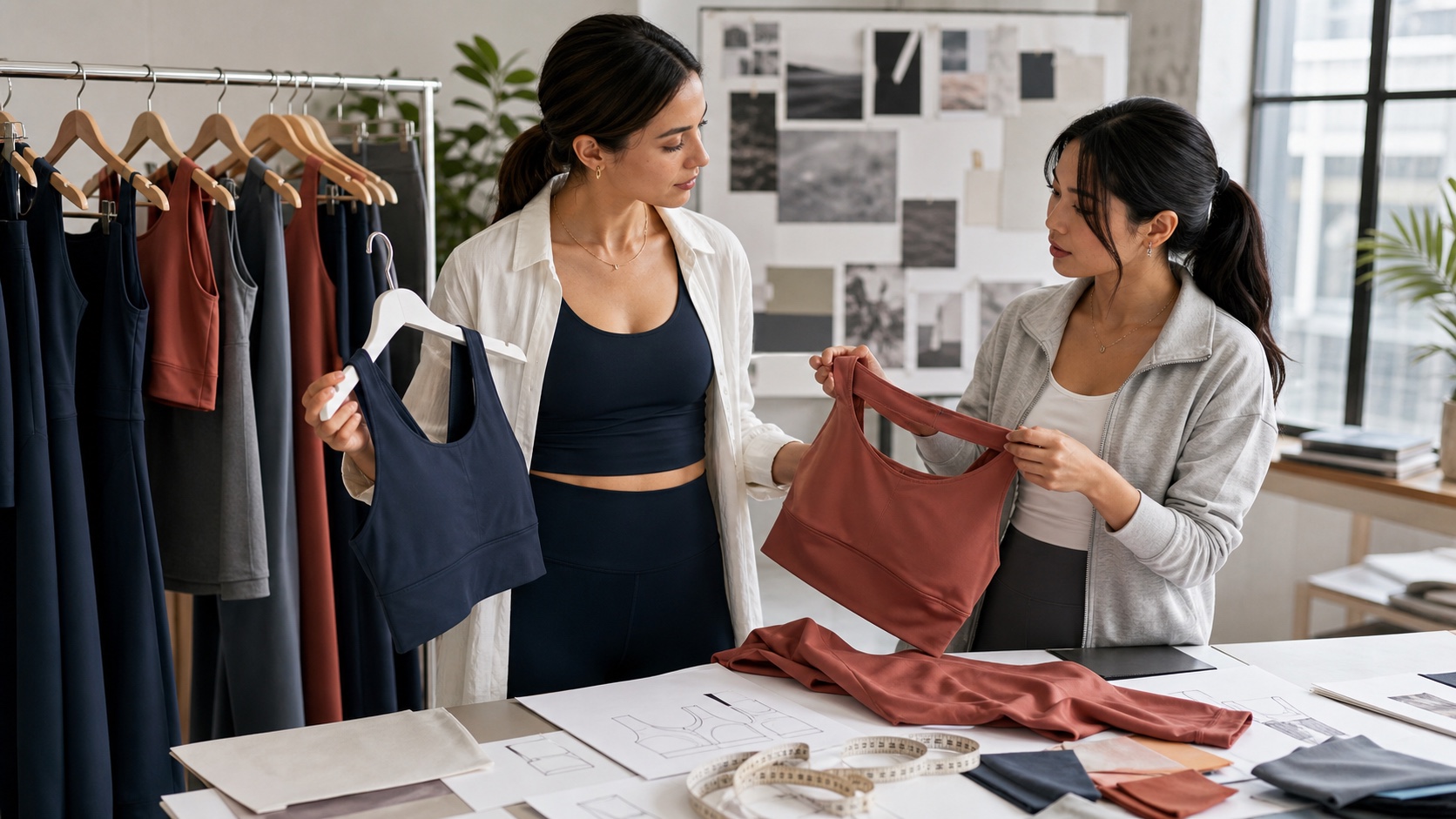
Activewear development does not always need to begin with an original pattern. Two founders can send the same leggings photo to a manufacturer and need two completely different projects.
One founder likes the general silhouette, can work with an available color, and mainly needs her logo, labels, and packaging. The other wants a different waistband, a different fit, and a shape built around a specific customer. The first founder may be ready to launch from an existing style. The second is asking for original product development.
The mistake is treating one route as the “serious” option and the other as the “cheap” option. Ready-to-custom and custom development answer different questions. The right choice is the one that tests what your brand still does not know.
This guide compares ready-to-custom with custom activewear development before you request samples, spend money on unnecessary changes, or test a product that cannot prove your real idea.
Do Not Choose a Route by Its Name
General guides such as Shopify’s explanation of private-label and white-label products can clarify the broad distinction, but suppliers may still define their programs differently. A much safer project question is:
What exactly am I allowed to change?
Ask about the silhouette, fabric, color, pattern, fit, logo, labels, packaging, sizes, and minimum quantities separately. The list of allowed changes tells you more than the service label.
At Battlerobe, the two small-batch routes have deliberately different boundaries:
- Small-Batch Ready-to-Custom uses existing silhouettes, predefined sizes, and available colors. Branding elements can be added, but the fabric, cut, pattern, and fit are not redesigned.
- Small-Batch Custom Development is for an original pattern or a meaningful change to silhouette, structure, or fit. It includes sampling and revision, while material and color choices still come from stock-ready options suitable for small-batch work.
Quick decision: If you would sell the existing garment after adding your brand identity, start by evaluating Ready-to-Custom. If the garment itself must change before it can deliver your customer promise, evaluate Custom Development.
The Real Question Is What Must Be Unique
Every founder wants the brand to feel distinctive. That does not mean every seam must be original.
A brand can initially be differentiated by its customer, styling, color selection, content, community, offer, or use occasion. A Pilates instructor creating a small class uniform may learn more from testing one well-chosen existing set than from developing an original five-piece collection.
But sometimes the garment is the promise. A fuller-bust strength tank, a coverage-led modest training top, or a nursing sports bra cannot be validated by applying a logo to a product that lacks the required function. If the feature that attracts the customer is missing, an existing style may test the wrong product.
Write one sentence before choosing your route:
“A customer should choose this product because __________.”
If the answer is mainly about the audience, identity, styling, or offer, an existing style may be enough for the first test. If the answer depends on a particular cut, coverage point, opening, fit, pocket, strap, or construction, the project is moving toward custom development.
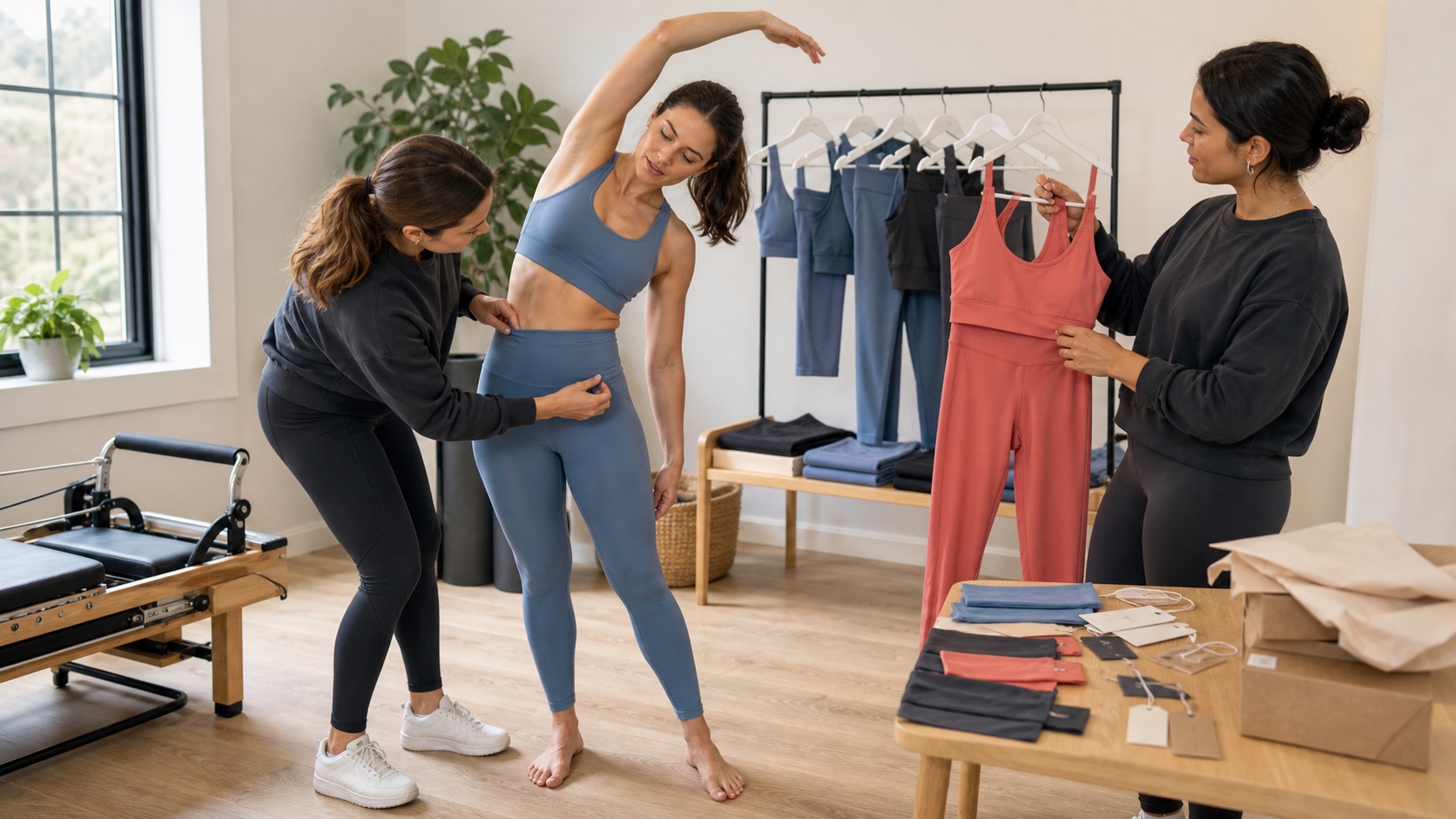
A Five-Question Route Test
Use these questions before asking for a quotation.
1. Would You Sell the Existing Silhouette Without Changing Its Fit?
If yes, do not create pattern work simply to make the project feel more original. Select the strongest existing option, inspect a sample, and concentrate on the branding and offer.
If no, name the problem. “I want it to feel different” is not enough. “The neckline needs more coverage for teaching,” “the waistband must sit higher,” or “the tank needs a different strap position” gives the project a reason to enter custom development.
Warning: Small visual changes can affect a pattern. Do not assume a manufacturer can quietly alter the neckline, rise, leg shape, or fit while keeping a ready-to-custom route.
2. Are Available Fabrics and Colors Acceptable?
For Ready-to-Custom, the answer must be yes. You are selecting from an existing product system rather than creating a new one.
Battlerobe’s small-batch custom route gives more control over the garment and lets the project choose from a stock-ready fabric pool, but it is still not a small-order textile-development program. High-MOQ mill-run fabrics and full custom fabric dyeing are not presented as part of this route.
If your fabric request is subjective—“more premium,” “buttery,” or “like my favorite leggings”—send or identify a physical reference and compare actual options. A fabric name or fiber percentage cannot communicate the complete hand feel.
3. What Do You Need the First Order to Teach You?
Ready-to-Custom is useful when the first uncertainty is commercial:
- Will this audience buy activewear from us?
- Which silhouette or color receives the strongest response?
- Can we present, price, and sell a coherent small capsule?
Custom Development is justified when the first uncertainty is the product:
- Can this new shape work on the intended wearer?
- Does the proposed change improve the use occasion?
- Can the design move from a reference or sketch into a sample worth refining?
A route is wrong when it cannot answer your most important question. A generic tank cannot validate demand for a special coverage feature. An expensive original pattern is unnecessary if you are only trying to learn whether an existing community wants branded merchandise.
4. Can You Explain the Required Difference?
You do not always need a finished professional tech pack to begin a conversation. You do need to separate three things:
- Keep: the details in the reference that express your intended direction.
- Change: the specific details that must be different.
- Unknown: decisions you want to review with the development team or confirm through a sample.
For example:
Keep: waist-length body and clean front.
Change: raise the neckline and widen the straps.
Unknown: which available fabric gives enough coverage without feeling too firm.
This is far more useful than sending five unrelated screenshots and asking for “something similar.” It also reduces the risk of using another brand’s product as a copying instruction rather than as limited visual reference.
5. Are You Ready to Review and Revise a Sample?
Custom development requires decisions. A founder must be prepared to try on the sample, compare it with the original brief, identify where a problem appears, and give clear feedback.
If every decision is still open—customer, activity, silhouette, length, support, color, and price direction—sampling will not create a clear brand for you. Narrow the idea first.
Conversely, if an existing garment already meets the need, do not add arbitrary changes simply to justify custom development. Unnecessary changes create more decisions without necessarily creating more customer value.
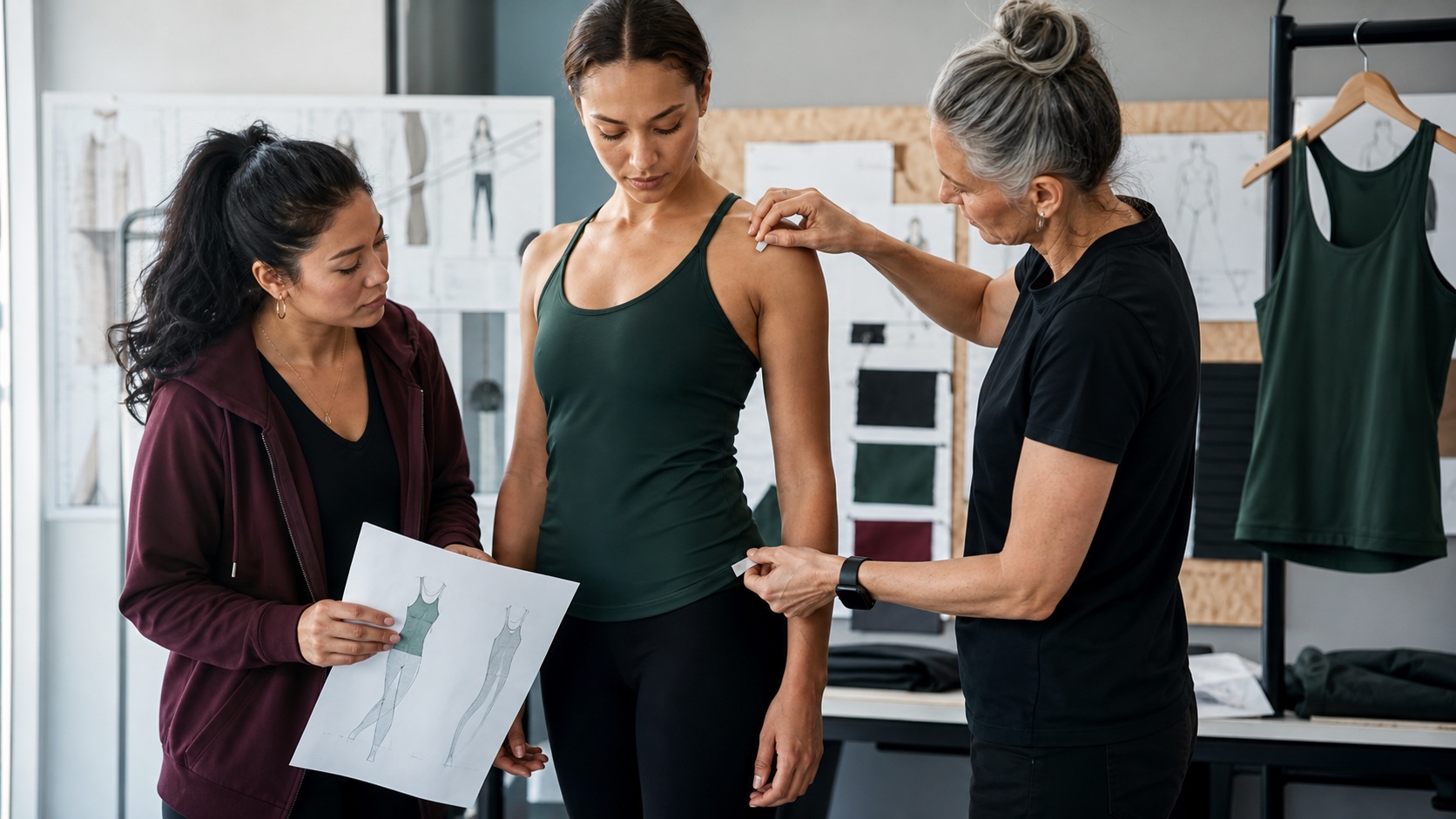
What Neither Route Solves for You
Choosing the correct production route removes the wrong kind of work. It does not remove the founder’s responsibility to judge the product.
Ready-to-Custom does not make every existing style a good product for your customer. You still need to inspect the sample, try it during the intended activity, review coverage and comfort, and decide whether the available colors and sizing fit the offer. The route removes original pattern development; it does not replace product selection.
Custom Development does not create differentiation from an unclear idea. A new pattern cannot decide who the customer is, which problem matters, or whether every feature on a moodboard belongs in one garment. Sampling works best when it confirms a focused idea. It becomes expensive confusion when each sample is asked to discover a new direction.
Use this stop rule: if you cannot explain why an existing style is sufficient, do not order it yet. If you cannot explain why an existing style is insufficient, do not start custom development yet.
Ready-to-Custom vs Custom Activewear Development: Decision Sheet
| Decision | Ready-to-Custom is more suitable when… | Custom Development is more suitable when… |
|---|---|---|
| Silhouette | An existing style already works | The cut, pattern, structure, or fit must change |
| Differentiation | The first advantage is audience, branding, styling, offer, or community | The customer promise depends on a garment feature |
| Fabric and color | Existing fabric and available colors are acceptable | The garment needs a different stock-ready material direction or stock color within the project’s confirmed options |
| Input | You can select a current style and define branding | You can explain the intended wearer, use, references, and required changes |
| Learning goal | You mainly need to test demand and presentation | You need to test a differentiated product idea |
| Founder workload | You want fewer product decisions | You are ready to review samples and make specific decisions |
This table is not a universal manufacturing law. It is a practical filter. Feasibility, materials, minimums, price, sampling, and timing still need to be confirmed for the actual project.
Three Founders, Three Different Answers
The Instructor Launching a Class Capsule
An instructor has a trusted local audience and wants a coordinated bra-and-legging set for clients. Her first question is whether people will wear her brand outside class. She does not yet have a fit innovation.
A Ready-to-Custom test may be appropriate: choose an existing style, use available colors, add a restrained logo and brand packaging, and test a concentrated capsule. This follows the audience-first logic in our guide to the fitness instructor activewear brand opportunity.
The Founder Building Around an Unmet Fit Need
A founder wants a strength-training tank for fuller-bust customers. The reason to buy is not the logo; it is a specific combination of coverage, hold, strap position, and an outerwear look.
An unrelated existing tank would not prove that concept. The founder should prepare a custom-development brief, start with one use occasion and one fit direction, then judge the physical sample. The product decision is closer to the one described in our fuller-bust activewear opportunity.
The Founder With a Moodboard but No Product Decision
A founder has twenty screenshots, three color palettes, and no clear target customer. She asks for an original collection because she wants the brand to look different.
Neither route is ready. The immediate job is to choose one product, one wearer, one use occasion, and a short keep/change/unknown list. Sampling before that decision would turn uncertainty into revisions rather than remove it.
What to Send for Each Route
For a Ready-to-Custom Inquiry
- The selected existing style or the type of style you want to review
- Available color preferences
- Estimated quantities by style, color, and size
- Logo artwork, preferred placement, and approximate size
- Main label, care label, hangtag, packaging, and insert needs
- Target launch timing and delivery destination
On Battlerobe’s current Ready-to-Custom page, the stated minimum is 20 pieces per style and 100 pieces per total order, with sizes and available colors mixable within the same style. Confirm current availability before building the final assortment.
For a Custom Development Inquiry
- One product type and its intended use
- Target wearer and size direction
- Reference images, sketch, tech pack, or physical sample
- A keep/change/unknown list
- Any useful physical reference for fit or fabric feel
- Branding and packaging requirements
- Estimated quantity, timing, and the decisions you need the sample to answer
Battlerobe reviews the project brief before confirming feasibility, material options, sampling, MOQ, quotation, and timing. Do not assume the Ready-to-Custom quantities apply to a custom project.
A Hybrid Path Is Often More Sensible Than an All-or-Nothing Choice
A brand does not have to remain permanently ready-to-custom or become fully custom in one jump.
One practical sequence is:
- Use a small group of existing styles to learn which category, silhouette, and offer attract real demand.
- Listen for repeated product-specific feedback rather than treating every personal preference as a development instruction.
- Choose one winning product role or unresolved customer problem.
- Move that one product into custom development while keeping supporting products simpler.
This approach concentrates development attention where it can create a meaningful product difference. It also prevents a first-time founder from custom-developing an entire collection before knowing which item deserves the work.
There is one important exception: if the brand’s original promise depends on fit, coverage, access, support, or another garment feature, starting with an unrelated existing style may produce misleading feedback. In that case, reduce the number of products—not the feature that defines the idea.
The Decision to Make Before You Ask for a Sample
Ready-to-Custom is not a lesser brand route. Custom Activewear Development is not proof of ambition. They are tools for removing different uncertainties.
Before contacting a manufacturer, finish these two sentences:
“The part of this product that must be unique is __________.”
“The first order or sample needs to teach us __________.”
If an existing style can protect the first answer and test the second, evaluate Ready-to-Custom. If the first answer requires a different garment, prepare for Custom Development. If you cannot complete either sentence, your next step is not sampling—it is clarifying the product.
For the broader process after route selection, see Activewear Product Development: From Idea to Production. When you are ready to discuss a project with Battlerobe, send the relevant route checklist above. The useful first conversation is not “Can you make activewear?” It is “Here is what must stay, what must change, and what we need the first sample or order to prove.”