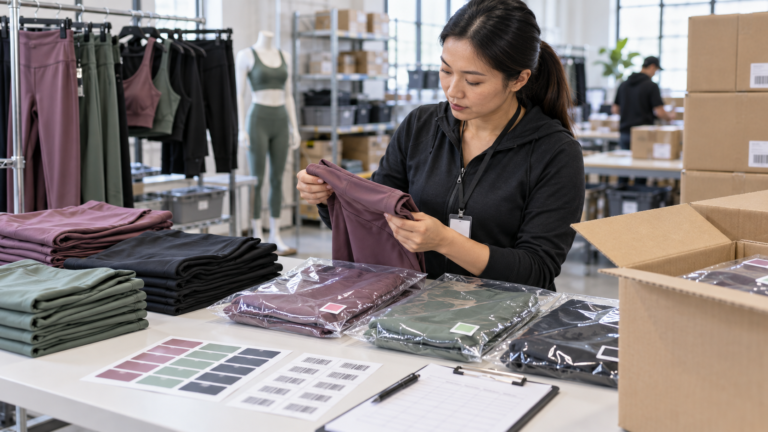


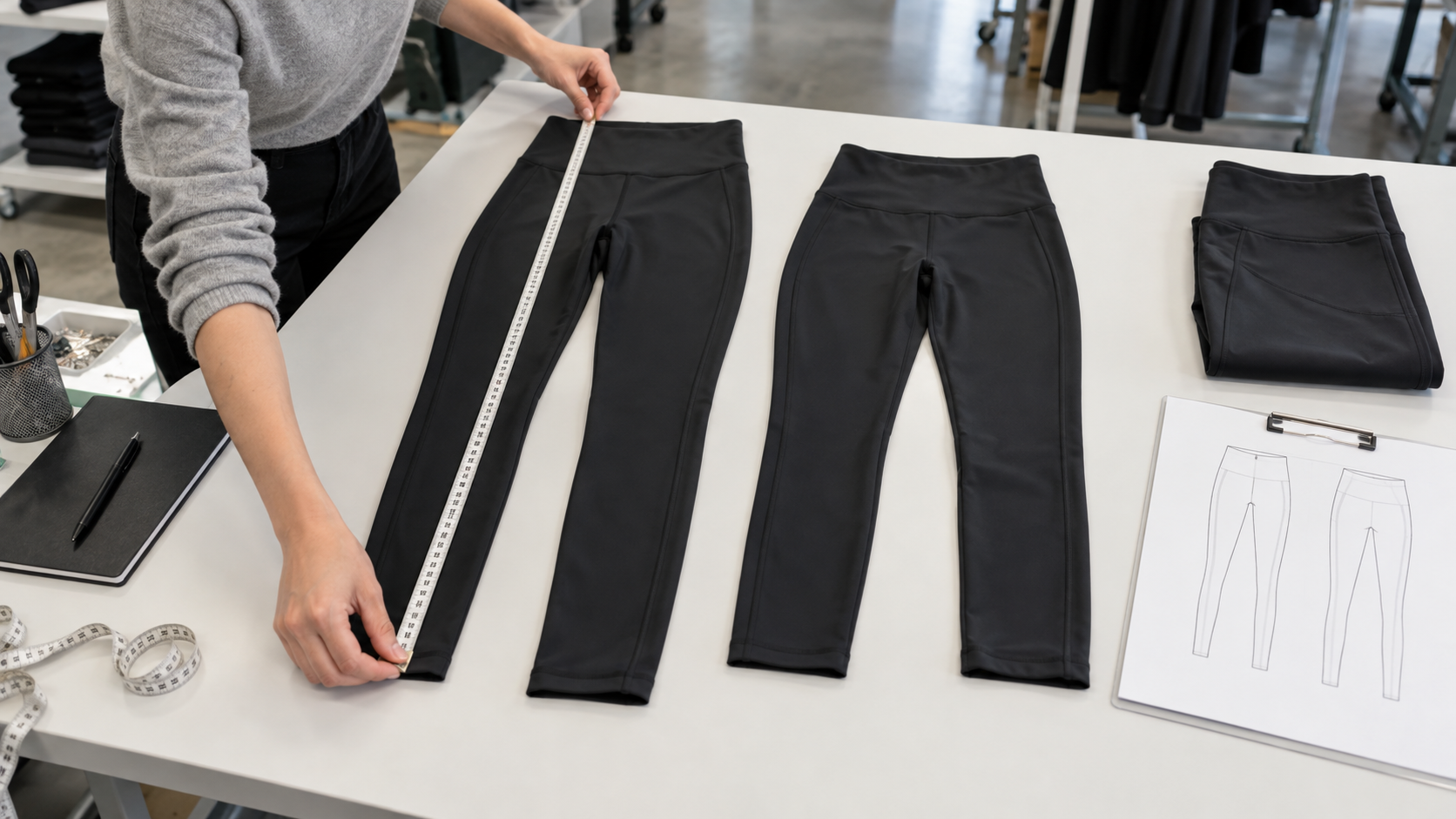
“They all have the same size label, but the waist and length are not the same.”
Same size activewear fits differently is one of the most expensive complaints for a small brand because it can be blamed on the customer, the size chart, the pattern, the cutting room, or the sewing line. Sometimes the garments really are inconsistent. Sometimes the size is consistent but the fit promise was never defined clearly.
The first job is to separate a measurement difference from a normal fit difference. You need an approved reference, the same measurement points, and enough units to see whether the problem repeats.
Same label does not automatically mean same fit experience
A garment can have the same label while differing in waist, hip, rise, inseam, armhole, strap length, or panel balance. Small differences may also feel larger on a tight stretch garment than on a loose top.
QIMA explains that garment inspection needs both dimension checks and a fit check because matching measurements do not always guarantee the final garment will sit correctly on a body. That distinction matters: measurement consistency and fit approval are related, not interchangeable.
Ask the customer or inspection team to identify the exact complaint. “Small” is not enough. Is the waistband tighter, the leg shorter, the rise lower, the armhole higher, or the whole garment rotated?
Build a comparison before measuring everything
Do not begin with the size chart. Begin with one approved garment and three units carrying the same label. If those pieces do not agree when placed in the same position, you have a production comparison to investigate before rewriting customer guidance.
Choose one approved sample and three or more production units from the same size. Lay them flat without stretching them into agreement. Mark the same points on every piece: waistband, hip, rise, inseam, hem, or the relevant top measurements.
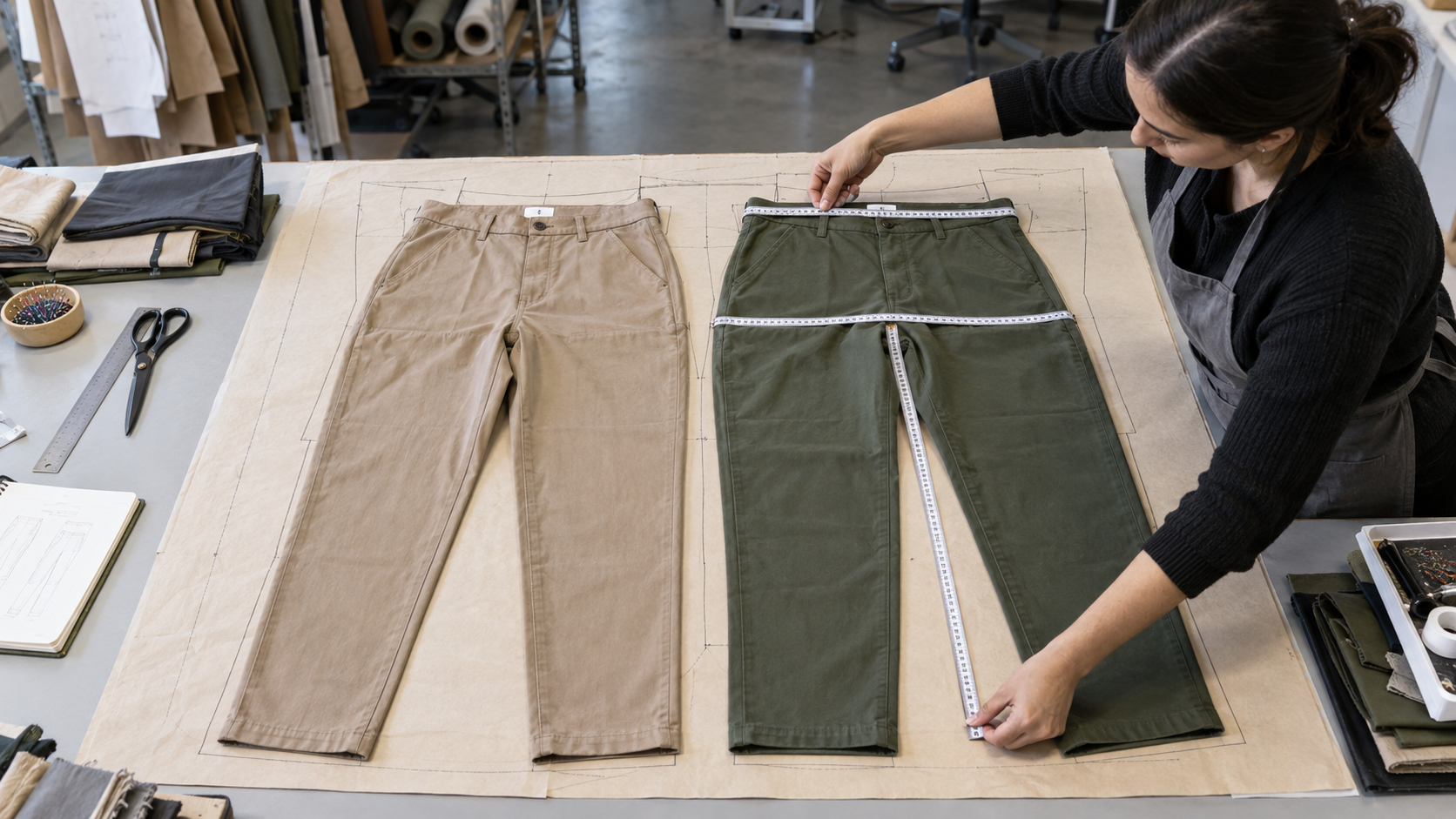
Look for a pattern:
- one unit is different while the others match;
- all units are different from the approved sample;
- one size or color is different;
- the waist matches but the rise or length does not;
- the measurement matches but the garment sits differently on a body.
This pattern decides whether you should inspect one garment, hold a group, or reopen the sample and size reference.
Why the same size can drift
Grading or pattern reference changed
If every production unit in a size moves away from the approved sample, check whether the factory used the same pattern version and grading reference. A revised file with a familiar name can still have different points.
Cutting or fabric relaxation changed the panel
Stretch fabric may not lie or recover identically when panels are cut, stacked, or handled. Compare several units from the same cutting group before deciding that a single measurement explains the whole order.
Sewing pulled the garment out of shape
High tension, uneven feeding, or different handling can change a garment’s finished length or width even when the cut panels were correct. The result may be most visible at a waistband, armhole, or curved seam.
The reference was incomplete
If the brand approved a photograph but never recorded the key measurements or fit condition, the supplier may have been working from a visual interpretation. That does not remove the problem; it changes how the next order must be controlled.
Measure the point that changes the customer decision
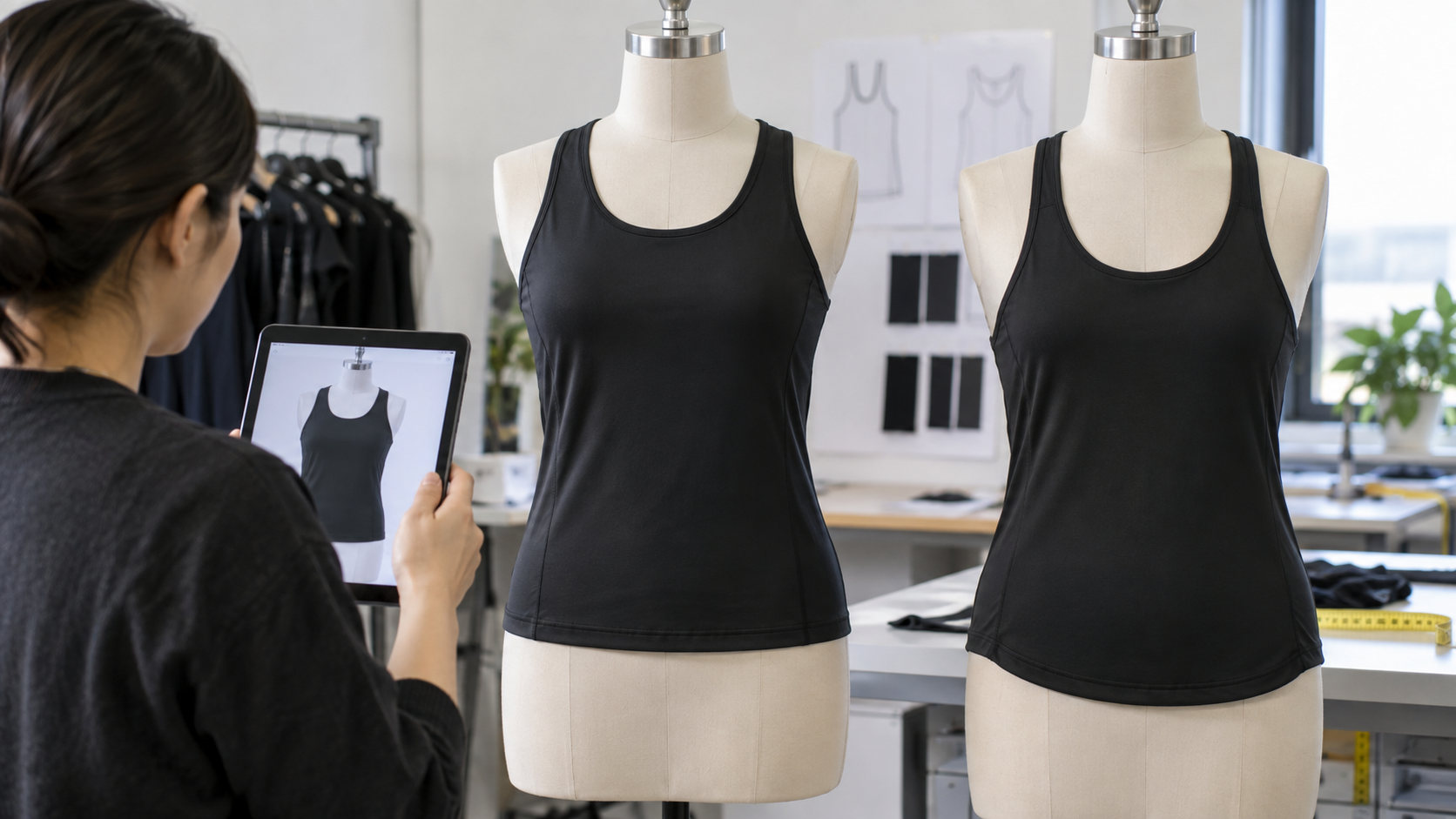
Do not measure every seam by habit. Start with the point connected to the complaint. If customers cannot pull the leggings over the hips, check waist and hip. If the leggings feel short, check rise and inseam. If the top cuts into the arm, check armhole and side length.
Use the same flat position and the same measurement method for every unit. A measurement without a repeatable position can create another argument instead of resolving the first one.
What to do with current goods
Separate the decision into scope and consequence.
- One isolated unit: check whether it is a workmanship or measurement outlier before holding the whole batch.
- A repeated group: identify the size, color, lot, operator, or production period and hold that group.
- All units differ from the approved sample: stop arguing about individual customers and compare the pattern, sample, and production reference.
- Measurements match but fit differs: perform a wear or mannequin comparison and inspect balance, stretch, and construction.
Do not solve a real size inconsistency with a vague instruction to “tell customers to size up.” That may hide a return problem for one customer while creating a new fit problem for another.
Make the next order easier to inspect
Keep the approved physical sample, the pattern or measurement sheet used for approval, and a small set of reference photos. QIMA notes that product specifications should define measurement points, standard measurements, and acceptable tolerances for inspection. For a small brand, this can begin with only the points that affect fit, appearance, and returns.
Before bulk, approve the first finished pieces in the most important sizes. During production, compare the same points on a small group before the line continues. At final inspection, distinguish isolated workmanship from a repeated size drift.
Where Battlerobe becomes useful
If the product is already approved and the main risk is repeat consistency, bulk custom production is the relevant Battlerobe route. The practical work is to carry forward the approved sample, critical measurement points, size/color references, and the inspection decision—not to promise that every body will experience the garment identically.
Send the approved reference, three affected units if available, the size and color, marked measurement photos, and the decision you need: sort, rework, revise the size chart, or stop the next cut. Battlerobe can help carry that approved reference into a future production checkpoint, but if the original brief is unclear, the answer may need to move back into sample development first.
Final decision
Same size activewear fits differently only becomes a production decision when the comparison is specific. Identify the measurement or fit point, establish the scope, and compare with the approved reference before deciding whether to sort goods, correct an operation, revise the pattern, or change the size guidance.
When same size activewear fits differently, keep the affected units beside the approved sample until the next action is clear; do not rewrite the size chart from one complaint.