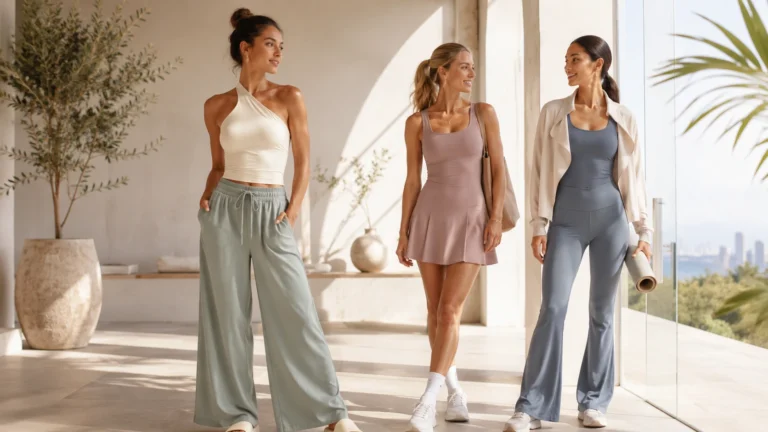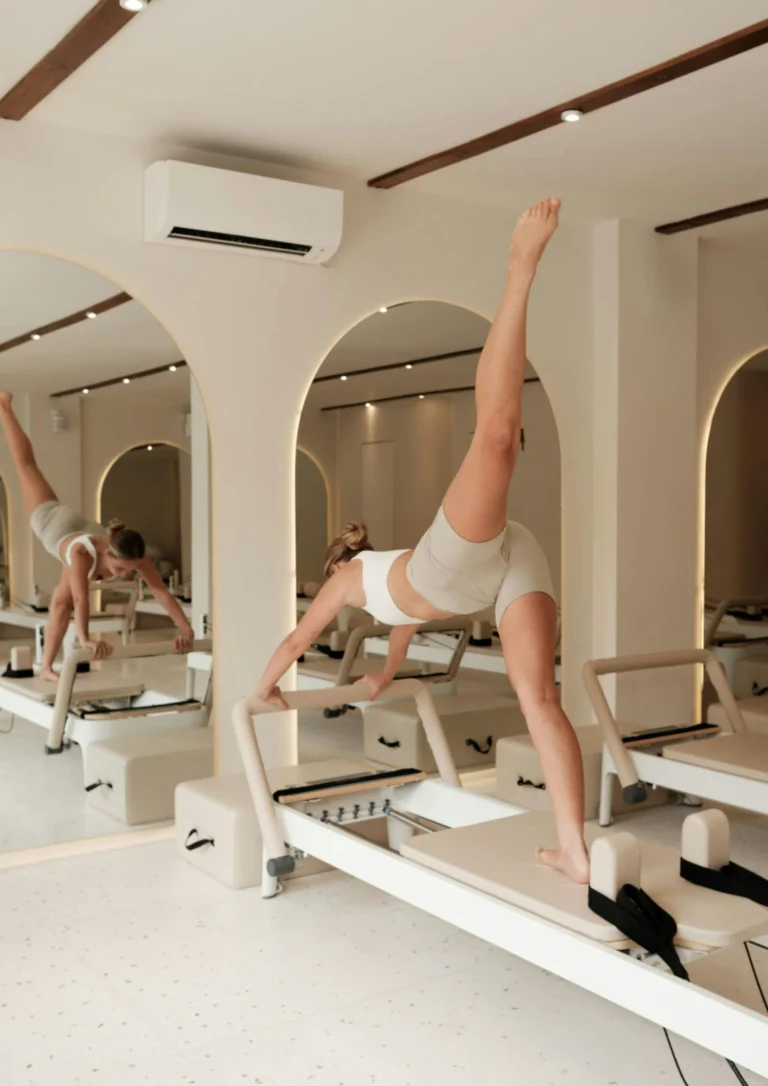


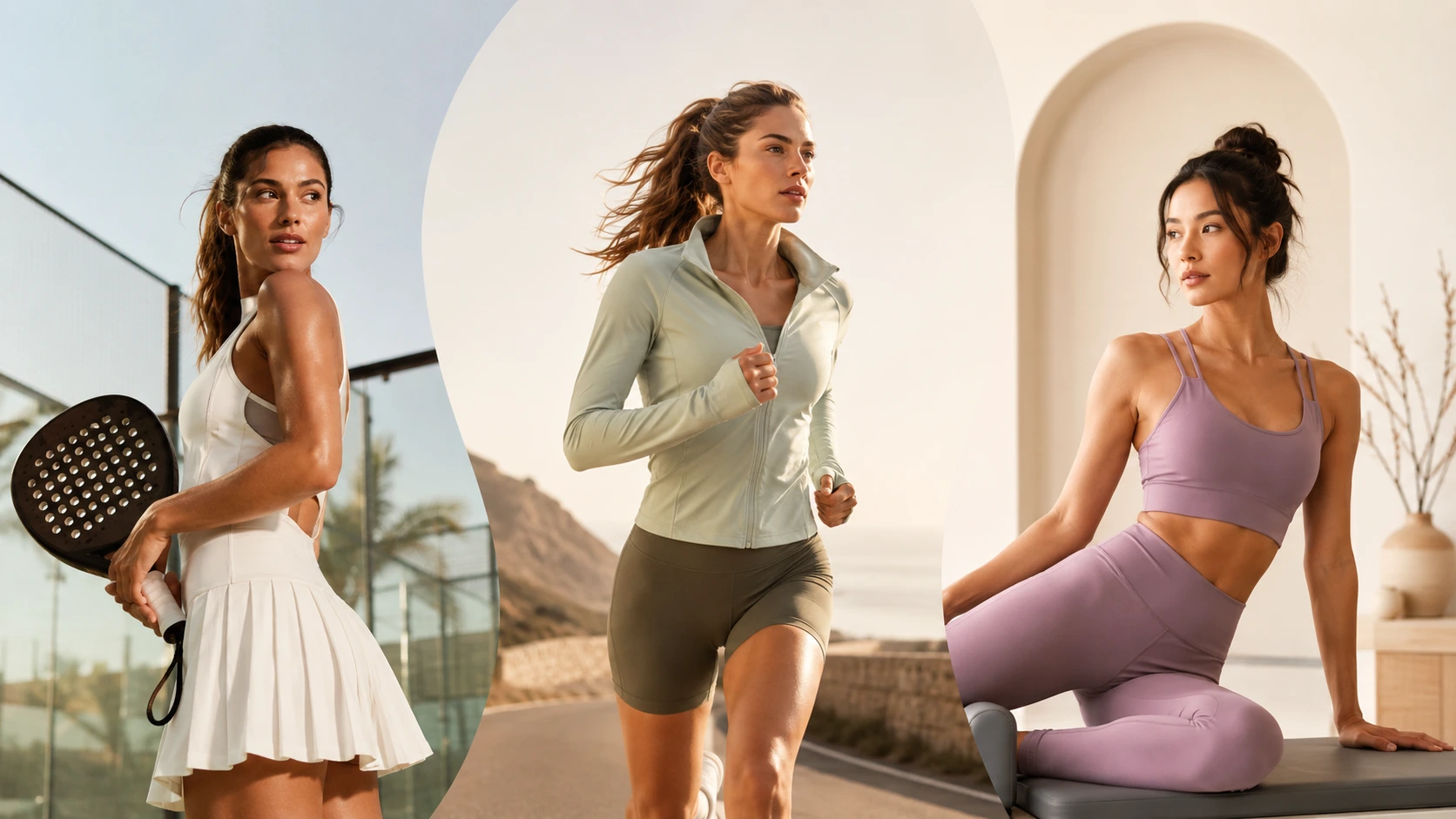
When Leelo Active launched in 2019, Pilates was not new.
Leggings were not new.
Women’s activewear was certainly not new.
What mattered was that Pilates was beginning to change from an exercise format into something larger: a social identity, an aesthetic, a studio culture and eventually a lifestyle.
As explored in our Leelo Active case study, the brand did not need to invent a new sport. It needed to recognize a cultural shift early enough to become closely associated with it.
That is an important distinction for anyone considering an activewear brand today.
The next meaningful opportunity is unlikely to be “another yoga brand” or “better leggings.”
It is more likely to appear where three things begin happening at the same time:
participation is growing, a community or identity is forming around the activity, and existing brands are still serving the category too broadly.
That matters because the broader sporting-goods market is still growing, but growth alone is no longer enough. McKinsey and the World Federation of the Sporting Goods Industry expect the global sporting-goods market to grow by roughly 6% annually from 2024 to 2029. At the same time, challenger brands have been taking share from large incumbents by targeting specific sports, consumers and cultural groups with much sharper propositions. McKinsey found that 41% of surveyed Millennials and Gen Z consumers had started a new sport within the previous year, while 27% said social media influenced them to try one. 麦肯锡公司
The opportunity, therefore, is not simply to enter a growing market.
It is to find a growing identity within that market.
Based on current participation data, consumer behavior and the way sports are increasingly merging with fashion, community and lifestyle, these are the areas I would investigate most seriously between now and 2029.
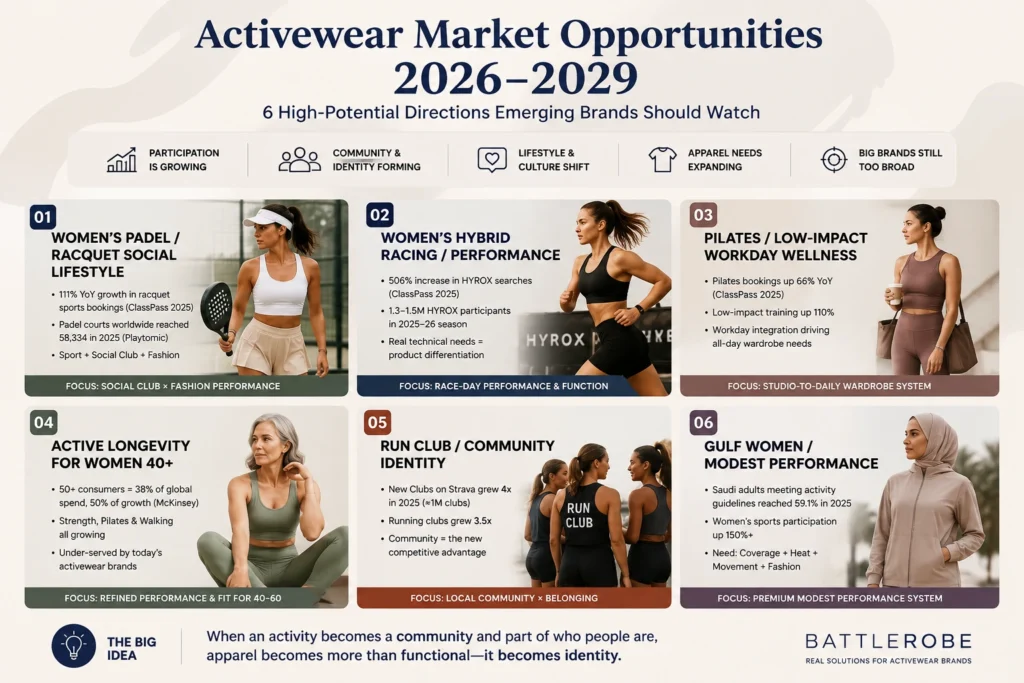
Padel Could Become the Next Major Social-Sport Fashion Category
Of all the opportunities I examined, women’s padel and broader racquet-sport lifestyle is one of the most compelling.
ClassPass recorded a 111% year-over-year increase in racquet-sport bookings in 2025, with North America growing 218%. Pickleball reservations grew 748% globally and 1,100% in APAC. ClassPass
Padel’s physical infrastructure is expanding at the same time. According to the Playtomic Global Padel Report 2026, 7,898 new padel courts and 4,969 new clubs were added globally during 2025, bringing the worldwide court base to approximately 58,334. The report estimates roughly 19.4 million players worldwide. Playtomic
Those numbers are interesting.
But they are not the main reason I like the category.
The important part is how people experience padel.
Padel is usually played with other people. Clubs naturally create waiting areas, cafés, social events, leagues and tournaments. The latest Playtomic research increasingly describes successful padel clubs not simply as places where people rent courts, but as broader social and wellness destinations. HubSpot
That gives apparel a much larger job than pure athletic performance.
A woman may arrive at the club, play for an hour, sit with friends afterwards, take photographs, have coffee and continue wearing the same outfit.
That begins to resemble the cultural conditions that helped Pilates activewear expand beyond the studio.
Where I see the actual brand opportunity
I would not launch another traditional tennis-inspired brand built around white polo shirts and pleated skirts.
That territory is already well understood.
I would position closer to:
Women × Padel × Social Club × Fashion Performance.
The customer is not necessarily a serious tournament athlete.
She may be a 23–38-year-old urban consumer who sees padel simultaneously as exercise, social activity and leisure.
The clothing should therefore feel more fashion-forward than traditional tenniswear, while still genuinely working for lateral movement, heat and pockets.
A first collection could be remarkably small: one excellent 2-in-1 skirt, one fitted performance tank, one bra-tank hybrid, one short with a genuinely useful ball pocket, one dress and one lightweight warm-up layer.
The visual opportunity sits somewhere between:
sport + resort + social club + contemporary women’s fashion.
And I would deliberately design at least one product that becomes recognizable away from the court.
That might be the skirt proportion, a curved waist construction, a distinctive dress back or a recognizable color-blocking system.
The goal is not just to make “padel clothing.”
It is to make clothing that starts to symbolize being part of padel culture.
The biggest mistake
The obvious mistake would be treating today’s padel growth as permission to build a huge collection immediately.
Infrastructure is growing quickly, but the market is at very different stages across countries. HubSpot
A brand should first dominate one city, club network or regional community rather than trying to look global from launch.
If I were starting with limited capital, I would rather be:
the brand repeatedly seen at five important padel clubs in one city
than:
an unknown international “padel brand” shipping everywhere.
That is how a small company can use concentration against much larger competitors.
Women’s Hybrid Racing May Create a New Performance Identity
The second opportunity is almost the opposite of the Pilates aesthetic.
HYROX combines running with functional exercise stations in a standardized competition format. What matters commercially is that it gives ordinary gym users something many of them did not previously have:
a race to train for.
ClassPass recorded a 506% increase in HYROX-related searches in 2025 and a 432% increase in reservations. ClassPass
HYROX’s own 2025 Sports Science Report projected roughly 1.3–1.5 million participants during the 2025–26 season. Hyrox
This changes consumer psychology.
There is a significant difference between:
I go to the gym.
and:
I am training for my race.
The second creates identity, deadlines, progress, community and equipment needs.
Strava’s broader data supports the same shift. Gen Z users were 75% more likely than Gen X to say a race or event was their main exercise motivation, while women were 21% more likely than men to record weight training on Strava in 2025. Strava新闻
The opportunity is not another Gymshark
I would avoid entering this market as:
Women’s Gymwear.
That market is already extremely crowded.
I would instead explore:
Women × Hybrid Training × Race-Day Performance.
Think of a consumer who strength trains, runs, does intervals and signs up for competitive events but does not necessarily identify with hardcore CrossFit culture.
Her product needs are more technical than those of a general Pilates customer.
A serious first capsule might focus on a high-support bra, stable-waist performance shorts, a race legging, a lightweight singlet and a warm-up layer.
And here product development matters.
The questions are no longer simply:
Is the color attractive?
They become:
Does the waistband move during running?
Does the fabric stay comfortable when saturated with sweat?
Where do seams sit during lunges and sled work?
Can the phone or nutrition pocket remain stable while running?
Does the bra still support during repeated transitions?
Does the short ride up?
Those problems create room for a smaller specialist brand because the product can become genuinely better for a specific user.
That is exactly the type of category where custom development starts making more sense earlier.
If a brand’s entire proposition is a better hybrid-racing product, testing generic gym leggings for a year will not teach it enough.
It needs to test the thing that makes it different.
One caution: HYROX is a protected brand and its own terms prohibit unauthorized use that implies sponsorship or affiliation. A new independent brand can target hybrid training and fitness racing without pretending to be an official HYROX partner. Hyrox
The broader opportunity is the activity culture.
Not the trademark.
Pilates Is Still Growing—but the Easy “Pilates Girl” Opportunity Is Becoming Crowded
It would be a mistake to conclude that Pilates is over simply because brands such as Leelo, WISKII and many others have already entered the category.
The participation numbers remain extraordinary.
According to the ClassPass 2025 Look Back Report, Pilates remained the most-booked workout globally for the third consecutive year, with bookings increasing 66% year over year. Reformer Pilates grew 71%, while Mat Pilates grew 114%. More than 15 million Pilates reservations were made on ClassPass during the reporting period, and Pilates was the most rebooked workout category in every region. ClassPass
So demand is not the problem.
Sameness is.
Another brand built around beige leggings, flare pants, a coffee cup and the words “Pilates Princess” does not automatically have a market position.
The first phase of the opportunity was:
Pilates as aesthetic.
I think the next phase will be:
Pilates as an all-day low-impact lifestyle system.
ClassPass offers a clue. Low-impact training grew more than 110% in 2025, while workout bookings between 11 a.m. and 1 p.m. rose 38%. At the same time, food-and-beverage ordering through ClassPass rose 121%, reinforcing the extent to which exercise, work, food and wellness routines are beginning to overlap. ClassPass
Where I would take the category next
I would target something closer to:
Low-Impact Training × Professional Women × Workday Wellness.
The product question becomes:
What does a woman wear if her workout is integrated into her day rather than separated from it?
That opens a slightly different product architecture.
Instead of five different sports bras and six nearly identical leggings, I would investigate a tight system containing a sculpt legging, straight or flare bottom, fitted tank, bra, refined lightweight jacket or cardigan-style layer and one genuinely lifestyle-oriented trouser.
The clothes should work across:
work-from-anywhere,
commuting,
studio,
coffee,
errands,
travel.
This is less about making everything more fashionable.
It is about reducing the number of times a woman needs to completely change identities during the day.
Mat Pilates is particularly interesting here. Its 114% booking growth matters because it does not require expensive reformer infrastructure in the same way studio reformer training does. ClassPass
That potentially broadens participation beyond affluent boutique-studio users.
So I would not abandon Pilates.
I would abandon undifferentiated Pilates branding.
The next brand still has room if it develops a more specific woman, use case and product system than the brands already occupying the first wave.
Activewear for Women 40+ May Be a Bigger Opportunity Than Another Gen-Z Brand
Not every opportunity comes from a new sport.
Some come from an ignored customer.
Much of contemporary activewear marketing still behaves as if its core customer is in her twenties.
The economics of fashion say otherwise.
McKinsey’s 2025 fashion research estimates that consumers aged 50 and older already account for approximately 38% of global consumer spending and around half of the growth in consumer spending, while fashion companies continue to place disproportionate attention on younger generations. 麦肯锡公司
At the same time, the underlying activities that work particularly well for an active-longevity consumer are growing. Strength training bookings increased 27% on ClassPass in 2025, Pilates grew 66%, low-impact training grew more than 110%, and walking became the second-most-recorded activity on Strava. ClassPass
I think there is a very credible brand position sitting between those trends:
Women 40–60 × Strength + Pilates + Walking × Refined Performance.
This should not be marketed as:
Activewear for old women.
That would be both commercially clumsy and conceptually wrong.
The customer does not necessarily want to be reminded of her age.
She wants products designed around what she values now.
The product opportunity
Many youth-led gym brands emphasize extreme compression, crop lengths, highly revealing cuts and trend-heavy styling.
There is room for a brand that remains attractive and modern while placing more thought into:
coverage,
support,
easy layering,
stable waist construction,
useful pockets,
good bra architecture,
refined silhouettes,
and fabrics that feel premium rather than aggressively “gym.”
The resulting brand should not feel medical or conservative.
I would position it much closer to:
capable, sophisticated and physically active.
A five-product opening collection might be enough: a very good legging, a straight or wide-leg active trouser, a medium-support bra with thoughtful construction, a longer fitted tank and a lightweight jacket.
The key here would be fit testing.
Do not simply take a product designed around a 22-year-old fit model, extend the size chart and declare the market solved.
Recruit the intended consumers into the development process.
A brand could build an unusually strong relationship with this segment simply by asking them questions most youth-focused activewear companies rarely ask.
This opportunity is less likely to go viral overnight than padel or HYROX.
But I think it may have better structural longevity because it is built on demographics rather than one aesthetic cycle.
Run Clubs Are Turning Running From an Individual Sport Into a Social Network
Running itself is obviously not an emerging market.
Trying to outperform Nike, Adidas, ASICS, On or HOKA at broad technical running would be a difficult starting strategy for a small apparel brand.
But something different is happening around running.
According to Strava’s 2025 Year in Sport report, new Clubs on the platform nearly quadrupled during the year, bringing the total to roughly one million. Running clubs grew 3.5×, while club-organized events increased 1.5×. Strava also found Gen Z users were significantly more likely to use exercise to meet people with common interests. Strava新闻
The opportunity is therefore not:
running apparel.
It is:
Run Club × Community × Social Identity.
That is much narrower.
And much more interesting for a challenger brand.
I would start locally, not with performance claims
A new brand does not need to make the world’s fastest marathon singlet.
It can first become the product worn by a specific community.
A launch capsule might consist of a running short, supportive bra, lightweight fitted tank, singlet, cap and packable jacket.
Then instead of spending the first $20,000 purely on Meta Ads, part of the growth budget could go toward relationships with actual run clubs.
Not simply sponsorship.
Think:
club-specific capsules,
limited colors,
local race weekends,
post-run coffee events,
creator-runners,
team photographs,
and small products that make people visibly belong to the group.
This is where smaller-scale production can become a competitive advantage.
A giant sports company may need thousands of units to justify a special product.
A smaller brand can create a 50-, 100- or 200-piece local capsule, see whether the community responds, and expand from there.
That is a much more realistic way for a startup to enter running culture than claiming it has invented a better running shirt.
The moat initially becomes community density, not technology.
If the same brand keeps appearing on the same runners, at the same weekly clubs and the same local races, perceived size can become much larger than actual company size.
That is very similar to how challenger brands have historically used concentration to compete with incumbents.
The Gulf Could Support a More Sophisticated Generation of Modest Performance Brands
The Gulf is a different type of opportunity because it is geographic and cultural rather than purely sport-led.
Saudi Arabia’s physical-activity participation has changed substantially. Saudi Vision 2030 reports that the share of adults achieving at least 150 minutes of physical activity per week reached 59.1% in 2025. Earlier Vision 2030 reporting stated that women’s participation in sport had increased by more than 150%, with more than 330,000 registered female athletes. Saudi Vision 2030
That does not automatically mean there is an easy activewear opportunity.
It means the consumer base around sport and exercise is changing.
My interest would be in:
Gulf Women × Fitness + Studio + Racquet × Premium Modest Performance.
The word performance is critical.
A weak approach would be taking conventional Western activewear and simply adding sleeves and length.
That solves only one visual requirement.
It does not solve heat, opacity, movement, layering, sweat management, silhouette or local preferences.
The stronger product idea is a system
Instead of designing isolated “modest activewear,” I would investigate a layered wardrobe.
That might include a high-neck inner top, lightweight longer performance top, breathable long-sleeve layer, stable legging, looser performance trouser and lightweight outer layer.
Some consumers may want more fitted products underneath looser pieces.
Others may want coverage built into the main garment.
That is exactly why local user research is essential.
The opportunity cannot be developed responsibly from a Pinterest moodboard in London, Los Angeles or Guangzhou.
I would recruit women in Riyadh, Jeddah, Dubai or Abu Dhabi before finalizing the first collection and conduct real wear tests around the actual activities the brand plans to serve.
The interesting opportunity is not simply:
modesty.
It is:
Can a brand make coverage, climate performance and contemporary fashion feel like one integrated product instead of three compromises?
If the answer is yes, there is genuine product differentiation.
What These Opportunities Have in Common
Padel, hybrid racing, Pilates, active longevity, run clubs and Gulf women’s performance appear to be very different markets.
But the reason I selected them is similar.
None requires a startup to beat Nike or Lululemon everywhere.
Each creates an opportunity to be more specific than a large incumbent wants to be.
That aligns closely with the broader shift McKinsey is seeing in sporting goods. Challenger brands have gained share because a narrowly defined customer often perceives a specialist brand as more authentic and more “for me” than a global company trying to communicate credibly across dozens of sports and consumer types. 麦肯锡公司
There is another pattern.
The strongest opportunities are no longer purely about exercise participation.
They combine movement with something else.
Padel combines sport with social clubs.
HYROX combines training with competitive identity.
Pilates combines movement with daily lifestyle.
Run clubs combine endurance with belonging.
Active longevity combines fitness with a changing life stage.
Gulf women’s performance combines activity with specific cultural and climate needs.
That is where apparel becomes particularly valuable.
A T-shirt is easy to copy.
An identity around which customers repeatedly buy products is much harder to copy.
If I Had to Choose Three Opportunities Today
I would not rank these purely by market size.
For an emerging brand, market size can actually be misleading.
A smaller market with rapidly increasing participation, strong identity and weak specialist competition can be more attractive than a billion-dollar category dominated by ten excellent companies.
My current top three would be:
| Opportunity | Why I Would Watch It | Main Risk |
|---|---|---|
| Women’s Padel / Racquet Social Lifestyle | Fast participation and club growth, very social, naturally fashion-visible, still forming its apparel identity | Too many brands may simply reproduce tennis aesthetics |
| Women’s Hybrid Racing / Performance | Explosive participation growth, strong event identity, real technical product problems to solve | Requires better product development and testing |
| Active Longevity for Women 40+ | Large spending base, structural demographic shift, less dependent on one trend cycle | Requires deep fit research and more nuanced branding |
Pilates remains commercially powerful, but I would only enter it with a much narrower proposition than “Pilates activewear.”
Run clubs are extremely interesting when a founder already has access to a real local community.
And Gulf women’s performance may be one of the most attractive regional opportunities for a founder who genuinely understands the consumer.
The correct opportunity therefore depends partly on what unfair access the founder already has.
A Pilates instructor with 300 loyal students possesses a different starting advantage from a woman deeply connected to Riyadh’s fitness community or a founder who organizes a 500-person run club.
Market data tells you where to look.
Founder access helps determine where you can actually win.
How I Would Test One of These Opportunities Without Building Too Much Inventory
The worst outcome of trend research is becoming so convinced by a market report that you immediately order 5,000 garments.
Data proves that a category is moving.
It does not prove that your interpretation of the category is correct.
The first objective should therefore be to test the smallest version of the brand thesis.
If I were testing the padel opportunity, for example, I would not launch fifteen styles.
I would select perhaps four or five products that express the intended position, create two or three carefully chosen colors, put them in front of actual padel players and clubs, and learn which silhouette generates both attention and purchase intent.
If the biggest uncertainty is the market position, existing or ready-developed product structures can reduce the cost of learning.
If the market response is already clear but the opportunity depends on a specific functional or visual product idea, original development becomes worthwhile.
And once a style repeatedly sells and replenishment becomes predictable, larger production quantities begin to improve economics.
This is why Battlerobe does not treat every emerging brand as if it should begin with the same production model. Its three production solutions are designed around different levels of product and demand certainty.
The purpose of small-batch production is not simply to help brands “order less.”
It is to let them learn before committing more capital.
And the purpose of bulk production is not simply to get a cheaper garment.
It is to exploit something the brand has already learned is worth scaling.
That distinction matters far more than chasing the lowest MOQ or lowest unit price from day one.
The Next Leelo Will Probably Not Look Like Leelo
The easiest conclusion from Leelo’s success would be:
Pilates worked. Let’s build another Pilates brand.
That misses the point.
The more useful conclusion is:
Leelo attached itself to an emerging consumer identity before that identity became obvious to everyone.
The next equivalent opportunity may come from padel.
It may come from women training for fitness races.
It may come from 50-year-old women whom most fashionable activewear brands continue to treat as an afterthought.
It may come from the Gulf.
Or it may come from a community that has barely appeared in the current data.
Nobody can know that perfectly in advance.
But there is a repeatable pattern worth watching:
When an activity starts becoming a community, when the community starts developing its own visual language, and when participants begin describing the activity as part of who they are—not simply something they do—the commercial value of apparel rises sharply.
That is the moment an emerging activewear brand should pay attention.
Not because every trend deserves a brand.
But because that is often where a small, focused brand can still become more relevant to one group of customers than a much larger company trying to be relevant to everyone.