

Nagnata did not make activewear distinctive by adding another logo to a pair of leggings.
It changed the material and construction conversation. Instead of treating knitwear as a soft lifestyle detail, Nagnata made engineered knit the centre of its design language, its sustainability argument, its price logic, and its limitation.
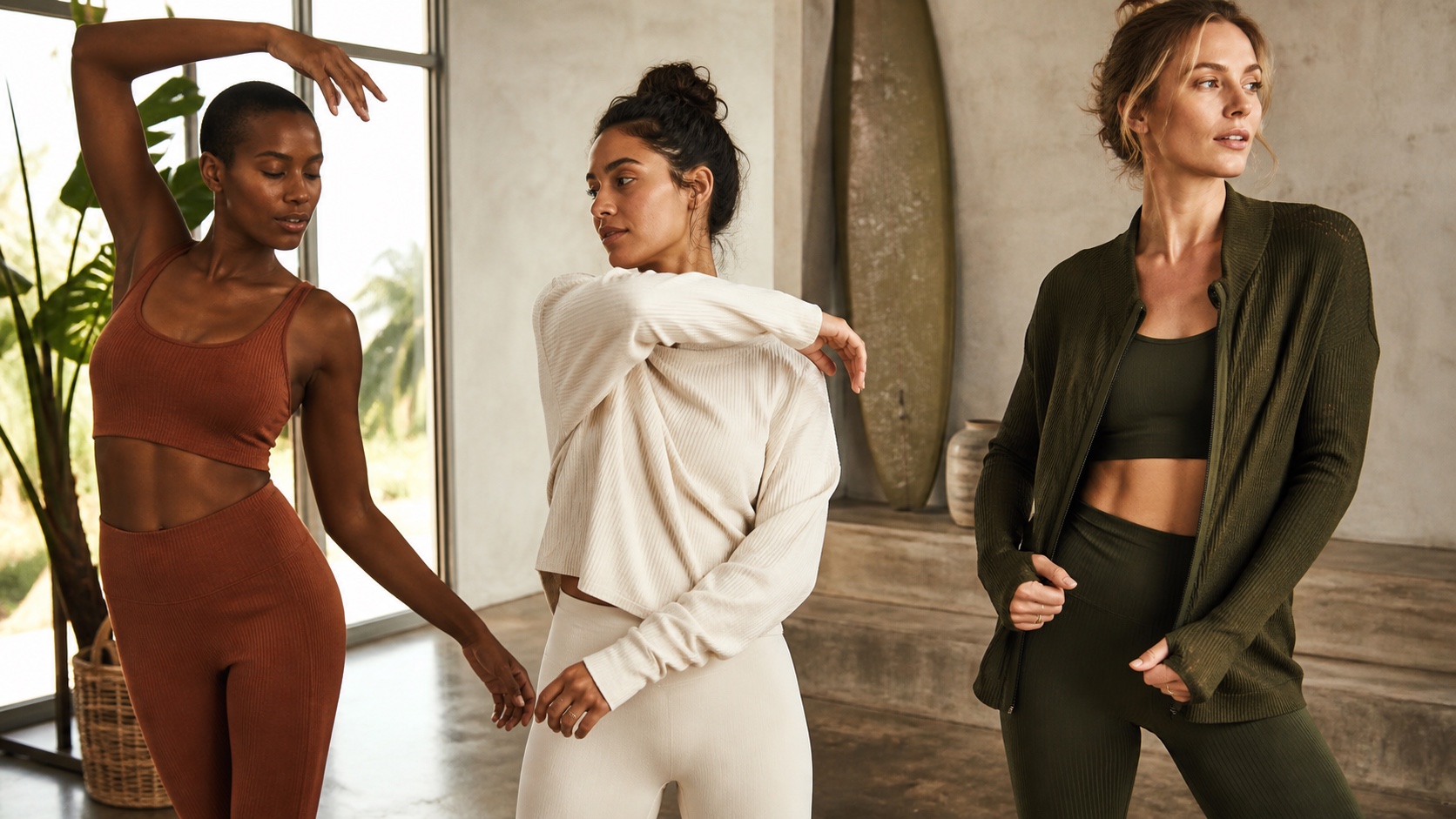
That is the useful way to study the Nagnata brand strategy. The brand’s public story includes Byron Bay, yoga, art, activism, sisters, natural fibres and “Movements Not Seasons.” Those details create atmosphere, but atmosphere alone is easy to copy. The harder-to-copy system is the decision to build a movement wardrobe around knit structures that can be knitted to shape, experiment with yarn combinations, and move between studio and street.
The model is not universal. Engineered knitwear requires specialised machinery, different minimums, careful care instructions, and a customer willing to pay for material and construction. Natural fibres can breathe beautifully but can also pill or snag. A knitted fashion set is not automatically a high-impact running product.
The stronger lesson is therefore narrower: when a young brand turns a production constraint into an observable product code, manufacturing can become part of the brand moat.
The original opportunity was not “more sustainable leggings”
Nagnata says Laura May founded the brand in 2015 after seeing an opportunity to challenge fast-fashion consumerism. Its official story describes Laura’s fashion-design and creative-director background alongside Hannah Gibbs’s textile-art and photography experience. The result was not a conventional performance label with a sustainability page attached later. It was conceived as a platform joining movement, art, activism, culture and conscious design.
That founding combination matters because the customer problem is richer than “I need workout clothes.” The intended wearer wants an item that can support yoga or another movement practice, express a point of view, and remain relevant outside a narrow seasonal workout calendar. Nagnata’s own language calls this a uniform and uses the phrase “Movements Not Seasons” to resist the standard cycle of constant novelty.
There are at least three plausible explanations for the brand’s appeal:
- The Byron Bay and art-led world creates a strong identity that makes the product feel culturally valuable.
- The knitwear itself creates a tactile and visual distinction from mass cut-and-sew activewear.
- Natural-fibre and climate-positive language attracts customers who want a slower alternative to synthetic, trend-led sportswear.
The public record cannot tell us the exact contribution of each. But the sequence is coherent: the founders’ creative and textile capabilities made a different construction possible; the construction made a different visual world credible; and the visual world made a slower, more premium product system legible.
Reader action: before choosing a logo or colour palette, list the unusual capability your team already possesses—textile knowledge, pattern cutting, dance, climbing, running, community access, or retail experience. Then ask whether that capability can change the product itself. A brand story built around an ability that never reaches the garment is only a campaign theme.
Nagnata brand strategy: knitwear is a product code, not a fabric choice
Nagnata’s Why Knitwear page makes the mechanism unusually explicit. It says engineered knitwear can achieve minimal or zero yarn waste compared with cut-and-sew garments, and that knitting to shape enables original yarn combinations and forms not commonly available in the active space. Its FAQ explains that Movement styles are fully fashioned, knitted to shape and linked where required rather than cut from a larger piece of fabric.
Even if a reader treats “zero yarn waste” as a brand-stated manufacturing claim rather than a complete lifecycle assessment, the strategic consequence remains important. The construction method affects:
- what the designer can make;
- how the garment feels and stretches;
- what materials can be combined;
- how the item is priced;
- what the customer needs to know about care;
- which factory capabilities are essential.
That is why copying the surface of Nagnata—contrast stripes, earthy colours, ribbed texture—would miss the point. The visible design code is downstream of a technical decision.
The production constraint is also honest. Nagnata says it develops in China because of technical innovation, yarn availability and the specialised machinery required, and notes that Australia does not have the knitwear factories needed for its particular movement garments. The brand says it visits factories and works directly with technicians. The important lesson is not that one country is inherently better; it is that a product claim should point to a real capability and a real development relationship.
Try this product-code test: remove the brand name from a product image. Can a customer still identify the construction logic through texture, shaping, colour blocking, seam absence, stretch behaviour or styling? If not, the design may be attractive but has not yet become a code.
Natural fibres created differentiation—and unavoidable trade-offs
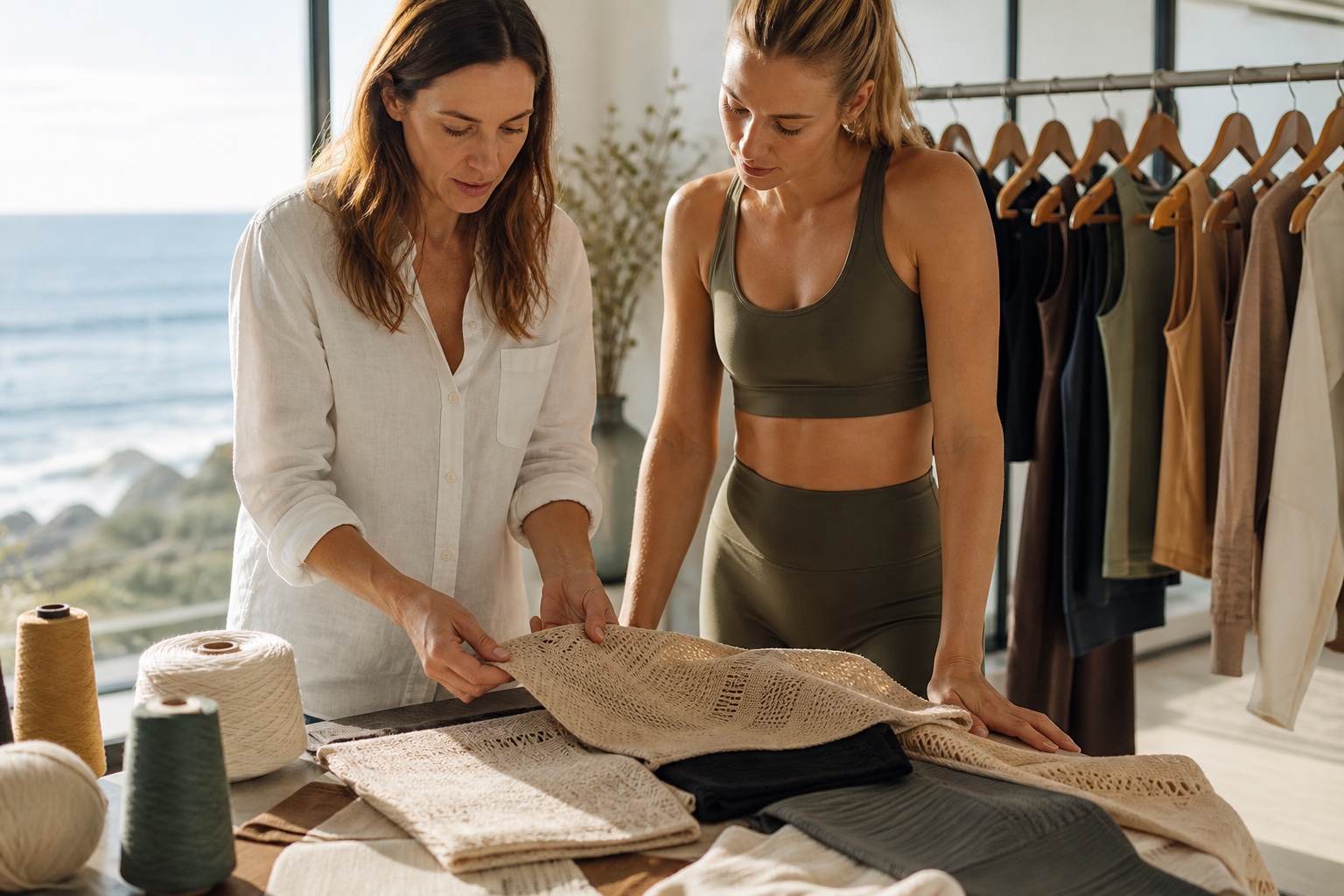
Nagnata says it combines organic and renewable fibres with technology and innovation, including organic cotton and Merino wool, while using a small amount of synthetics where stretch or performance requires it. Its climate-positive page gives more detail than a typical “eco” claim. A carbon inventory and water-risk analysis based on FY21 covered three primary garment categories and calculated 150 tonnes of carbon emissions for the garments sold and used in that period.
That analysis is published by the brand and is period-specific. It should not be read as a current audited footprint or as proof that every Nagnata product has the same impact. Its value is that it exposes trade-offs instead of hiding them. The brand reports that organic cotton had the lowest carbon emissions among the analysed product lines, while Merino had higher emissions related to farming, processing and transport but lower embodied water use. It also acknowledges water-stress risks around organic-cotton regions and pollution risk in dyeing.
This is a better sustainability conversation because it allows a customer to see the decision surface. “Natural” is not a single score. Fibre, farming, spinning, dyeing, transport, washing, durability and end-of-life can point in different directions.
Nagnata’s care guidance adds the body-level reality. It recommends hand washing or spot cleaning, says natural fibres may pill or snag more easily, and explains that some synthetics remain in performance lines and can release microfibres during washing. It also encourages customers to wear garments often, wash less, care for them, and resell them rather than discard them.
That friction is not an embarrassment to conceal. It helps define the correct customer and occasion. A merino movement top that resists odour and needs less washing may be valuable for travel, studio practice and layered everyday wear. The same item may not be the ideal answer for a sweaty, high-impact training session where abrasion resistance and machine-wash convenience dominate.
Build a trade-off label: for every material, state one benefit, one limitation, and one care action. “Breathable” becomes “breathable for low-to-medium intensity; spot clean between wears; avoid rough surfaces that can snag the knit.” This protects trust better than claiming the fibre is simply better.
“Movements Not Seasons” changes the assortment math
Most fashion brands use seasons to create urgency. Nagnata uses movements to connect products across time. Its FAQ says the brand does not mass-produce collections; once an item sells out it may not be restocked unless the style is remade in a future collection. New movements reuse core fabrics and fits in new design and colour variations, with pieces designed to style back with one another.
This creates a distinctive kind of scarcity. The customer is not promised that the same SKU will always be available. She is promised a language: a future piece may share the fabric, fit, palette or styling logic of an earlier one. That can reduce the need for constant reinvention while still giving the brand something new to show.
But the decision has two sides. Limited restock can protect a small brand from carrying excessive inventory and can make each movement feel authored. It can also frustrate a customer who finds a perfect fit and cannot replace it. A high price makes that frustration more consequential. The brand must therefore communicate whether a product is a core anchor, a limited movement, or a possible future remake.
For an emerging label, the assortment can be designed as a small grammar rather than a large collection:
| Role | Product decision | Customer reason to return | Risk |
|---|---|---|---|
| Core fabric | One repeatable knit or fabric family | Trust in feel and fit | Minimums, capacity and cost |
| Movement anchor | One bra, short, legging or top that defines the activity | Replacement or a new colour | Support and durability expectations |
| Expression piece | Colour block, jacquard or fashion silhouette | Newness without a new brand language | Slower sell-through and higher complexity |
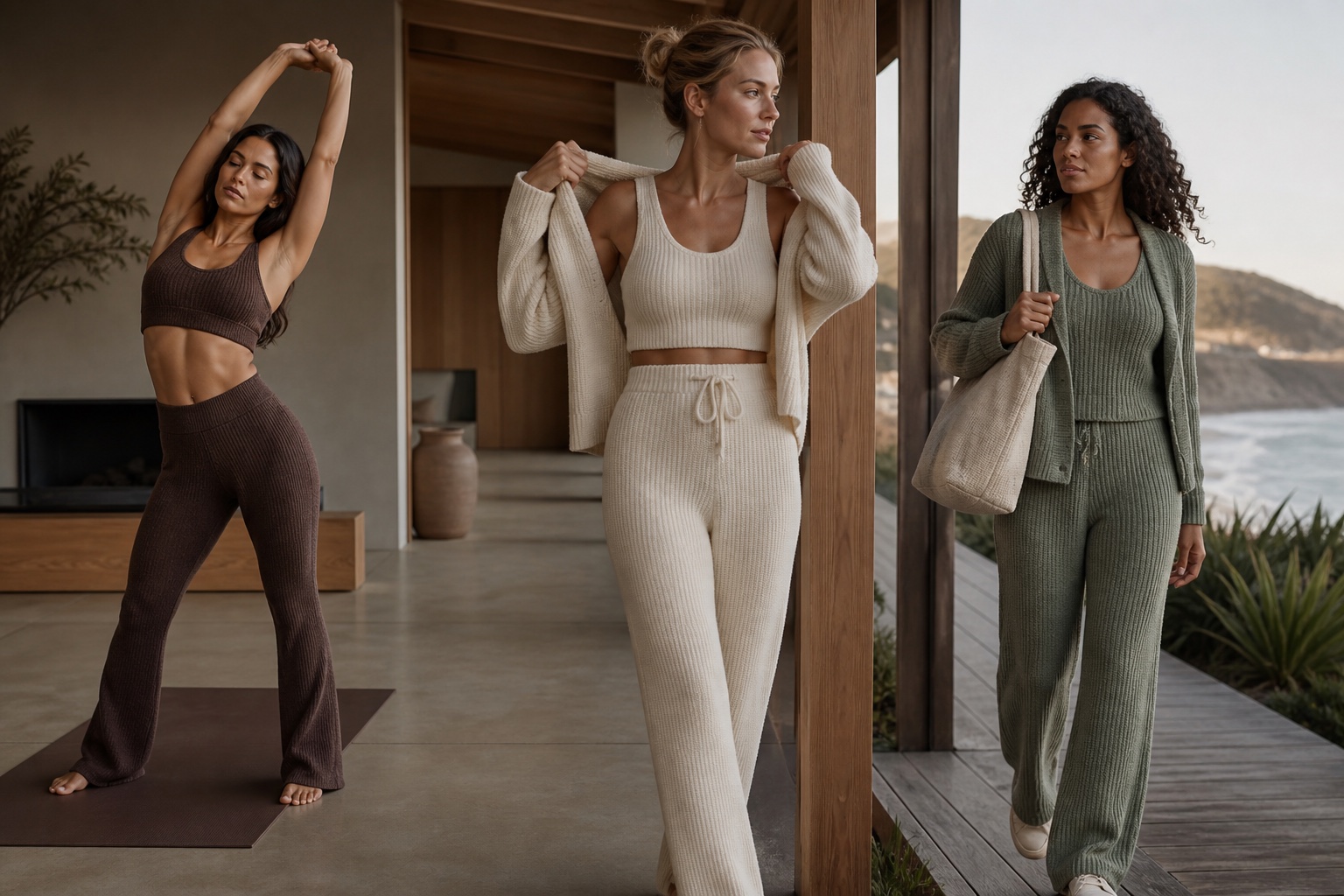
| Bridge layer | Track pant, sweater, dress or outer layer | Studio-to-street use | Becoming ordinary fashion without a clear link |
Use this rule: hold the core fabric and fit stable while changing only one design variable in the next movement. If colour, yarn blend, silhouette and activity all change at once, you will not know what created demand or what caused returns.
Premium pricing only works when the customer can feel the difference
Nagnata’s current collection shows the commercial position clearly. The public All Products page lists examples such as Organic Yoni Shorts around A$170, Halter Wool Bralets around A$195, Retro Shorts around A$240, jackets from roughly A$495 and a Teo Jacket at A$680. These are current page snapshots and some are sale prices, but they show that Nagnata is not competing as an accessible basic-legging label.
The FAQ directly connects price to yarn and manufacturing cost, fully fashioned knit machines, natural raw materials and knitting time. It also says the Merino seamless core line can reach a lower price point because circular-machine minimums are higher and allow more competitive unit economics.
This is a useful price lesson. Premium is not a number placed on top of a product. It is the result of a customer believing that the material, construction, longevity, design and use occasions justify the number. The price can also filter the audience: a customer seeking a $60 training tight is not necessarily the same customer seeking a $240 knitted movement short.
Run a value-per-wear calculation before lowering price: ask how often the target customer could realistically wear the piece, how it replaces other garments, what care it needs, and which construction detail she can identify. If the answer depends entirely on “it is sustainable,” the product is under-explained. If the answer includes feel, versatility, durability, repair, care and recognisable design, the price has a stronger argument.
The real moat may be supplier learning, not the word “knit”
A competitor can buy a ribbed fabric. It is harder to reproduce the accumulated knowledge of how a particular yarn combination behaves in a bra, a short, a sweater, or a colour-blocked panel; how it should be graded; how it responds after washing; and how it can be reproduced in a later movement.
Nagnata’s public explanation of working with technicians and choosing China for yarn availability suggests that supplier learning is part of the system. That is an inference, not a disclosed proprietary advantage. But it is a reasonable one: when the construction is unusual, the factory is not simply an order taker. It is part of the product-development capability.
The risk is concentration. A young brand built around one specialised manufacturing route can face capacity, lead-time, quality or minimum-order constraints. A new supplier may make the silhouette but not the same hand feel. A small change in yarn or machine gauge can alter the product code customers trusted.
Supplier-learning checklist: keep a technical record of yarn composition, machine or gauge requirements, stitch structure, measurements, stretch and recovery, wash results, pilling and snagging observations, colour standards, approved tolerances, and the reason each change was accepted or rejected. The document becomes a memory system when the business grows or people change.
What an emerging brand should copy—and what it should not
Test now
- Choose one activity and one transition occasion, such as yoga to travel or studio to dinner.
- Identify one construction or material capability that changes the product, not just the campaign.
- Sample one core fit in one fabric and document the body-level behaviour before adding colours.
- Give the customer one benefit, one limitation and one care instruction for the material.
- Photograph movement, layering, texture and close construction—not only a static front pose.
Build after proof
- Develop a repeatable product family that can share the same fabric, fit block or construction vocabulary.
- Use seasonal variation only after the core combination can be replenished consistently.
- Create a care, repair, resale or end-of-life pathway that matches the actual material.
- Invest in specialised production capability when repeat demand justifies the minimums and development time.
Do not copy directly
- Do not copy Nagnata’s price without a construction or material difference customers can feel.
- Do not use “zero waste” as a complete environmental conclusion.
- Do not assume natural fibres are best for every activity or climate.
- Do not use limited availability to hide poor replenishment planning.
- Do not describe a factory as a strategic partner until its technical capability and quality consistency are proven.
Where Battlerobe becomes relevant
Nagnata’s lesson makes the production connection precise. If a new brand wants engineered knitwear, the first question is not “Can you make a similar-looking set?” It is “Which construction capability is essential to the customer promise, and can the selected production route reproduce it?”
For many early activewear brands, a controlled cut-and-sew development may be the more sensible first test. For others, the distinctive opportunity may be a custom fabric, a specific rib structure, a seamless construction, or a carefully engineered fit. The commitment should match the evidence. A proprietary-looking fabric with no customer proof can become expensive inventory; a validated hero product can justify deeper development.
Once the product direction is specific enough to sample and test, Battlerobe’s bulk custom production service can support relevant stages such as fabric and colour coordination, sampling, branding, quality control, bulk production and repeat orders. The useful connection is execution continuity: turning an approved brief into a repeatable garment with clear tolerances and inspection points.
The boundary is important. Battlerobe cannot replace specialised knit machinery, certify an environmental claim, or decide whether a premium product has earned demand. A founder should bring the customer occasion, technical priorities, target quantity, care requirements, and pass/fail tests. The production conversation becomes productive when the brand knows what must remain unchanged.
Prepare before sampling: define the activity, desired support, stretch and recovery, fibre composition, hand feel, stitch or surface direction, size range, colour standard, care expectation, target quantity, and the three reasons a sample would be rejected. That is the beginning of a product code.
The decision: build a capability customers can recognise
Nagnata is worth studying because it shows how a small activewear brand can make manufacturing intellectually visible. The knit is not merely behind the garment; it explains the garment’s look, feel, price, sustainability discussion, care instructions and limits.
The strongest transferable mechanism is capability-to-code: a real technical or material capability becomes a recognisable product language, and the product language creates a reason for customers to remember and return to the brand.
For an emerging label, the first test should be one hero movement piece and one bridge styling piece, using one construction vocabulary. Scale only when customers can describe the difference without being prompted, the garment passes its use and care tests, and the production route can reproduce it within an acceptable tolerance. Stop if the only reason for purchase is the founder’s story, if the product is too fragile for its promised use, or if the economics depend on a level of scarcity the customer never agreed to.
The point is not to become Nagnata. It is to find the part of your product that competitors cannot reproduce by changing a colour and copying a silhouette.
Sources and further reading
This case study distinguishes official Nagnata claims from interpretation. The public record does not establish the exact sales contribution of knitwear, natural fibres, the Byron Bay identity, climate-positive certification, or the founders’ creative backgrounds. The climate figures are tied to the brand’s FY21 analysis, and current product prices and availability can change.
- Nagnata: About, story and “Movements Not Seasons”
- Nagnata: Why Knitwear and engineered construction
- Nagnata: Sustainably Minded Design
- Nagnata: climate and water-risk analysis
- Nagnata: manufacturing, care, restock and pricing FAQ
- Nagnata: current product and price snapshot
- David Jones: external assortment context