

Year of Ours did not need to invent a new exercise. It needed to make one pair of leggings impossible to confuse with everyone else’s.
That distinction is the most useful way to understand the Year of Ours brand strategy.
The Los Angeles label is often described through broad ideas: female-led, inclusive, fashion-forward and inspired by American sport. All are relevant. None fully explains why the brand became visible in a crowded market where nearly every company could already sell black leggings, ribbed sets and studio-to-street basics.
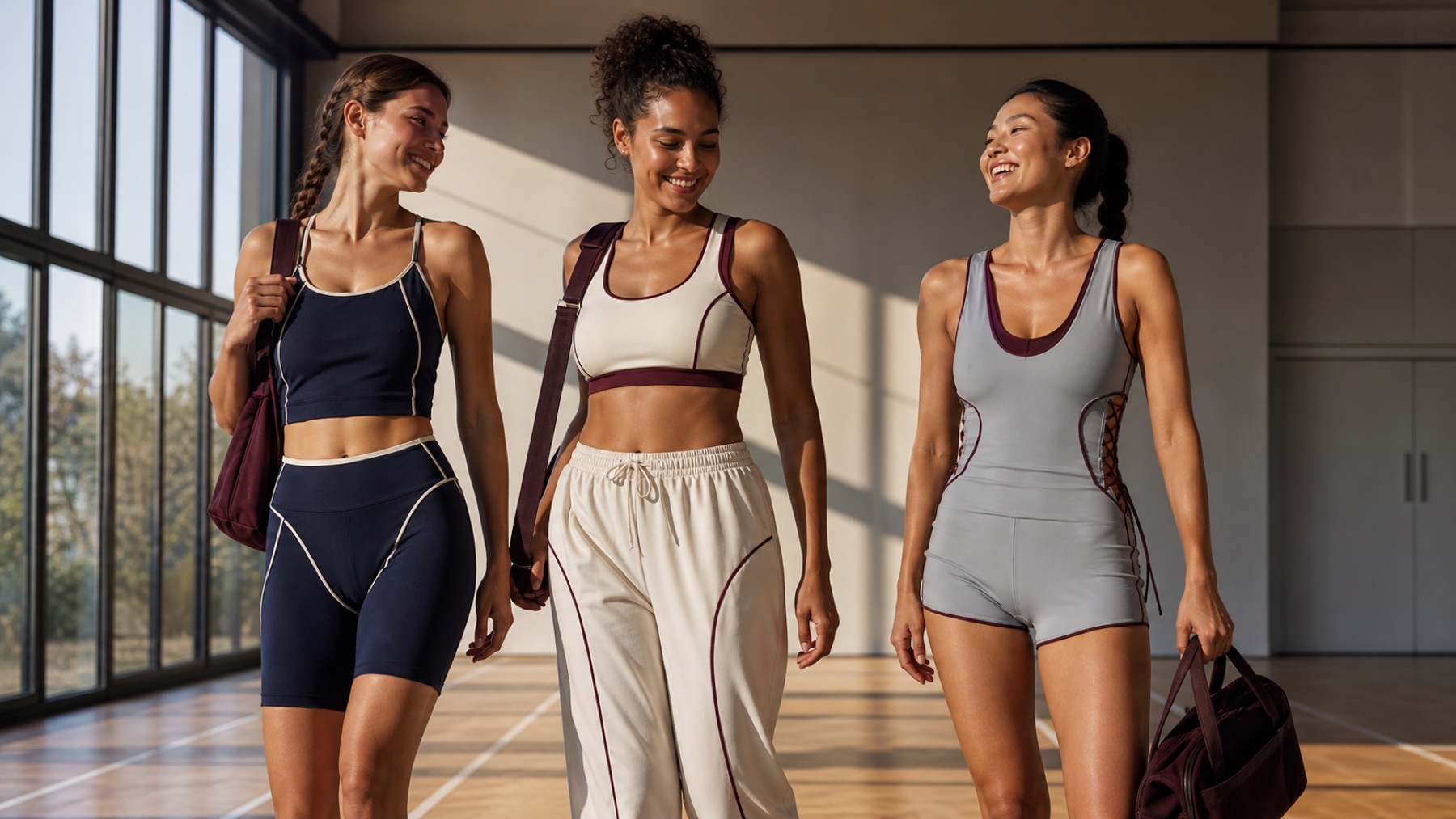
The more defensible explanation begins with a specific object: the Football Legging. Its curved high waist, lace-up front, vertical piping and uniform reference gave retailers and customers something they could recognize before they had memorized the logo. Wholesale then amplified that recognition. Close access to product development and production helped the company keep refining fit and translating the idea into bras, shorts, onesies and seasonal collections.
This is not a claim that one legging caused every part of the company’s growth. Year of Ours is private, and public information does not reveal audited style-level sales, margins or repeat purchase. Wholesale reach, fashion styling, celebrity exposure, timing and activewear demand all matter. The practical lesson is narrower and more useful:
A hero product becomes a growth asset when its most recognizable detail can survive fit, movement, merchandising and category expansion—not merely when it looks unusual in one campaign.
1. The original problem was fit, but the commercial answer was recognition
According to the brand’s current About page, Year of Ours was created in 2016 after co-founder Eleanor Haycock struggled to find workout clothes that properly fit and flattered her body. She co-founded the business with longtime colleague Lily Shin and brought in stylist and designer Alejandra Hernandez.
That origin points to a functional problem: activewear sizing and fit did not serve enough bodies. But a startup cannot win only by saying “better fit.” The phrase is difficult to see in a product image, difficult for a retailer to verify in seconds and easy for every competitor to repeat.
Year of Ours gave the promise a visible form.
The Football Legging was part of its first collection. In a 2019 Forbes interview, Haycock described it as the first legging the team developed. In 2024, she told Forbes that it had remained at the heart of the brand since 2016.
Longevity matters more than novelty here. A lace-up waist can be copied as decoration. A product that stays commercially and culturally relevant for years suggests that the detail is doing several jobs at once:
- it creates a recognizable front view;
- the curved waist and seam placement frame the body;
- piping brings a team-uniform reference into an everyday garment;
- the product can be styled for training, studio use, errands or game day;
- the construction gives editors, retailers and customers a simple story to repeat.
The three-frame recognition test
Before calling a feature a brand code, remove the logo and test it in three frames:
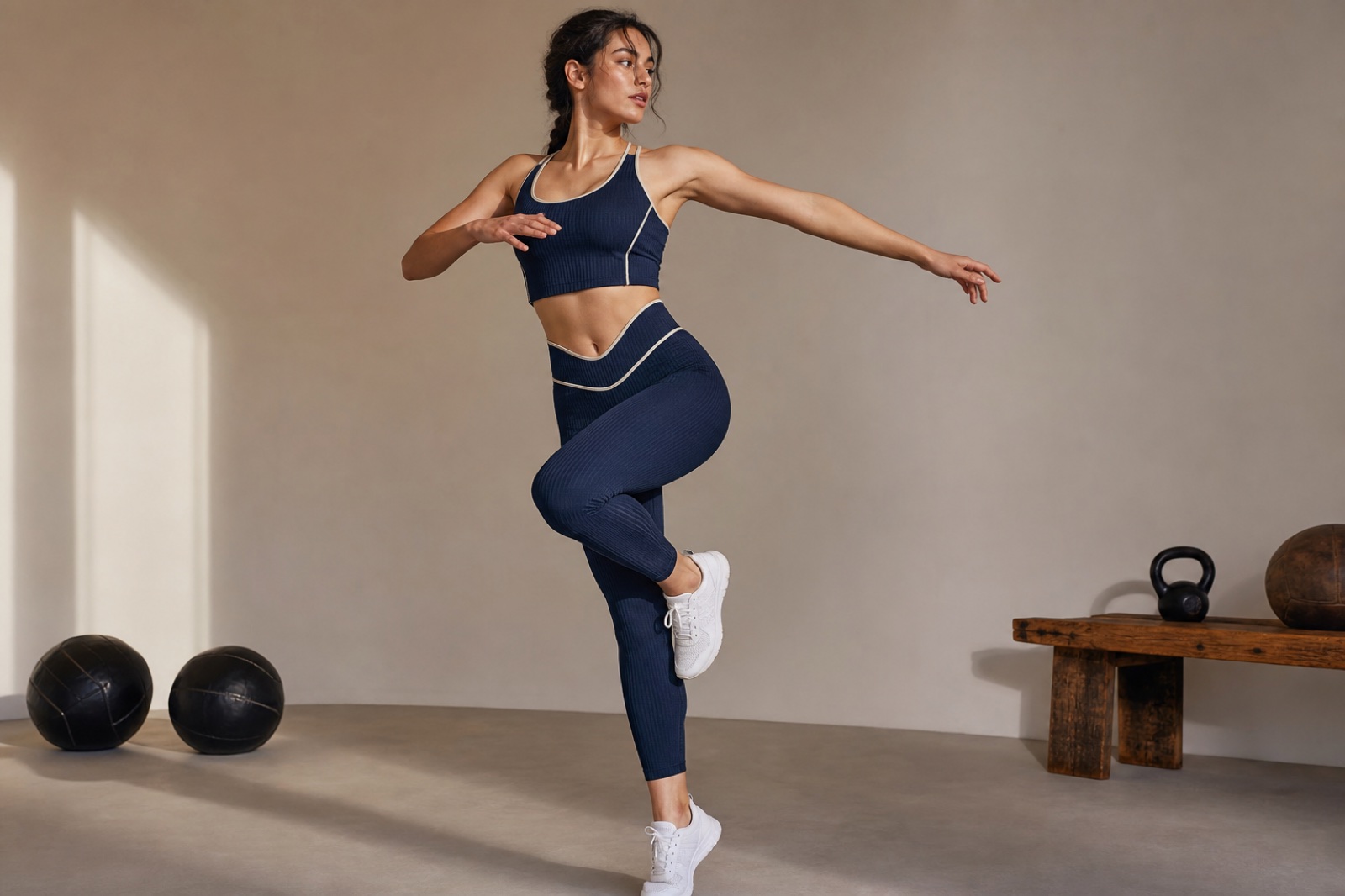
- Silhouette: can the product be distinguished from six metres away?
- Close-up: is there one construction detail a customer can describe without marketing language?
- Movement: does the distinction remain visible and functional during a squat, stretch, walk or layer change?
If the feature disappears in two of the three frames, it may be campaign styling rather than product identity. If it survives all three, it may deserve deeper development.
2. The Football Legging solved a wholesale problem as well as a product problem
Emerging brands often talk about wholesale as if the difficult part is finding the buyer’s email address. The deeper problem is making the assortment understandable quickly enough for the buyer to take a risk.
Year of Ours appears to have faced this directly. The same 2019 Forbes profile reports that some buyers initially resisted the brand because it looked different. A Spring 2018 feature on Carbon38 was then described as a breakthrough, after which styles sold out. These are founder-reported events rather than audited channel data, but the sequence is useful.
Difference creates resistance before it creates advantage. A buyer must decide whether an unfamiliar detail is a commercial signal or merely design noise.
The Football Legging was unusually suitable for that decision. It was familiar enough to classify as a legging, yet distinctive enough to explain with one sentence. The category reduced buyer uncertainty; the construction created memorability.
The five-second buyer test
A founder preparing a wholesale capsule should be able to answer five questions on one line each:
- What familiar category gives the buyer confidence?
- What visible construction makes the product different?
- Who is already responding to it, and what is the evidence?
- What retail price and margin structure make the product viable?
- Can sizes, lead times and replenishment be supplied consistently?
If the product requires a ten-minute brand philosophy before it becomes interesting, it is asking the buyer to do too much work. If it is instantly understandable but indistinguishable, it gives the buyer no reason to replace an existing supplier.
This is why wholesale should not be treated only as distribution. It is also a compression test for the product idea.
But wholesale has a limit. In a 2023 Glossy interview, the founders said direct-to-consumer sales represented only about 20% of the business at that time. Haycock explained that relying heavily on retailers constrained the brand’s ability to tell its own expanding story.
That tension is strategically important:
Wholesale can help a young brand become discoverable before its own audience is large. DTC becomes more important when the brand needs to explain a broader product world, own customer data and learn directly from behaviour.
The transferable action is therefore staged. Use wholesale to prove that an edited assortment is understandable and commercially relevant. Build DTC learning before channel partners become the only people who know the customer.
3. Fashion influence became useful because it entered the pattern—not only the campaign
Alejandra Hernandez’s background as a stylist is often presented as part of the brand’s creative story. The more interesting evidence is how styling observations reportedly entered product development.
In the Glossy interview, Hernandez said conversations during fittings—about waistlines, cups, preferred coverage and how bodies interact with clothes—informed her design work. She also connected the brand’s visual language to vintage sportswear, street style and 1990s references.
This converts “fashion-led activewear” from a mood board into construction decisions.
A fashion reference becomes commercially useful when it changes at least one of the following:
- the proportion customers see first;
- the way the garment frames or supports the body;
- the occasion in which the customer can wear it;
- the styling combinations the product makes possible;
- the story a retailer, creator or customer can repeat.
Contrast piping, a lace-up front and a curved waist pass this test. A random seasonal print may not.
Turn inspiration into a construction brief
When a founder brings a sports-uniform, ballet, corsetry or workwear reference into activewear, the development brief should not say only “make it look like this.” It should separate the reference into decisions:
- Visual job: what should the customer notice first?
- Fit job: what body relationship should the line, seam or waist create?
- Movement job: must it stretch, stabilize, adjust or remain purely decorative?
- Production job: which pattern pieces, elastics, bindings, cords or stitch operations are required?
- Failure condition: what would make the detail uncomfortable, unstable, expensive or visually weak?
This exercise prevents a visual reference from becoming an expensive trim attached to an ordinary product.
4. Production proximity mattered because fit is a learning process
Year of Ours currently says that 80% of its products are made in the USA at its El Monte, California offices and factory. The figure is a brand claim, not an independent audit. The strategic value is not the country label by itself. It is the relationship between design decisions and production learning.
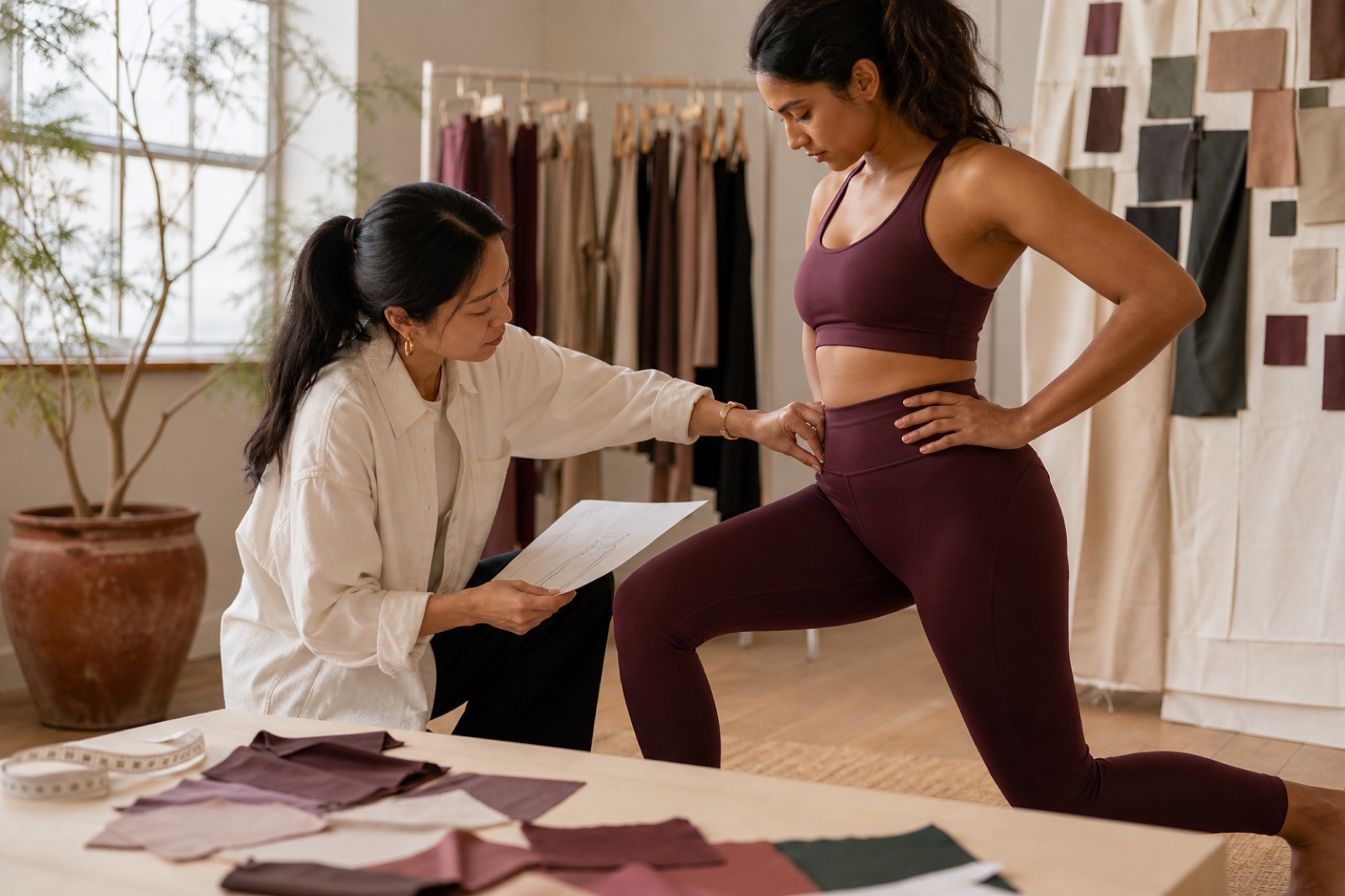
Haycock told Glossy that the team could sample quickly and fit products two to ten times. Hernandez described working directly with the pattern maker and production team to make changes on the spot.
That helps explain how a construction-led hero product can remain alive. A curved waist, lace-up opening, contrast piping and compressive rib fabric interact. Change the rise, stretch recovery or elastic tension and the visual code may remain recognizable while the actual wearing experience deteriorates.
Factory ownership is not automatically superior, and most emerging labels should not imitate the capital structure. What they can copy is the information loop:
reference → pattern → sample → movement test → fit notes → isolated correction → approved standard.
A fit round needs a question, not just an opinion
For every sample, record one controlled question. For example:
- Does the curved waistband remain flat after repeated movement?
- Does the lace adjustment meaningfully change fit, or is it decorative?
- Does piping create pressure or distortion at full stretch?
- Does the front construction remain flattering across the intended size range?
- Does the fabric recover after sitting, bending and washing?
Then change the smallest possible number of variables. If fabric, pattern, elastic and grading all change in the same round, the team may approve a better sample without knowing why it improved.
The reward is cumulative. A documented fit standard can migrate to the next bra, short or flare. An undocumented “perfect sample” cannot.
5. A hero product becomes a brand code only when it can travel
One bestseller is useful. One design grammar that creates several credible products is more valuable.
Year of Ours extended its sports references through Football bras and shorts, lace-up pieces, contrast binding, track styles and other uniform-informed silhouettes. Its current product sitemap also shows recurring families such as Football, Veronica, V-waist and track products across multiple garment types.
The current Year of Ours SPORTS capsule is especially revealing. It is an edited group of eight products built around recognizable sports-influenced styles, updated fits and a new fabric. Rather than proving that every extension works, the capsule shows how a brand can return to its strongest grammar and reintroduce it.
The product-code ladder
An emerging label can use a four-step ladder:
- Hero construction: one bottom or top where the detail has the strongest visual and functional reason to exist.
- Matching counterpart: a second piece that makes the hero easier to style and increases basket potential.
- Adjacent silhouette: a short, flare, bra or layer that tests whether customers want the code beyond one garment.
- New occasion: only after proof, move the grammar into game day, studio, travel or lifestyle use.
At every step, ask whether customers are buying the code or merely buying a convenient basic in a popular colour. Useful signals include direct mentions of the detail in reviews, repeat purchase across related silhouettes, creator content that focuses on the construction, waitlist or restock requests and lower explanation cost over time.
If the next product depends on a completely different reason to buy, it is probably not an extension. It is a second bet.
6. Expansion creates a hidden multiplication problem
The Year of Ours brand strategy also reveals its own operating risk.
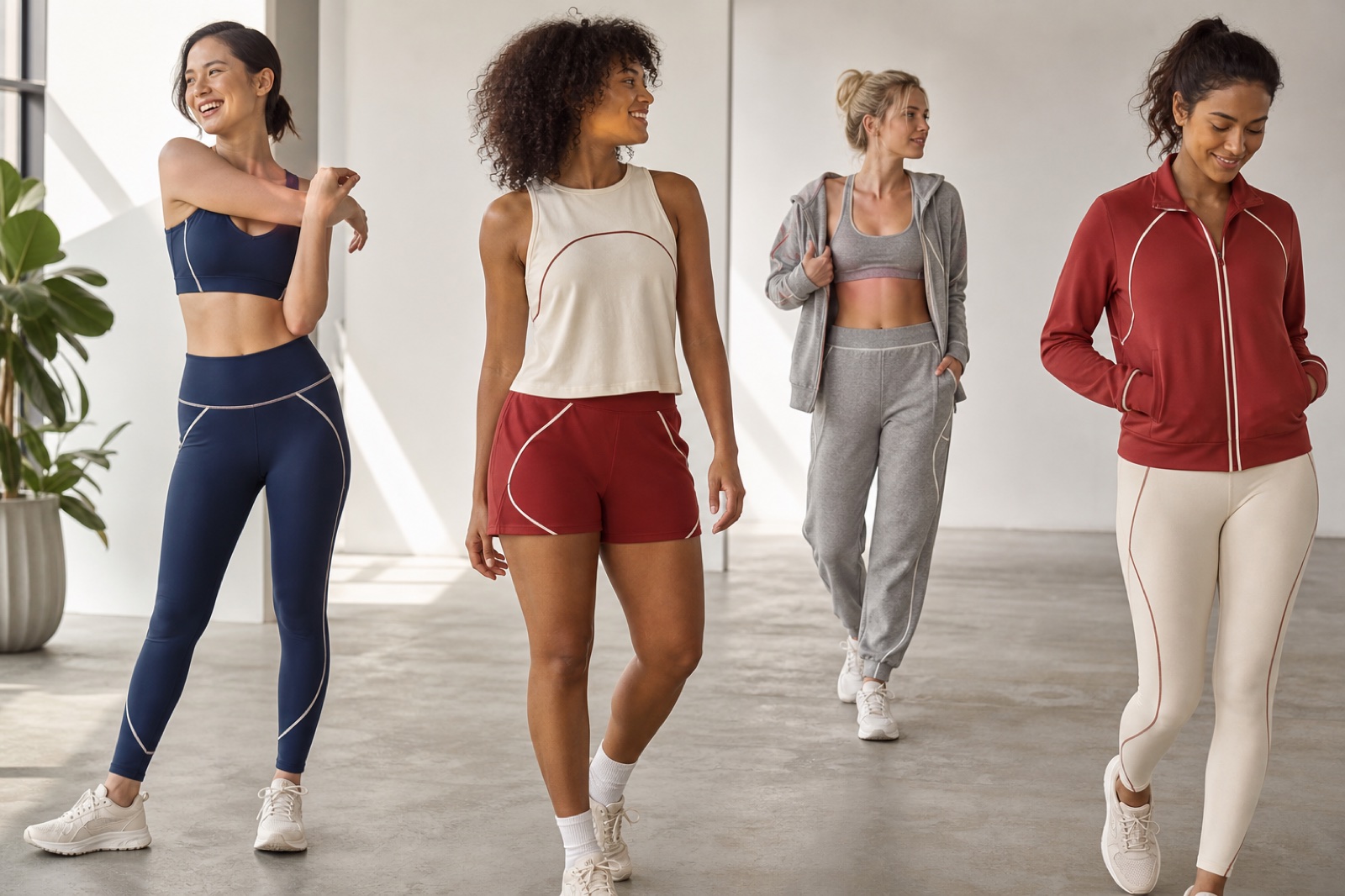
At the time of review, the brand’s leggings collection showed 41 products across six fabric filters: Active Cotton, Active Rib, EcoSport, Sport Interlock, Stretch Active and Studio Jersey. Full-price leggings generally sat around $98 to $125, while multiple variants were discounted by 30% or 50%. The sale collection showed 79 products across activewear, lifestyle and swim, commonly marked down 30% to 50%.
This does not prove poor performance. Seasonal clearance, colour exits, category changes and inventory planning can all produce markdowns. Public product pages cannot reveal margin, sell-through or the reason for each discount.
They do reveal complexity.
A collection is not just a count of styles:
Styles × fabrics × colours × sizes × channels = inventory decisions.
One design code can reduce creative confusion while still creating working-capital risk. Five recognizable leggings in three fabrics, four colours and six sizes already produce 360 style-level size/colour decisions before wholesale allocations are considered.
Use expansion gates, not enthusiasm
Before extending a hero code, require evidence at three gates:
- Recognition gate: customers mention or repeatedly engage with the defining construction.
- Fit gate: return reasons, size feedback and movement tests are stable enough to become specifications.
- Commercial gate: the core colour and size curve can support a reorder without depending on heavy discounting.
Then limit each new SKU to one primary learning job. A new short may test seasonality. A flare may test a lifestyle occasion. A matching bra may test outfit conversion. If one launch changes silhouette, fabric, colour architecture and customer occasion together, weak sales will be almost impossible to diagnose.
7. What a smaller brand should build first
A startup inspired by Year of Ours should not begin with football laces. That would copy the answer while ignoring the question.
Begin with one cultural or functional reference that matters to the intended customer, then convert it into a construction language. A disciplined first system might contain only four products:
- Hero bottom: the clearest expression of the waist, seam or proportion code.
- Hero top: a related neckline, binding or support construction.
- Commercial basic: a simpler piece that makes the hero easier to buy and wear.
- Occasion bridge: a layer, short or one-piece that tests whether the language can leave its first setting.
Use two dependable colours and one controlled test colour. Photograph each product in silhouette, construction detail and real movement. Give a small tester group specific fit questions. Track what customers say about the feature, not only whether they click “like.”
The first launch should answer three questions:
- Which construction earns recognition?
- Which product earns purchase?
- Which fit or fabric issue prevents repeat wear?
Those answers determine whether the next investment belongs in marketing, pattern development, material improvement or inventory—not whether the founder needs another mood board.
8. Where Battlerobe can credibly help
A construction-led brand code eventually has to become a production standard. That means patterns, measurements, grading, fabric stretch and recovery, elastic tension, piping width, lace or trim specifications, stitch methods, tolerances and an approved sample.
This is where a manufacturing partner can create real value, but only when the production route matches the level of proof.
If a founder is still choosing between several unrelated aesthetics, a large custom order is premature. The immediate job is to narrow the customer, silhouette, price and visual code through controlled testing.
When buyers or customers repeatedly identify the same construction and the team can describe its fit and movement requirements, custom product development becomes more defensible. The brief is no longer “make something unique.” It is “preserve this proven waist relationship, support level and visual line across these sizes and this activity.”
After the approved design, size curve, colours and reorder demand are stable, Battlerobe’s Bulk Custom Production route is designed for confirmed products and larger-volume requirements. Its public process covers design and pattern development, size and fit, performance fabric, trims, sampling, sample approval, bulk production and quality inspection. The page currently gives starting guidance of 500 pieces per colour per style and 1,000 pieces per style, with exact quantities, cost and timing dependent on the product.
The practical sequence is:
discover the code → prove that customers value it → document the fit → approve the sample → scale the confirmed system.
Battlerobe should not be chosen because a founder wants a factory to invent the brand on her behalf. It becomes useful when the founder has evidence and needs a product-development and production partner to help translate that evidence into repeatable garments.
A productive first enquiry should include a product reference, sketch, tech pack or sample; the target customer and activity; intended fabric feel and support; size range; expected quantity; target launch date; and the specific construction that must remain recognizable. That information lets both sides decide whether the project belongs in validation, custom development or bulk production.
9. What not to copy—and the question Year of Ours still has to answer
Do not copy the Football Legging’s lace-up front. Do not assume American sports nostalgia travels equally well into every market. Do not treat domestic manufacturing as a substitute for customer demand. Do not pursue wholesale before margins, lead times and replenishment can survive it. And do not extend a design code into every category merely because it is recognizable.
The brand’s next strategic question is visible in its current breadth.
Can Year of Ours preserve a distinct sports-informed identity across leggings, bras, tennis, swim, dresses, maternity, sweats and lifestyle products while reducing the complexity that broad assortments create?
Its 2024 first retail pop-up in New York centred on football and fan culture. Its current SPORTS capsule again edits the offer around iconic sport-inspired styles. Those choices suggest that the brand itself understands the value of returning to a strong core. Whether that focus can coexist with continued category breadth remains an open question.
That uncertainty makes the case more useful, not less. A serious brand study should identify the next constraint rather than write as if success has ended the story.
Conclusion: what the Year of Ours brand strategy teaches
The strongest interpretation of the Year of Ours brand strategy is not that sports nostalgia sells.
It is that one construction-led hero product gave the company a recognizable object; wholesale gave that object reach; fashion-informed product work gave it cultural relevance; and close production access helped translate the idea through repeated fit and construction decisions.
For an emerging activewear founder, the first test is small:
Can the intended customer recognize one product without the logo, explain why the detail matters and still value it after moving in it?
If not, keep learning. If recognition appears but fit fails, refine the product. If recognition, fit and purchase repeat across a tight capsule, document the standard and prepare for deeper development. Scale only when demand, size curves, colours and quality expectations are stable enough to make the inventory equation survivable.
The goal is not to launch a clever legging.
It is to create a piece of product intelligence that every later garment can begin with.
Research sources and evidence notes
- Year of Ours About Us: brand origin, current size range, fabrics, production and mission claims.
- Year of Ours Factory: brand-stated El Monte production model.
- Year of Ours SPORTS: current edited sports capsule, updated-fit claim and product architecture.
- Year of Ours Leggings and Sale: current assortment, fabric, size, price and markdown observations.
- Forbes, 2019: founder-reported early product and wholesale history.
- Glossy, 2023: founder interview on wholesale, DTC, fit rounds, production and fashion influence.
- Forbes, 2024: first retail pop-up and the continuing role of the Football Legging.
- Battlerobe Bulk Custom Production: current service scope, process and quantity boundaries.
Year of Ours is a private company. Public information does not establish audited revenue, profit, unit sales, repeat-purchase rate or the isolated contribution of wholesale, product design, celebrity exposure or factory proximity. Brand and founder claims are identified as such; causal explanations in this article are Battlerobe’s analysis of the public evidence.