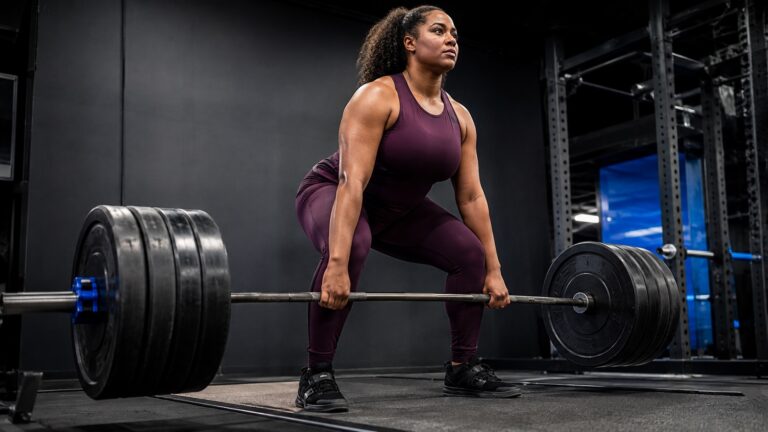


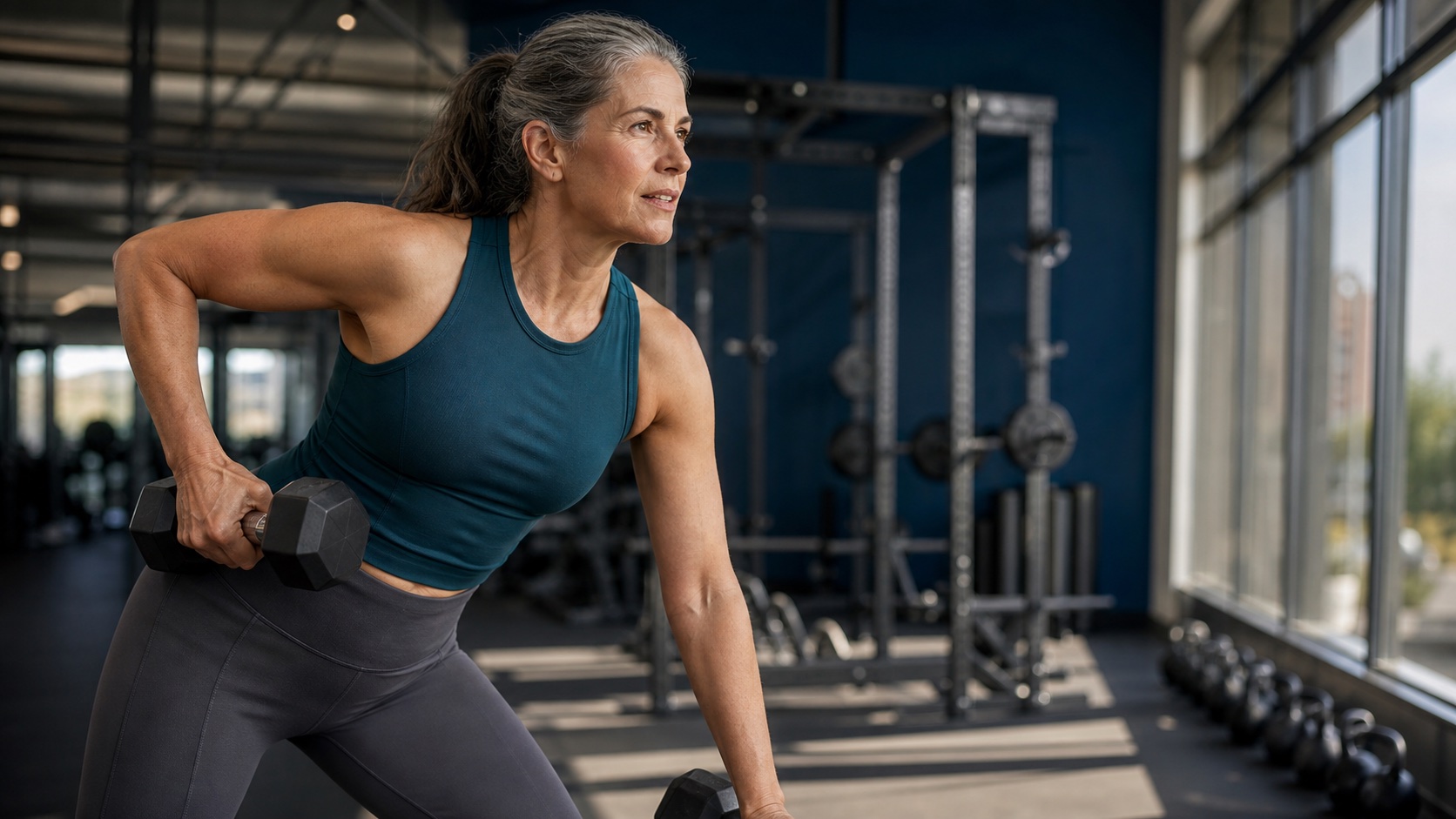
Activewear for women over 50 is often treated as a demographic expansion: take an existing legging, add older models, soften the colors, and call the result inclusive.
That is not the opportunity.
The more interesting opening sits where three changes meet. Women in midlife are being encouraged to preserve strength and bone health through resistance exercise. Menopause and ageing can change temperature comfort, body composition, breast support, and how clothing feels. Yet much fashionable activewear still communicates through young bodies, aggressive compression, pull-on bras, and a narrow idea of what an athletic woman looks like.
This does not mean every woman over 50 needs specialist clothing. Many are well served by mainstream brands. It means an emerging founder may have a testable opening among women roughly 45–65 who are starting or returning to strength training, Pilates, or yoga and cannot find a product that combines modern style with support, easy dressing, coverage, and changing-body fit.
The first product should not be a full “menopause collection.” It should be one support tank whose improvement can be felt in a fitting room.
Varley revealed the wardrobe question, not this market
Our earlier analysis of Varley’s brand strategy argued that the brand changed the unit of competition from one workout garment to the customer’s whole day. Training, travel, errands, work, recovery, and social life could belong to one coherent wardrobe.
That case does not prove demand for activewear for women over 50. It does reveal a better way to look for an opening: stop asking which sport is trending and ask which person moves through a day that existing brands still understand too broadly.
A woman returning to strength training at 52 may move from a morning walk to work, a gym session, errands, and dinner. She may want the same visual confidence as a 25-year-old customer without the same sports-bra construction, waistband pressure, exposure, or temperature experience.
A useful customer interview should therefore begin with a day, not an age. Ask what she does before and after exercise, when she changes clothes, what she adjusts during movement, and which garment makes her avoid a class. “Women over 50” is not yet a customer. “A 54-year-old returning to strength training who wants support without wrestling out of a wet pullover bra” is closer.
Why the activewear for women over 50 signal is becoming harder to ignore
The demographic context is large, but demographic size alone is not a buying reason. The World Health Organization reported that women aged 50 and over represented 26% of all women and girls globally in 2021. It also notes that most women experience menopause between 45 and 55 and that hot flushes may involve sudden heat and perspiration.
The behavioral context matters more. The NHS recommends regular exercise and specifically highlights weight-bearing exercise to build strength. For adults 65 and older, the CDC recommends a weekly mix of aerobic, muscle-strengthening, and balance activity.
These sources establish health context, not apparel demand. The commercial signal appears when this context is compared with product activity. ThirdLove now sells a thermoregulating adjustable sports bra with hook-and-eye closure and a matching legging. CATT Fitness & Apparel positions its training and clothing around women over 40. Evolving Prowess explicitly designs for changing bodies through menopause, illness, postpartum experience, PCOS, and fitness journeys.
None of these companies proves that the market is easy. Their presence shows that several founders and an established intimates brand are converging on temperature, support, changing fit, and midlife identity. That is enough to justify a small test; it is not enough to justify a warehouse.
Decision rule: when demographic context, behavior, product research, and several live offers point toward the same tension, move to customer and sample validation—not directly to inventory.
The product gap begins above the waist
Leggings dominate activewear conversations because they are visually legible. But the more defensible entry here may be a support tank.
A 2025 peer-reviewed study on sports-bra design for senior women identified support, shaping effect, tactile sensation, appearance, underband stability, and fit as important evaluation criteria. Among the tested designs, the researchers favored a long-shirt encapsulation style with a higher neckline and double back layer. Earlier PolyU research into senior women doing yoga likewise found support and comfort were primary concerns, followed by easy dressing and more coverage.
Those findings should not be treated as a universal design brief for everyone over 50. They do, however, reveal a cluster of product variables that generic age marketing misses:
- how the garment goes on and comes off;
- whether the underband stays stable without digging;
- how support changes across cup and torso proportions;
- whether coverage increases confidence without trapping heat;
- whether straps and closures remain comfortable during pressing, pulling, and floor work.
The first design brief should describe a movement problem, not a mood board. “Elegant, empowering, menopause-friendly” is positioning language. “A longline support tank that a warm, sweaty wearer can remove without painful overhead pulling, while remaining stable during rows and Pilates transitions” is a product problem.
Temperature comfort deserves its own boundary. ThirdLove’s current product page shows that an established brand is willing to build a temperature-regulating story into activewear, but a supplier data sheet or a cool-touch hand feel does not establish performance on the intended wearer.
Do not buy the cooling story before testing the garment. Keep the construction constant and compare a small number of feasible fabric candidates through the same workout, wash, and dry routine. Record damp cling, drying time, skin comfort, odor perception, and whether added coverage feels hotter. If wearers cannot identify a meaningful improvement, remove the claim instead of expanding it.
Do not build a “senior look” from stereotypes
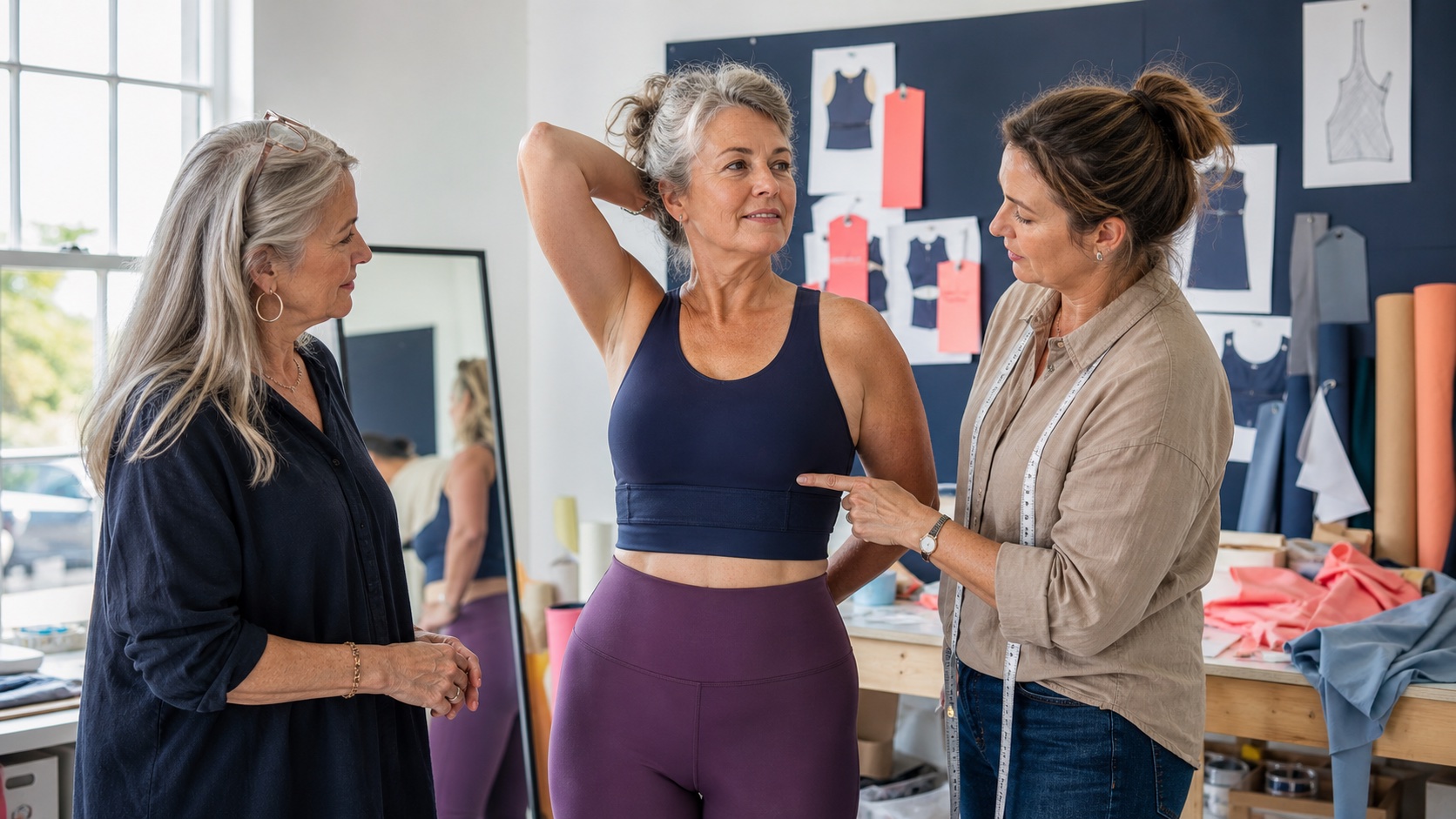
A 2019 Korean market survey reported that women over 50 in its sample often found yoga wear too revealing, too colorful, and uncomfortable, and that elasticity and moisture handling mattered. That is useful evidence, but it is also culturally and historically bounded. Turning it into a universal rule would be another form of lazy segmentation.
Some midlife customers want black, coverage, and quiet design. Others want bright color, sculpting, halter details, or a strong gym identity. The common opportunity is not “make it modest.” It is to let the intended wearer decide which confidence problem the product should solve.
Separate three questions in research:
- Function: support, access, temperature comfort, opacity, movement, storage.
- Exposure: neckline, arm coverage, torso length, waistband height.
- Identity: whether she wants to look technical, feminine, minimal, powerful, fashionable, or discreet.
If interviews combine all three into “older women want coverage,” the brand will produce a stereotype instead of a product.
A credible MVP isolates one fit question
The cheapest first step does not require manufacturing. A practical discovery round might involve eight to twelve women in the intended age and activity context. That is not a representative market sample; it is a manageable way to expose repeated product friction before paying for a pattern. Ask each person to bring one sports bra she keeps wearing and one she avoids. Do not begin by showing your design.
Observe dressing and removal, overhead reach, a pulling movement, a floor transition, and the minutes after exercise when the garment is damp. Record the wearer’s own language. Move to sampling only if the same friction appears without prompting and several participants agree to return for a fit test.
Then build two prototypes with the same fabric, torso coverage, and support target. Change only the entry and adjustability solution—such as a conventional pullover construction versus a back-opening or other easier-entry construction that sampling confirms is feasible.
Test the prototypes against four questions:
- Is one meaningfully easier to put on and remove?
- Does the underband remain stable during movement?
- Does added coverage create unwanted heat or restriction?
- Would the wearer replace an existing favorite with it?
Continue when one construction improves access while preserving support and comfort. Revise when the idea solves one problem but introduces chafing, heat, pressure, or instability. Stop when mainstream products already solve the issue and participants show no reason to switch.
This is a better MVP than launching a bra, legging, jacket, and five colors. It tells the founder whether the opportunity is real and tells the product developer what must change next.
This opportunity may need a real person before it needs a campaign
Founder-led marketing is not compulsory in every market opportunity. Here it can be unusually powerful because the customer is being asked to believe that the brand understands a changing body and a return to movement.
Evolving Prowess founder Victoria Tsang publicly connects the company to her own illness, return to exercise, and experience of old activewear no longer fitting. The brand currently offers eligible customers 25% off the same style and color in a different size within one year, without requiring the original item to be returned. CATT connects women-over-40 training with apparel. These are brand-originated stories and policies, not independent proof of success, but they show how a real life stage can shape content, product decisions, and service design.
A founder, coach, or customer in this segment can document:
- the decision to begin or return to lifting;
- the garment frustrations discovered in real sessions;
- why the first sample failed;
- what changed in the underband, closure, coverage, or fabric;
- how other women responded during wear tests.
The early audience may be tiny. The value is that the archive becomes evidence of attention and progress. Product development becomes content, content attracts similar users, and their feedback improves the next sample.
But authenticity is a constraint. Do not manufacture a menopause story, ask a private founder to perform vulnerability, or make medical promises. If no credible protagonist exists, use a transparent co-design panel instead.
The second product should follow the first proof
If the support tank earns repeat wear, the next product should solve the next problem in the same day—not merely complete a matching set.
A legging may follow if wear tests repeatedly expose waistband pressure, changing waist-to-hip proportions, opacity, pocket, or rise problems. A lightweight layer may follow if users repeatedly describe arriving cold, overheating during training, and cooling rapidly afterward. The order depends on observed friction.
This is where the Varley lesson becomes useful. Build a wardrobe around a person’s sequence of occasions, but earn each new piece through a demonstrated transition. Do not interpret “lifestyle” as permission to add categories.
A simple expansion rule: a second product deserves development only when it either removes a recurring barrier around the hero product or creates a clearly observed wearing occasion. “Customers may want a set” is not enough.
When Battlerobe should—and should not—enter
The first interview and content test do not need a factory. A manufacturer cannot decide whether the founder understands the customer.
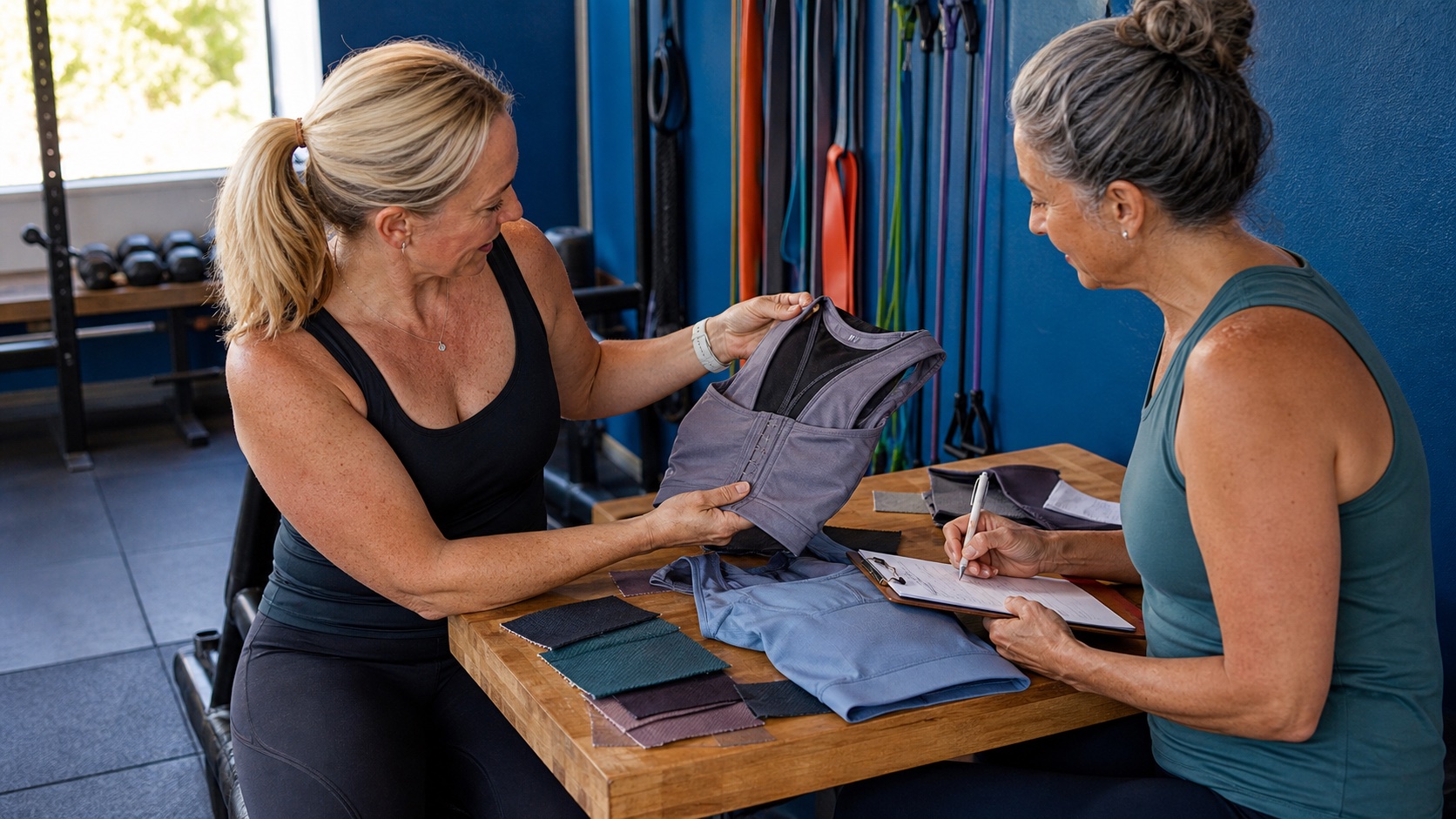
Once repeated evidence justifies a sample, the opportunity becomes a technical development problem: entry method, underband stability, cup and torso proportions, neckline, fabric recovery, thermal comfort, seams, grading, and movement testing must work together. A ready-made garment with a new logo cannot prove that difference.
The useful Battlerobe decision is first to reject the wrong route. Small-Batch Ready-to-Custom uses existing silhouettes, predefined sizes, and available colors, so it cannot validate a custom support, access, or fit promise. Bulk Custom Production would commit too much before the fit is proven. Only after the customer problem earns a sample does Battlerobe’s Small-Batch Custom Development route become appropriate.
At that stage, Battlerobe can review an image, sketch, tech pack, or sample and help move a confirmed product idea through feasibility and sampling. Material, MOQ, price, and lead time still need project-specific confirmation; the route does not guarantee that the first concept is commercially right. Its value here is turning a carefully defined wear problem into controlled sample decisions without pretending production can replace customer evidence.
Before that conversation, prepare:
- the target wearer and activity;
- two or three reference products and what each gets wrong;
- target support and coverage;
- the entry or fit problem to test;
- the intended size and cup/torso range for initial fitting;
- expected test quantity and launch timing;
- the one result that would justify a second sample.
Battlerobe’s guide to activewear product development explains why a design must move through clearer specifications, sampling, fit review, and approval before production. Its quality-control framework becomes relevant later, when the approved support and access behavior must remain consistent across units and sizes.
The opportunity is strength without age camouflage
The strongest version of activewear for women over 50 is not a beige “senior collection,” a generic cooling claim, or the same legging shown on an older model.
It is a product and brand built around a more specific promise: women entering a new phase of strength should not have to choose between modern identity and clothing that respects how their bodies move, heat, support, and change.
This opportunity is ready for a bounded test, not broad production. Start with real wardrobes and rejected bras. Identify one repeated friction. Prototype one longline support tank with one controlled construction comparison. Let the wearer—not the founder’s trend forecast—decide whether the difference matters.
If access improves and support survives movement, continue. If the solution creates new heat, pressure, or chafing, revise. If an existing product already wins, stop and look for a sharper problem.
The founder best suited to this opportunity is not necessarily the person with the largest audience. It is the person willing to live near the customer problem, show the development honestly, and keep the first experiment small enough to learn from.
Sources and further reading
- World Health Organization: Menopause
- NHS: Things you can do to help menopause and perimenopause symptoms
- CDC: What counts as physical activity for older adults
- Fashion and Textiles: Sports-bra design criteria for senior women
- PolyU: User needs of senior women during yoga
- Journal of the Korean Society of Clothing and Textiles: Yoga-wear prototype for women over 50
- ThirdLove TempSync sports bra
- Evolving Prowess and CATT Fitness & Apparel